

TL;DR:
- Recurring flakes in dandruff are common because the underlying microbial imbalance and skin barrier issues persist despite temporary symptom relief. Maintaining a microbiome-compatible routine, managing triggers, and supporting barrier health are key for long-term control of the condition. Complete cure is unlikely; instead, lifelong management strategies help prevent rapid relapse and promote scalp resilience.
Treating dandruff and seeing clear results feels like a win. Then the flakes come back. For many Australians dealing with chronic scalp flaking, this cycle is familiar and frustrating. The important thing to understand is that returning flakes do not mean your treatment failed. Dandruff and seborrheic dermatitis are chronic, relapsing conditions where symptoms clear temporarily but the underlying biology remains active. This article walks through the real reasons flakes return, the role your scalp’s microbial community plays, and what a sustainable, microbiome-focused approach actually looks like in practice.
Table of Contents
- Why do flakes return after treatment?
- The scalp microbiome’s role in flake recurrence
- Triggers and lifestyle factors that spark recurrence
- Why barrier and immune issues keep flakes coming back
- Sustaining results: why maintenance matters
- The real problem with ‘quick fixes’: a scalp health perspective
- Microbiome-friendly solutions to support your scalp
- Frequently asked questions
Key Takeaways
| Point | Details |
|---|---|
| Relapse is common | Returning flakes after treatment are typical and not always a sign your approach is wrong. |
| Balance your microbiome | Supporting a healthy mix of scalp microbes helps reduce flake recurrences over time. |
| Identify your triggers | Stress, oil, and weather changes can all restart a flake cycle even after improvement. |
| Maintain barrier health | Ongoing care that repairs the skin barrier offers more lasting scalp comfort. |
| Stay consistent | A tailored, routine scalp care regimen is crucial for keeping symptoms in remission. |
Why do flakes return after treatment?
With the context set, let us examine why flakes keep reappearing even after following recommended treatments.
Most people experience dandruff as something to fix and forget. A shampoo works, the flakes disappear, and they assume the problem is solved. But dandruff does not work that way. It is better understood as a condition with cycles, not a single event with a clear endpoint.
Dandruff and seborrheic dermatitis commonly return after treatment because the underlying microbial trigger and contributing factors remain even when surface symptoms resolve.
This cycle of remission and relapse is a defining feature of chronic skin conditions. Seborrheic dermatitis, one of the most common skin conditions in Australia, follows this exact pattern. Treatments reduce visible symptoms effectively in the short term. What they rarely address is the state of the scalp ecosystem underneath.
Think of it this way. A treatment that reduces flaking does not automatically restore healthy microbial diversity, repair skin barrier function, or resolve the hormonal or immune factors that made flaking possible in the first place. When those conditions remain, the system tips back toward imbalance. Flakes return.
Key reasons flakes cycle back include:
- The underlying microbial population was suppressed, not permanently eliminated
- Skin barrier integrity was not restored during the treatment period
- Triggering factors such as stress or seasonal changes reactivated the condition
- Maintenance was stopped as soon as visible symptoms cleared
- Product choices after treatment disrupted the scalp’s microbial balance further
Understanding why dandruff occurs at a biological level makes it much easier to build a strategy that holds results for longer rather than just reacting when symptoms return.
The scalp microbiome’s role in flake recurrence
Peeling back another layer, let us focus on how your scalp’s microscopic inhabitants influence flake return.
Dandruff has historically been linked to a single fungal genus, Malassezia. While Malassezia is genuinely involved, the science has moved well beyond single-microbe thinking. Scalp microbiome dysbiosis, meaning a disruption in the balance of the bacterial and fungal community, is now understood to drive the flare and remission cycles seen in chronic dandruff.
When the scalp microbiome is healthy, diverse microbial populations compete and keep each other in check. When that balance is disrupted, opportunistic microbes expand. Pathogenic bacteria like Staphylococcus can increase as beneficial bacteria decline, and Malassezia and scalp flakes become a compounding problem rather than a single cause.
The concept of “system resilience” is useful here. A resilient scalp microbiome can recover from disruptions. A low-resilience ecosystem, often seen after repeated use of harsh antifungal or antibacterial products, struggles to bounce back. This is why some people find that dandruff returns faster and more aggressively after each treatment round.
| Approach | Effect on microbiome | Long-term outcome |
|---|---|---|
| Daily antifungal shampoo | Suppresses fungi broadly | Low resilience, fast relapse |
| pH-balanced maintenance products | Supports microbial diversity | More stable remission |
| Microbiome-targeted serums | Addresses specific imbalance | Controlled, less frequent flares |
| No maintenance after clearing | Microbiome remains vulnerable | Rapid recurrence |
Pro Tip: Reducing the frequency of active treatments once flakes clear is not slacking off. It is a deliberate strategy to allow the scalp’s own microbial balance to stabilise rather than staying dependent on daily suppression.
Getting microbiome balance advice that is specific to your scalp type matters more than following a generic daily shampoo routine. A scalp regimen built around microbiome compatibility will generally outperform one built around symptom suppression alone.
Triggers and lifestyle factors that spark recurrence
While the microbiome explains much of the biology, daily life and individual triggers add another dimension.
Even a well-maintained scalp can be pushed back toward flaking by specific triggers. These are not random. Host factors and daily triggers such as increased sebum production, stress, hormonal fluctuations, seasonal changes, and product irritation can reactivate the flare cycle even after symptoms have settled.
Understanding your personal triggers is a practical and underused tool for managing chronic dandruff. Here is how common triggers interact with scalp biology:
-
Stress. Elevated cortisol suppresses immune regulation and can increase sebum production. Both create conditions where Malassezia and other opportunistic microbes thrive. Flakes that appear after a stressful period are not a coincidence.
-
Seasonal changes. Australian summers bring heat and sweat, which alter scalp pH and sebum output. Winters bring dry air and indoor heating, which compromise skin barrier moisture. Both seasonal transitions are common times for flare-ups.
-
Hormonal shifts. Testosterone-related hormones stimulate sebaceous glands. This is why dandruff is more common in adult males and tends to worsen around hormonal transitions such as puberty, menopause, or periods of hormonal imbalance.
-
Product irritation. Fragrance, sulphates, and preservatives in mainstream shampoos can disturb the scalp’s acid mantle and alter the microbial environment. People often switch products to treat returning flakes and inadvertently worsen the underlying imbalance.
-
Diet and gut health. There is growing evidence linking gut microbiome health to skin conditions including dandruff. High sugar intake, alcohol, and inflammatory foods can tip systemic immune regulation in ways that show up on the scalp.
Pro Tip: Tracking your flare-ups against a simple log of stress levels, diet, product changes, and weather can reveal personal patterns that generic advice will never identify. This kind of data-driven tracking is central to how the 1-Week Scalp Health Guide works.
Managing an oily scalp is one area where trigger awareness pays off quickly. Sebum excess is both a trigger and a fuel source for microbial overgrowth, so addressing it directly reduces the frequency and intensity of recurrence.
Why barrier and immune issues keep flakes coming back
Now, let us look at what happens beneath the surface, at your scalp’s invisible defences.
The skin barrier is not just a physical layer. It is an active system that regulates moisture, pH, microbial populations, and immune signalling. When that barrier is compromised, the scalp becomes more permeable to irritants, more vulnerable to microbial invasion, and less capable of self-repair.
Barrier dysfunction and immune dysregulation can persist or re-form after treatment, which explains why some people find their scalp remains reactive, tight, or easily irritated even when visible flakes are under control. The surface looks better, but the underlying structure is still fragile.
| Barrier sign | What it indicates | Practical response |
|---|---|---|
| Tight or dry scalp after washing | Disrupted acid mantle | Use lower-pH, sulphate-free products |
| Redness after product application | Impaired barrier permeability | Reduce product frequency |
| Rapid return of flakes post-treatment | Microbiome not stabilised | Add microbiome-compatible maintenance step |
| Burning or stinging from actives | Compromised skin integrity | Scale back to maintenance-only phase |
Long-term control requires addressing both barrier dysfunction and immune dysregulation, not just surface symptom removal.
Effective regimens replenish the lipids and ceramides that form the barrier’s protective structure. They also support a return to the scalp’s natural acidic pH range of 4.5 to 5.5, which is where the barrier and microbiome both function best. Products that sit at or above pH 7 can compromise this environment with every use.
Exploring products that restore balance rather than simply suppress symptoms gives the barrier a genuine opportunity to repair rather than cycling through repeated disruption and recovery.
Sustaining results: why maintenance matters
Given the underlying drivers, let us explore practical steps for keeping your scalp healthy in the long run.
The gap between clearing flakes and keeping them away sits in the maintenance phase. Most people exit the active treatment phase, stop their routine, and wait for symptoms to reappear before acting again. This reactive pattern is exactly why flakes return predictably.
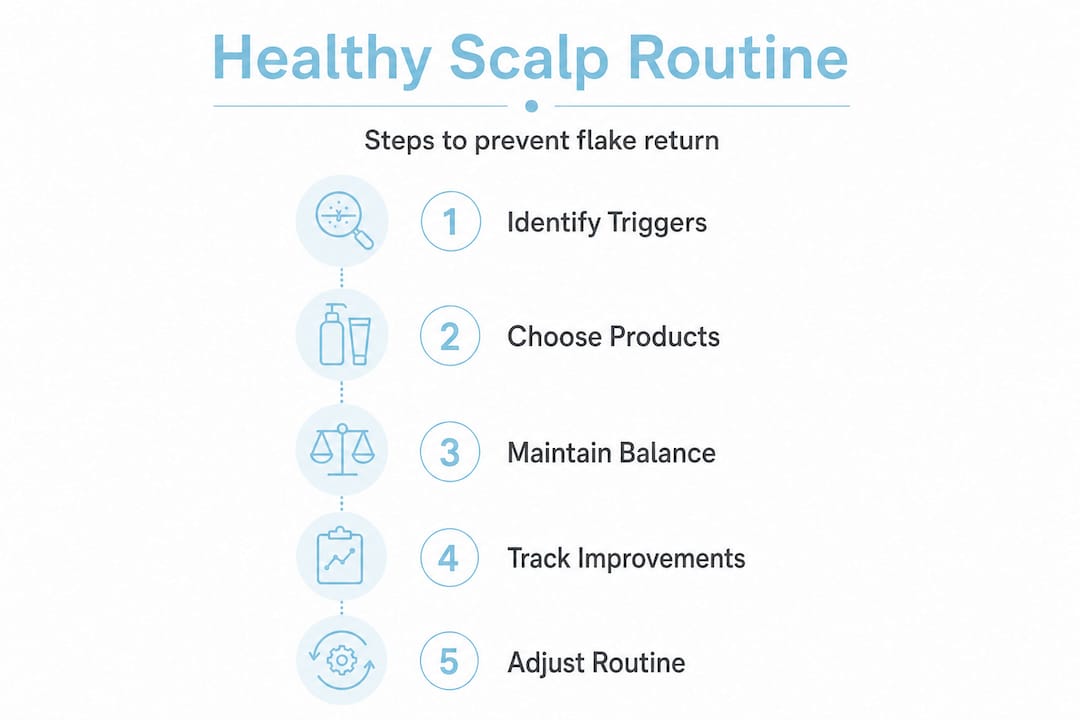
A structured scalp care regimen can reduce scalp inflammatory biomarkers and Malassezia levels, and relapses occur most often when maintenance is inadequate or the underlying microbiome balance is not sustained. The evidence supports maintenance as an active, essential phase, not an optional extra.
Practical maintenance principles that hold results:
- Use lower-pH, microbiome-compatible products as a daily or regular base rather than active antifungal products
- Reserve higher-strength treatments for flare-up periods only, not daily use
- Reduce product volume and frequency progressively as scalp health stabilises
- Focus on gut health and trigger reduction alongside topical care
- Track scalp condition regularly to catch early signs of imbalance before a full flare develops
A microbiome-friendly approach to maintenance is not about adding more products. It is about using fewer, better-targeted products at the right frequency. Dependency on daily antifungal shampoos replaces one problem with another and does not support the scalp in returning to self-regulation.
This is the same dependency loop that explains why dandruff shampoo stops working over time.
Dandruff prevention tips focused on microbiome compatibility give a practical starting point for building a routine that reduces relapse frequency. Combining that with a clear step-by-step approach to dandruff relief helps remove the guesswork from the maintenance phase entirely.
Pro Tip: A scalp that needs progressively less product to stay clear is a scalp that is genuinely recovering. If your routine requires the same daily intervention after six months as it did on day one, the underlying ecosystem has not been addressed.
The real problem with ‘quick fixes’: a scalp health perspective
Having covered the science and practice, let us take a step back to see the bigger picture and what most advice misses about relapsing flakes.
The single most counterproductive belief in scalp care is the idea that there is a cure waiting to be found. That belief drives people toward increasingly aggressive treatments, more frequent product use, and growing frustration each time flakes return. The biology simply does not support a permanent cure model for chronic seborrheic dermatitis.
Recurrence does not mean treatment failed. Clinical evidence confirms that some patients experience a relapsing course with incomplete symptom control unless ongoing maintenance is used, and worsening despite continued use can reflect normal fluctuation in disease activity rather than drug ineffectiveness. That is a meaningful reframe. Your scalp is not broken. It is behaving in a way that is well-documented and manageable.
The more useful framework is to treat dandruff the way health-conscious Australians treat other chronic conditions like seasonal allergies or eczema. You do not expect those to disappear permanently. You build a management system that keeps them controlled, responds to flares early, and reduces the overall burden on your system over time.
What this looks like practically is a shift away from maximum-strength daily suppression and toward minimum effective intervention with microbiome awareness. It means using active treatments during flare periods and stepping back to lighter, pH-compatible maintenance between them. It means investigating food triggers, stress management, and gut health as genuine contributors rather than secondary concerns.
The sustainable scalp solutions conversation starts when people stop expecting a one-time fix and start building a scalp environment that is resilient enough to manage minor disruptions without tipping into a full flare. That is achievable. It just requires a different approach than the one most mainstream products are designed to deliver.
Microbiome-friendly solutions to support your scalp
Ready to take proactive steps with credible, science-backed products?
Victory Serums is built specifically for Australians dealing with chronic dandruff, scalp flaking, and the frustrating cycle of relapse. The range is pharmacist-developed, pH-aware, and designed around microbiome compatibility rather than daily chemical suppression.

The microbiome-friendly conditioning shampoo supports regular maintenance without disrupting the scalp’s natural microbial balance. For active flare periods, the dandruff control intensive shampoo delivers targeted relief without requiring daily use. The scalp serum is formulated for direct, fast-acting application to the scalp, working within minutes or as a leave-in treatment to calm irritation and support rebalancing. Together, these products support the Reset, Rebalance, Restore framework at the core of the 1-Week Scalp Health Guide.
Frequently asked questions
How can I tell if my recurring flakes are dandruff, seborrheic dermatitis, or something else?
If over-the-counter treatments are not controlling your flakes, or you have persistent redness, thick scales, or swelling, see a healthcare professional to confirm your diagnosis and rule out conditions like psoriasis or contact dermatitis.
Can changing my shampoo prevent flakes from returning?
Switching to a microbiome-compatible, lower-pH shampoo and using it consistently can support a more balanced scalp environment. A structured regimen reduces inflammatory markers and Malassezia levels, which lowers relapse risk over time.
For some people, returning flare-ups are driven less by yeast and more by histamine. See if histamine is behind your recurring scalp itch.
Does stress make my scalp flakes worse?
Yes. Stress and other host triggers can reactivate the flare cycle even after symptoms have cleared, which is why stress management is a practical part of long-term scalp health.
Are scalp flakes due to poor hygiene?
No. Recurring dandruff is driven by immune response, skin barrier function, and microbiome factors, none of which are related to personal cleanliness. Over-washing can actually worsen the condition by disrupting the scalp’s acid mantle.
What if flakes return despite following my regimen?
Relapses are a documented feature of chronic scalp conditions. Fluctuation in disease course is expected and does not mean your regimen is ineffective. Early intervention and consistent maintenance reduce both frequency and severity over time.
Recommended
- What causes scalp flakes? Malassezia affects 80% of cases – Victory Serums
- Dermatologist-recommended scalp regimen for lasting relief – Victory Serums
- Recognise scalp imbalance: signs, solutions, and natural care – Victory Serums
- Persistent dandruff: Causes, science, and real solutions – Victory Serums
- Hair Restoration | Rao Dermatology

Get the free 1-Week Guide to Scalp Health and uncover the real cause of your flakes.
Download the free guide
Matt Heron is the founder of Victory Serums, an Australian microbiome focused scalp care brand specialising in severe dandruff, yeast imbalance and chronic scalp instability. With more than four decades of personal experience managing persistent dandruff and extensive study of scalp biology, skin pH and barrier function, he developed targeted scalp serums that work within minutes or as leave in treatments. His Reset, Rebalance and Restore approach challenges daily anti-dandruff shampoo dependence and is helping redefine the way chronic dandruff is treated.