

Updated July 2026
In Brief:
- Persistent dandruff keeps returning despite treatment. That is the nature of the condition, not a failure of effort.
- It is driven by microbiome imbalance, particularly Malassezia overgrowth and a weakened barrier.
- The goal is ongoing management through trigger identification and microbiome support, not a one-time cure.
Finding flakes on your collar after yet another round of anti-dandruff shampoo is genuinely frustrating. For many Australians, dandruff is not a one-off problem that clears up and stays gone. It keeps returning, often within weeks of treatment, and shelf products rarely deliver lasting results. This article explains why. It covers what persistent dandruff actually is, how the scalp microbiome drives recurring symptoms, what makes flares worse, and what science-informed management looks like in practice.
Defining persistent dandruff: what sets it apart?
Not all flaking is the same. A dry scalp after a cold week, or a one-off reaction to a new shampoo, is common and usually short-lived. Persistent dandruff is different. It is recurring or continuous flaking, itching and irritation that either fails to respond to standard treatment or returns shortly after symptoms settle.
Most adults living with it spend months, sometimes years, cycling through products before recognising the pattern. They find something that works briefly, then watch it stop being effective. That experience is not a failure of effort. It reflects the actual nature of the condition.
Symptoms can recur even after improvement, and routine measures are often insufficient for long-term control.
Several features point toward a persistent pattern rather than a temporary episode:
- Flaking returns within two to four weeks after stopping or changing treatment
- Itching or redness is present regardless of weather or stress
- Multiple over-the-counter shampoos have been tried without lasting improvement
- Symptoms have been present, on and off, for more than three months
- The scalp feels oily and irritated even with regular washing
Understanding why dandruff keeps returning requires looking past the surface. The flakes are just the visible output of a deeper biological process. As Harvard Health notes, dandruff is chronic and likely to recur, with no known cure. The goal is ongoing control, not a one-time fix.
That is not pessimistic. It is practical. People who accept that persistent dandruff needs ongoing management, rather than a single solution, tend to get better results and far less frustration.
Pro Tip: If symptoms persist after two or three full treatment cycles with different products, stop rotating and start investigating. A pattern of recurrence points to a structural issue, not a product gap.
Why persistent dandruff occurs: the microbiome connection
The scalp hosts a complex ecosystem of bacteria, fungi and other microorganisms. In healthy scalps these communities sit in relative balance. In scalps prone to persistent dandruff, that balance is disrupted. This state is called dysbiosis, and it is now considered central to chronic flaking.
Scalp microbial dysbiosis and altered Malassezia levels are strongly associated with dandruff. Malassezia is present on virtually every human scalp. In people with persistent dandruff, its populations are often elevated or shifted toward more inflammatory species. These yeasts feed on sebum and produce by-products that irritate the skin, accelerate cell turnover and drive the flaking cycle.
But Malassezia is only part of the picture. Research also points to changes in bacterial populations, reduced ceramide levels in the barrier, and increased water loss. The barrier becomes less effective, letting irritants penetrate more easily and making the scalp more reactive overall.
| Feature | Healthy scalp | Dandruff-prone scalp |
|---|---|---|
| Malassezia levels | Balanced | Elevated or shifted |
| Skin barrier | Intact, low water loss | Compromised, higher water loss |
| Bacterial diversity | High | Reduced |
| Sebum regulation | Stable | Often excessive or irregular |
| Inflammatory response | Low | Elevated |
| pH range | 4.5 to 5.5 (acidic) | Often shifted higher |
Understanding how Malassezia drives scalp flakes explains why the condition behaves the way it does. It is not about hygiene. It is about biology, and biology does not reset with a single bottle of medicated shampoo.
This is where many standard treatments fall short. Shampoos containing zinc pyrithione, selenium sulphide or ketoconazole reduce Malassezia effectively in the short term. But used daily and long term, they strip beneficial microbes, alter pH, and create conditions that favour the imbalance returning once treatment stops.
Pro Tip: Overusing anti-dandruff shampoos offers short-term relief but can make the underlying imbalance harder to correct. The goal of balancing your scalp microbiome is to reduce dependency, not create a new one.
Common triggers and why they matter
Real-world triggers make persistent dandruff unpredictable and can restart a flare even when the scalp seems to be responding well.
- Seasonal changes. Humidity drops and indoor heating alter moisture balance in winter. Increased sweating in summer raises sebum and gives Malassezia more to feed on.
- Stress. Cortisol suppresses immune function and disrupts the barrier, and a weakened barrier is more susceptible to imbalance and inflammation.
- Personal care products. Sulphates, alcohols, fragrance and high-pH formulas all shift the scalp away from its healthy 4.5 to 5.5 range.
- Infrequent washing. Letting sebum accumulate gives Malassezia ideal conditions. But overwashing with harsh products is equally disruptive.
- Diet and gut health. Emerging research links gut health to skin conditions including scalp inflammation. High sugar intake and processed foods may compound existing issues.
- Immune health. People with seborrhoeic dermatitis, psoriasis or compromised immunity are at higher risk of persistent and severe dandruff.
Recognising your own trigger patterns is one of the most practical steps you can take. One person's worst trigger is another's non-issue. Individual variation is real and significant.
Pro Tip: Keep a simple scalp diary for four to six weeks. Record washing frequency, products used, diet, stress and symptom severity. Patterns usually emerge within a month.
Science-informed management: what really works
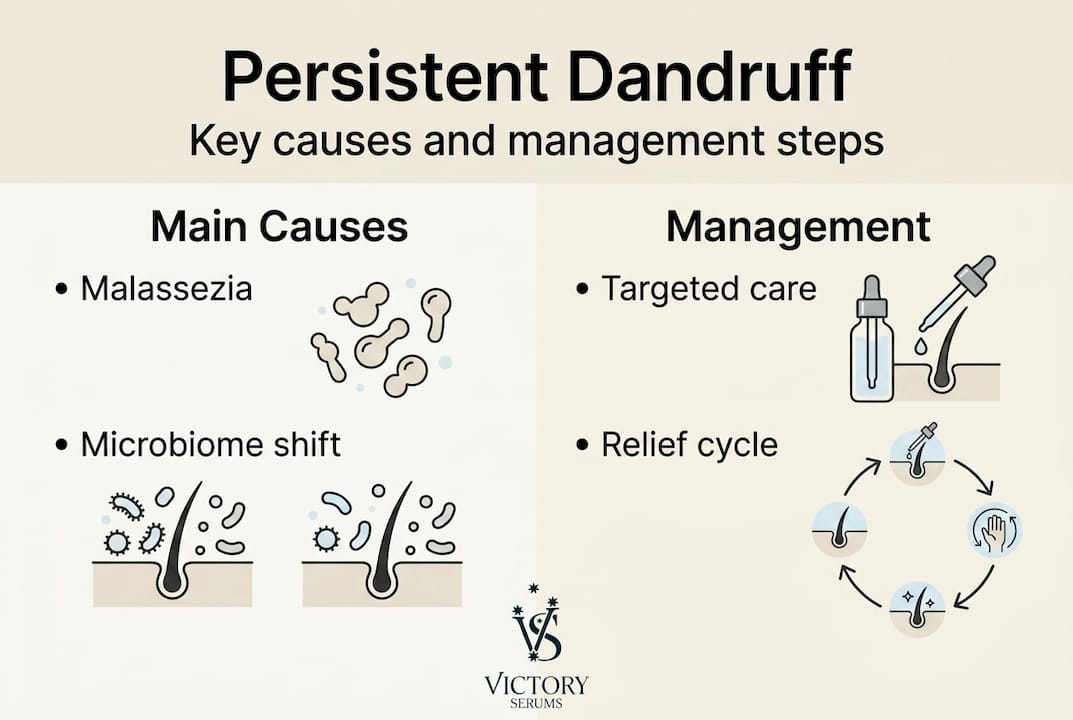
Long-term control and relapse prevention are the goals. Harsh or frequent treatments suppress symptoms temporarily but further disturb the scalp environment, making relapses more frequent over time.
- Identify your triggers using a diary or structured programme to pinpoint what causes flares for you specifically.
- Target Malassezia during flares with antifungal or microbiome-aware treatment during active episodes rather than continuously.
- Support the barrier with low-pH, gentle formulations between flares to maintain integrity without over-stripping.
- Select microbiome-compatible products designed to preserve microbial diversity rather than eliminate everything indiscriminately.
- Reduce product frequency over time. The goal is for the scalp to self-regulate, not to rely permanently on strong actives.
- Consult a professional when needed. If symptoms are severe, widespread or unresponsive to over-the-counter care, medical review is appropriate.
| Management stage | Focus | Product approach |
|---|---|---|
| Active flare | Reduce flaking, calm irritation | Targeted antifungal, short-term use |
| Recovery phase | Restore barrier, reduce inflammation | Low-pH, gentle formulas |
| Maintenance | Prevent recurrence, support microbiome | Minimal intervention |
| Monitoring | Track triggers and symptom patterns | Diary, structured tracking |
No permanent cure exists for persistent dandruff. Symptoms often return. The aim is maintenance and trigger management, not eradication. People who understand this make better product decisions and build more effective routines. A step-by-step approach gives structure to what can otherwise feel like endless guesswork.
Pro Tip: Rotate a gentle targeted treatment during flares with a low-pH maintenance routine during stable periods. Avoid strong actives daily. The scalp needs recovery time between interventions to move toward self-regulation.
The real key to lasting relief
The biggest misconception people bring to persistent dandruff is that the right product will eventually make it stop completely. That expectation drives an enormous amount of product cycling and frustration, and it pushes people toward progressively stronger treatments that further disrupt the scalp they are trying to heal.
The shift in mindset matters more than any individual product. When someone stops searching for a cure and starts building a sustainable management routine, results improve. Small, consistent adjustments, like reducing washing frequency, choosing lower-pH formulas, and responding to flares early rather than after they peak, produce better outcomes than any single treatment.
Understanding scalp care versus hair care is central to this. The scalp is skin. It has a microbiome. Treating it like a surface to be cleaned rather than an ecosystem to be supported is where most long-term plans fall apart. That is the shift worth making.
Support your scalp for long-term balance
Victory Serums is built for exactly this situation. The scalp serum is formulated by pharmacists with pH awareness and microbiome compatibility in mind, designed for targeted use during flares rather than daily chemical suppression.

The full dandruff control range supports every stage of the cycle, from active flare to long-term maintenance. For structured guidance, the free 1-Week Scalp Health Guide outlines the Reset, Rebalance, Restore framework, covering gut health, trigger identification and tracking. Real results come from systems, not single products.
Frequently asked questions
Can persistent dandruff go away on its own?
It rarely resolves without ongoing care. Symptoms often return after improvement, which makes consistent management essential for most people.
How can I tell if my dandruff is persistent or just temporary?
If flaking and irritation return after standard treatment, or last for several weeks, it is likely persistent. Dandruff is persistent when it does not respond adequately or keeps recurring despite routine care.
Is persistent dandruff linked to the scalp microbiome?
Yes. Research confirms that microbial imbalance and altered Malassezia levels are strongly associated with chronic dandruff, which makes microbiome-aware care an important part of any plan.
When should I see a doctor?
If over-the-counter treatments are not working, or you develop severe redness and irritation, consult a healthcare professional. Symptoms that fail to improve or actively worsen are clear signals that review is warranted.
Victory Serums products are designed to support scalp comfort and scalp health practices. They are not intended to diagnose, treat, cure or prevent medical conditions. If symptoms are severe, persistent, cracked, bleeding or worsening, seek guidance from a qualified healthcare professional.
Recommended
- Why Does Dandruff Occur? Science-Backed Scalp Insights 2026 – Victory Serums
- Understanding anti-dandruff agents: sustainable relief – Victory Serums
- Dandruff treatment step by step for lasting relief – Victory Serums
- Australian scalp care: microbiome balance for 2026 – Victory Serums

Get the free 1-Week Guide to Scalp Health and uncover the real cause of your flakes.
Download the free guide
Matt Heron is the founder of Victory Serums, an Australian microbiome focused scalp care brand specialising in severe dandruff, yeast imbalance and chronic scalp instability. With more than four decades of personal experience managing persistent dandruff and extensive study of scalp biology, skin pH and barrier function, he developed targeted scalp serums that work within minutes or as leave in treatments. His Reset, Rebalance and Restore approach challenges daily anti-dandruff shampoo dependence and is helping redefine the way chronic dandruff is treated.