

Updated July 2026
In Brief:
- Chronic dandruff comes from scalp microbiome imbalance and Malassezia overgrowth, not poor hygiene.
- Effective products target the yeast, restore microbial balance and repair the barrier. All three matter.
- Lasting results come from layering those approaches, not from quick symptom suppression.
About half of adults deal with chronic dandruff, yet most are still reaching for the same supermarket shampoo every second day with little lasting change. Dandruff is not a hygiene problem. It is a scalp microbiome imbalance, where specific microbes and a compromised barrier drive the flaking cycle. This guide breaks down the science, explains how different product types work, and shows you how to build a routine that delivers real results.
What causes chronic dandruff?
The scalp is home to a complex microbial community. When that community falls out of balance, the result shows up as flaking, redness and persistent irritation. The main driver is Malassezia, a naturally occurring yeast that lives on most human scalps. Under the right conditions it overgrows, breaking down sebum into irritating fatty acids that trigger inflammation and rapid skin cell turnover. That turnover is what produces visible flakes.
Malassezia overgrowth and microbial imbalance are confirmed as core drivers of dandruff. A healthy scalp maintains a diverse microbiome, with beneficial bacteria keeping opportunistic organisms in check.
Several factors tip the scalp toward imbalance:
- Frequent use of harsh detergent shampoos that strip protective lipids
- Elevated scalp pH from alkaline products, which favours Malassezia
- Hormonal shifts, stress or seasonal changes that affect sebum production
- Antibiotic use that disrupts the broader skin microbiome
- Dietary patterns that influence systemic inflammation
Microbiome-friendly products that restore bacterial balance while repairing the barrier show measurable improvements in scalp condition. The barrier itself is critical: when its lipids are depleted, the scalp loses moisture and becomes more vulnerable to irritation.
Dandruff is chronic and recurrent by nature. It is not caused by infrequent washing. Many people with dandruff wash daily, which can actually worsen it by over-stripping the scalp's protective layer.
How evidence-based scalp products work
Evidence-based products work through several distinct mechanisms. Understanding what each does helps you use them correctly rather than just hoping for the best.
- Antifungal actives such as ketoconazole and zinc pyrithione disrupt Malassezia metabolism directly, interfering with the lipids the yeast needs to survive.
- Microbiome-restoring formulas rebuild the bacterial community. Prebiotics, ceramides and low-pH buffers create conditions that favour protective bacteria over opportunists.
- Barrier repair agents including ceramides, niacinamide and fatty acids replenish the lipid layer that keeps moisture in and irritants out. Without this, no antifungal produces lasting results.
- Corticosteroids are sometimes used short-term to reduce acute inflammation. They do not address the underlying imbalance and are not suitable for ongoing use. Use them only on medical advice.
Antifungal shampoos reduce Malassezia most effectively when used two to three times a week rather than daily. Daily use strips the scalp and disrupts the broader microbiome, working against recovery.
| Product type | Primary action | Best use case |
|---|---|---|
| Antifungal shampoo | Reduces Malassezia population | Acute flares, active symptoms |
| Microbiome serum | Restores microbial balance and pH | Maintenance and prevention |
| Barrier repair product | Replenishes protective lipids | Sensitive or dry scalp types |
| Corticosteroid lotion | Reduces inflammation quickly | Short-term flare management only |
Barrier repair and microbiome restoration produce sustained improvements over a period of weeks, which is longer-lasting than antifungal-only approaches. That supports layering both strategies rather than relying on one.
Pro Tip: Use an antifungal shampoo during a flare, then transition to a low-pH microbiome serum or maintenance routine once symptoms settle. That layered approach addresses both the acute problem and the long-term environment.
Comparing antifungal, microbiome-friendly and plant-based options
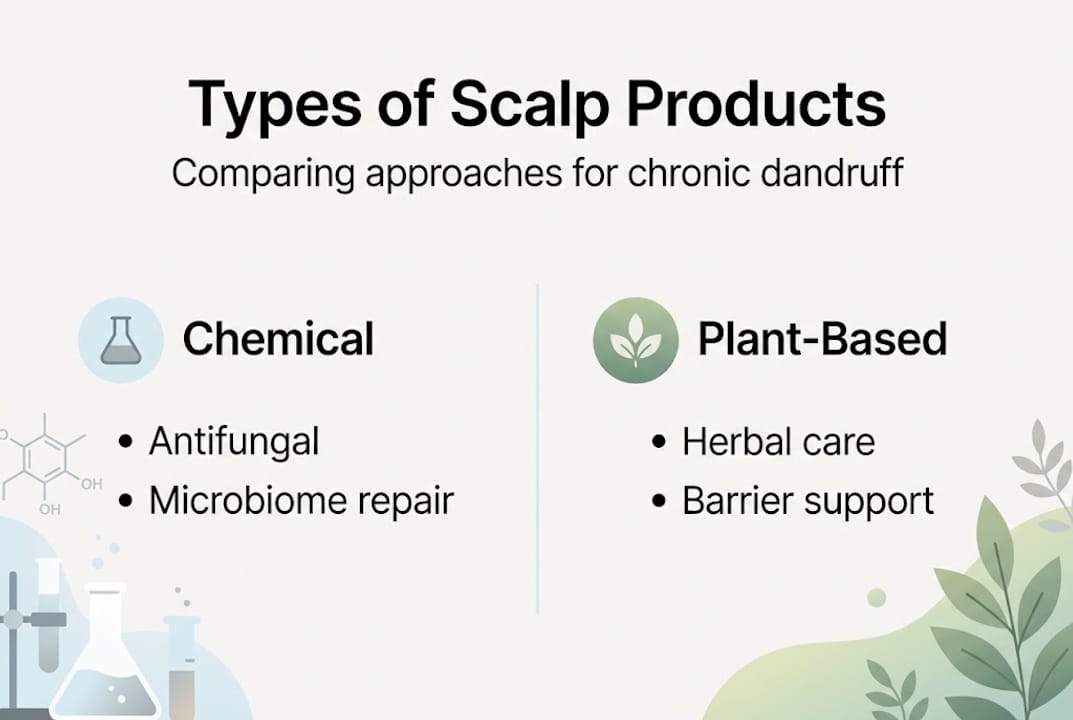
Not all scalp products are equal, and what works best depends on where you are in the cycle, your scalp type and how your skin responds.
| Product category | Effectiveness | Limitations | Best suited for |
|---|---|---|---|
| Chemical antifungals | High for acute symptoms | Potential resistance, dryness with prolonged use | Active flares |
| Microbiome-friendly | Sustained long-term balance | Slower initial response | Maintenance phase |
| Plant-based actives | Promising in trials | Variable quality across brands | Long-term or sensitive scalps |
The case for plant-based options is stronger than many people expect, with several showing meaningful clearance rates in controlled trials rather than being merely cosmetic. Key considerations:
- Antifungals work fast but can cause dryness and may lose effectiveness with prolonged use.
- Microbiome-friendly formulas support the whole ecosystem, making them the better choice for maintenance once symptoms are controlled.
- Plant-based actives such as eucalyptus offer multi-target action, including antifungal and anti-inflammatory effects, with good tolerability for sensitive scalps.
Choosing the right product means being honest about where your scalp is right now. Active flaking needs fast-acting support. Stable or recovering scalps benefit most from microbiome-focused maintenance.
Getting results: practical tips
Reading a product label well is the first practical skill. Look for active ingredients listed clearly: ketoconazole, piroctone olamine, zinc pyrithione or ceramides. Avoid products with sulphates, heavy fragrance or an undisclosed pH. Fragrance is a common hidden irritant.
- Start with an antifungal shampoo two to three times a week during an active flare. Leave it on for three to five minutes before rinsing.
- Once flaking reduces, shift to a low-pH maintenance routine used less frequently. Not daily.
- Introduce a microbiome-supporting serum, applied to a dry scalp, to maintain conditions that discourage regrowth.
- Add a barrier repair product if your scalp feels dry or tight after washing. Look for ceramides or plant-derived lipids.
- Track your response every two weeks and adjust frequency up or down based on what you observe.
Results take time. Consistent, evidence-based routines produce meaningful reductions in scaling and redness over roughly 4 to 12 weeks. That is real, measurable progress, but it requires patience.
Pro Tip: Scalp condition is also influenced by diet, stress and sleep. Keeping a simple log of flare-ups alongside lifestyle factors reveals patterns that make your routine far more targeted.
If your scalp is not responding after 12 weeks of consistent treatment, or you notice spreading patches, sores or hair loss, seek professional review. Some cases are misdiagnosed or involve underlying conditions needing specific management.
Why lasting scalp health means going beyond quick fixes
Most people approach dandruff the same way every time. They reach for a medicated shampoo, get short-term relief, then find themselves back where they started a few weeks later. That cycle is predictable, because symptom suppression alone does not address the environment that allowed the imbalance to develop.
Poor tolerance of harsh antifungals consistently pushes people toward gentler, long-term solutions, and that shift reflects what the research supports. The scalp has a remarkable capacity to self-regulate when given the right conditions. The goal of good scalp care is to restore those conditions, then step back.
The distinction between scalp care and hair care matters here. Products marketed for hair cosmetics are designed for the strand, not the skin. Genuine scalp care requires pH awareness, microbiome literacy, and a willingness to reduce product volume over time rather than swap one daily dependency for another. Patience is not a soft recommendation. It is a requirement.
Gentle, evidence-based products for real results
Victory Serums is pharmacist-developed and built around the Reset, Rebalance, Restore framework, which moves beyond cosmetic symptom control to address the functional drivers of scalp imbalance.

The scalp serum is formulated for targeted, low-frequency use during flares, designed to calm irritation without disrupting natural recovery. Browse the full range of dandruff solutions to find the right starting point for your scalp type and current condition.
Frequently asked questions
How quickly do evidence-based scalp products work?
A visible reduction in flakes and redness is achievable within roughly 4 to 12 weeks of consistent use, with results best sustained through microbiome-focused maintenance afterwards.
Are plant-based products as effective as chemical antifungals?
Good-quality trials show plant-based formulas can be comparable for symptom relief in many people, particularly for long-term or maintenance use.
What ingredients should I look for?
Prioritise ketoconazole, piroctone olamine or ceramides as first-line actives, and avoid products with heavy fragrance or sulphate-based detergents.
When should I see a doctor?
Seek review if symptoms persist beyond 12 weeks of consistent treatment, or if you notice worsening patches, sores or hair loss that may signal misdiagnosis or an underlying condition.
Victory Serums products are designed to support scalp comfort and scalp health practices. They are not intended to diagnose, treat, cure or prevent medical conditions. If symptoms are severe, persistent, cracked, bleeding or worsening, seek guidance from a qualified healthcare professional.
Recommended
- Scalp pH Balance Guide: Restore Microbiome Harmony 2026 – Victory Serums
- Understanding anti-dandruff agents: sustainable relief – Victory Serums
- What causes scalp flakes? Malassezia affects 80% of cases – Victory Serums
- Australian scalp care: microbiome balance for 2026 – Victory Serums

Get the free 1-Week Guide to Scalp Health and uncover the real cause of your flakes.
Download the free guide
Matt Heron is the founder of Victory Serums, an Australian microbiome focused scalp care brand specialising in severe dandruff, yeast imbalance and chronic scalp instability. With more than four decades of personal experience managing persistent dandruff and extensive study of scalp biology, skin pH and barrier function, he developed targeted scalp serums that work within minutes or as leave in treatments. His Reset, Rebalance and Restore approach challenges daily anti-dandruff shampoo dependence and is helping redefine the way chronic dandruff is treated.