

Updated July 2026
In Brief:
- Targeted, microbiome-friendly routines address underlying scalp imbalance rather than just surface symptoms.
- Antifungal ingredients like zinc pyrithione and ketoconazole effectively manage Malassezia-driven dandruff at proper pH levels.
- Over-washing and improper product use can worsen scalp issues; consistent, gentle, pH-balanced care supports long-term health.
Around half of all adults in Australia deal with chronic scalp issues, from persistent flaking to relentless itching. Most reach for the nearest anti-dandruff shampoo and repeat the cycle indefinitely. The problem is not effort. It is approach. A targeted, microbiome-friendly hydration routine addresses the functional drivers behind scalp imbalance, not just the surface symptoms. This guide walks through the science, the right products, a practical step-by-step routine, and how to troubleshoot when things do not go to plan. The goal is lasting relief, not daily dependency.
Table of Contents
- Understanding your scalp: Causes, symptoms, and misconceptions
- What you need: Microbiome-friendly products and preparation
- Step-by-step scalp hydration routine for lasting relief
- Troubleshooting and adapting: Common mistakes, barriers, and long-term support
- Why hydration and balance, not harsh suppression, deliver true scalp health
- Discover Victory Serums
- Frequently asked questions
Key Takeaways
| Point | Details |
|---|---|
| Target the microbiome | Balancing the scalp microbiome, not just suppressing symptoms, is key for long-term relief. |
| Use pH-balanced products | Low pH cleansers help maintain scalp hydration and defend against barrier damage. |
| Antifungals for dandruff | Treat with proven antifungal actives when dealing with persistent flakes or mild irritation. |
| Routine beats harshness | Gentle, regular care outperforms aggressive or frequent washing for scalp health. |
Understanding your scalp: Causes, symptoms, and misconceptions
Before diving into actionable steps, it is essential to understand what drives scalp discomfort and what sets apart different scalp issues.
The scalp is not just skin with hair growing out of it. It is a complex ecosystem. Sebaceous glands produce sebum, the scalp's natural oil. That sebum feeds a yeast called Malassezia, which lives on virtually every adult scalp. In balanced conditions, Malassezia is harmless. When it overgrows, it breaks down sebum into fatty acids that irritate the skin, trigger inflammation, and accelerate cell turnover. The result is flaking, itching, and redness. Malassezia yeast overgrowth accounts for up to 80% of dandruff cases worldwide.
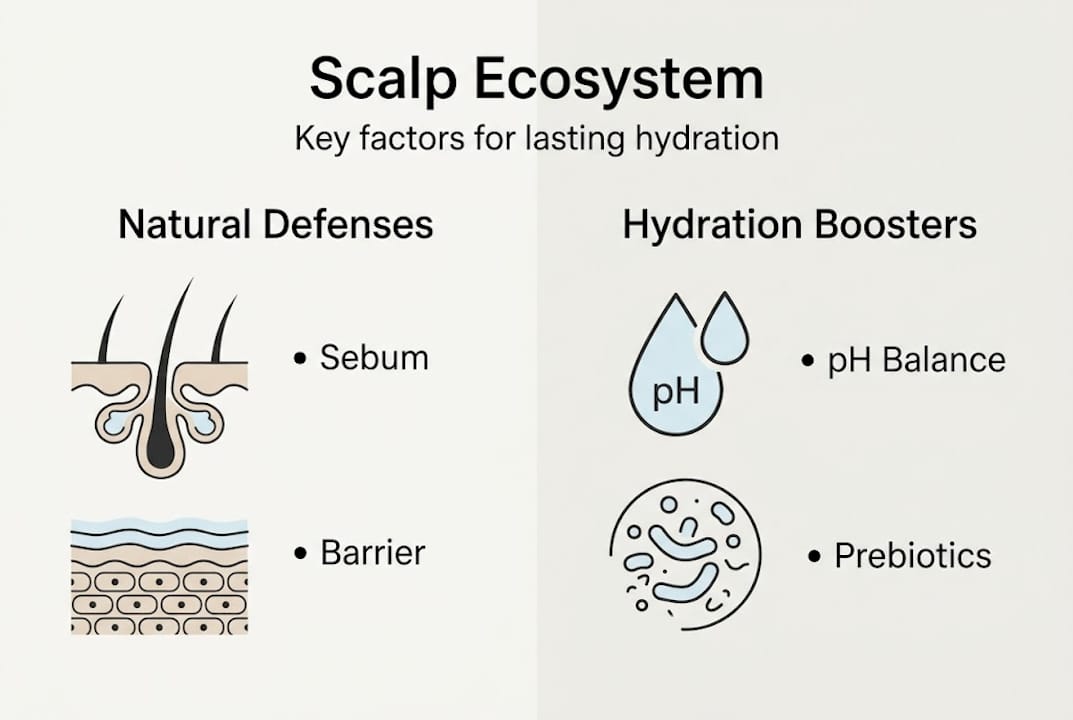
Understanding the difference between dry scalp and dandruff matters because the treatment approach differs.
| Feature | Dry scalp | Dandruff |
|---|---|---|
| Flake appearance | Small, white, dry | Larger, oily, yellowish |
| Scalp feel | Tight, dry | Greasy or normal |
| Primary cause | Dehydration, cold air | Malassezia overgrowth |
| Treatment focus | Gentle moisturisation | Antifungal actives |
A common misconception is that an oily scalp cannot be dehydrated. It can. Excess oil production is sometimes a compensatory response to a disrupted barrier, not a sign of adequate hydration. The scalp produces more sebum when its surface is stripped or irritated, which feeds more Malassezia and worsens the cycle. Understanding scalp care vs hair care is key here because most people treat their scalp the same way they treat their hair, which is a different tissue entirely.
Other common myths worth addressing:
- Washing more often clears dandruff. Daily washing with harsh shampoos strips the scalp barrier, disrupts pH, and can worsen flaking.
- Dandruff means poor hygiene. Malassezia overgrowth is driven by biology, not cleanliness.
- Stronger products work better. High-concentration actives used too frequently can disrupt the microbiome further.
- Conditioner helps the scalp. Most conditioners are formulated for hair fibre, not scalp skin, and can occlude follicles.
"The science behind itchy scalp shows that barrier disruption and microbiome imbalance are the core drivers, not surface-level dryness or dirt."
Getting the diagnosis right is the first step. Treating dry scalp with antifungals will not help. Treating dandruff with moisturiser alone will not resolve Malassezia overgrowth. Know what you are dealing with before building your routine.
What you need: Microbiome-friendly products and preparation
Now that you know the causes and types of scalp issues, here is what you need to build an effective routine.
The active ingredients in your products matter more than the brand name on the bottle. For dandruff and Malassezia-related issues, look for these proven actives:
- Zinc pyrithione: Antifungal and antibacterial. Reduces Malassezia populations without being overly aggressive.
- Ketoconazole: A stronger antifungal, typically used for moderate to severe cases or flare-ups.
- Selenium sulphide: Slows cell turnover and reduces Malassezia. Effective but can be drying with overuse.
- Piroctone olamine: A gentler antifungal option, well tolerated for sensitive scalps and regular use.
Alongside actives, pH-balanced, gentle cleansers in the pH 4 to 7 range are core building blocks for any scalp hydration routine. The scalp's natural pH sits between 4.5 and 5.5. Products formulated above pH 7 disrupt the acid mantle, weaken the barrier, and create conditions where Malassezia thrives. A scalp pH balance guide can help clarify which products sit within the right range.
| Product type | What to look for | What to avoid |
|---|---|---|
| Shampoo | pH 4.5 to 6, antifungal actives | Sulphates, high-alkaline formulas |
| Serum | Lightweight, leave-in compatible | Heavy oils on scalp, occlusive agents |
| Conditioner | Apply to lengths only | Direct scalp contact |
For anti-dandruff agent insights, understanding how each active works helps you rotate or combine them more strategically rather than defaulting to one product indefinitely.
Preparation steps before starting:
- Patch test new products. Apply a small amount behind the ear or on the inner wrist. Wait 24 hours before full application.
- Use lukewarm water. Hot water strips sebum and disrupts the scalp barrier. Lukewarm is enough to cleanse effectively.
- Section the scalp. Parting hair into sections ensures product reaches the scalp directly rather than coating the hair shaft.
Pro tip: If you are unsure whether your shampoo's pH is scalp-friendly, a basic pH strip test at home gives a reliable reading. Anything above pH 7 is worth reconsidering.
Step-by-step scalp hydration routine for lasting relief
With your products and tools ready, here is each routine step broken out in practical detail.
-
Pre-wash preparation. Lightly detangle hair to reduce mechanical stress on the scalp. If using a treatment oil such as jojoba or squalane, apply it to the scalp 10 to 15 minutes before washing. This softens buildup and provides a buffer against cleansing.
-
Cleanse with a pH-balanced antifungal shampoo. Apply to a wet scalp. Use fingertip pads, not nails, to massage gently in circular motions for 60 to 90 seconds. This mechanical action improves circulation and ensures even distribution of actives. Rinse with lukewarm water thoroughly.
-
Skip the scalp conditioner. Apply conditioner to hair lengths and ends only. Keeping conditioner off the scalp prevents follicle occlusion and maintains the clean surface you just created.
-
Post-wash hydration. Once the scalp is towel-dried, apply a targeted serum or lightweight leave-in treatment directly to the scalp. This step supports barrier repair and locks in moisture without adding excess weight.
-
Set your frequency. Gentle, pH-balanced cleansing 2 to 3 times per week with antifungal actives and lukewarm water forms the evidence-based core routine for most adults. Adjust based on how oily your scalp becomes, your workout schedule, and seasonal climate shifts.
Statistic: Studies show that washing more than once daily significantly increases scalp barrier disruption and Malassezia rebound in susceptible individuals.
Pro tip: Track your scalp condition weekly. Note flaking levels, oiliness, and any itching on a simple scale of 1 to 5. Patterns become clear within 2 to 3 weeks and help you fine-tune frequency. See microbiome-friendly prevention tips for a structured tracking approach.
Troubleshooting and adapting: Common mistakes, barriers, and long-term support
Even the best routine can hit snags. Here is how to stay on track and recognise when to adapt.
The most common mistake is confusing dry scalp with dandruff. Distinguishing dry scalp from dandruff using simple checks, such as flake size, colour, and scalp feel, prevents weeks of misdirected treatment. Small, white, powdery flakes that fall easily suggest dry scalp. Larger, yellowish, oily flakes that stick to the scalp point to Malassezia-driven dandruff.
Common routine mistakes and how to fix them:
- Overwashing. Reduces sebum too aggressively, triggers rebound oil production, and disrupts pH. Scale back to 2 to 3 times per week.
- Using too much product. A small volume of a well-formulated serum or shampoo is more effective than a large amount of a mediocre one. Less is more.
- Skipping the post-wash serum. Cleansing without barrier support leaves the scalp vulnerable between washes.
- Applying conditioner to the scalp. This is one of the most common errors and can worsen oiliness and follicle congestion.
For those managing an oily scalp, hydration is still essential. Stripping oil without replacing moisture drives more sebum production. The fix is not less hydration but smarter hydration: lightweight, non-occlusive serums rather than heavy oils.
"Diet and stress directly influence scalp outcomes. Low GI eating patterns and omega-3 intake reduce systemic inflammation, which in turn calms scalp reactivity."
Long-term support strategies:
- Low GI diet and omega-3 foods. Reduces systemic inflammation that feeds scalp reactivity.
- Stress management. Cortisol spikes increase sebum production and worsen Malassezia conditions.
- Gentle hair care habits. Avoid tight hairstyles, excessive heat, and mechanical friction.
If symptoms persist after 6 to 8 weeks of a consistent microbiome-friendly routine, or worsen rapidly, consult a dermatologist. Some cases involve seborrhoeic dermatitis or psoriasis that require prescription-level intervention. Australian scalp care resources can also help identify whether your environment is contributing to flare-ups.
Why hydration and balance, not harsh suppression, deliver true scalp health
Here is the perspective that most anti-dandruff marketing avoids: suppression is not the same as resolution.
Traditional antifungal approaches, while effective short-term, can disrupt microbiome balance over time. Daily use of high-strength antifungals reduces Malassezia populations temporarily. But it also reduces the diversity of the scalp's broader microbial community. When treatment stops, Malassezia rebounds, often more aggressively. This is the dependency cycle that keeps people buying the same shampoo for decades without resolution.
The more sustainable path is barrier-first. Prebiotics, antioxidants, and low pH formulations support the scalp's own self-regulation rather than overriding it. The scalp, like the gut, functions best when its microbial community is diverse and balanced, not chemically suppressed. Microbiome prevention perspective reinforces that the goal is to reduce product dependency over time, not extend it. Science is increasingly clear: chronic scalp issues respond best to holistic, barrier-first routines that work with the microbiome rather than against it.
Discover Victory Serums
Ready to put this routine into practice with real, science-backed tools? Victory Serums offers pharmacist-developed products designed specifically for this approach.

The dandruff control shampoo is formulated at a microbiome-compatible pH with targeted antifungal actives. For post-wash barrier support, the scalp hydration serum delivers lightweight, leave-in hydration without disrupting the scalp's natural balance. Both are built on the Reset Rebalance Restore framework, designed to reduce product dependency over time. Explore the full scalp relief range to find the right combination for your scalp type and severity.
Pharmacist-Backed. Microbiome-Friendly. Australian Made.
Frequently asked questions
Can scalp hydration routines help both dry scalp and dandruff?
Yes, hydration routines support both conditions, but dandruff also requires antifungal actives to target Malassezia. Dry scalp benefits most from gentle moisturisation alone, while dandruff needs a combined approach.
How often should I wash my scalp if I have chronic irritation?
Two to three times weekly with a gentle, pH-balanced, microbiome-friendly shampoo suits most adults. Adjust frequency based on oiliness, climate, and activity level.
What is the ideal scalp pH and why does it matter?
Healthy scalp pH sits between 4.5 and 5.5. Staying within this acidic range maintains the barrier, supports microbial balance, and preserves hydration.
Do oily scalps need hydration?
Yes. Oily scalps can be dehydrated, and stripping oil without replacing moisture drives more sebum production. Lightweight, non-occlusive hydration is appropriate for all scalp types.
Recommended
- Scalp Health and Hair - Why It Matters for Relief - Victory Serums
- Dry scalp remedies list for effective relief in 2026 - Victory Serums
- Understanding anti-dandruff agents: sustainable relief - Victory Serums
- Fast Acting Dandruff Relief for Oily Scalp in 2026 - Victory Serums

Get the free 1-Week Guide to Scalp Health and uncover the real cause of your flakes.
Download the free guide
Matt Heron is the founder of Victory Serums, an Australian microbiome focused scalp care brand specialising in severe dandruff, yeast imbalance and chronic scalp instability. With more than four decades of personal experience managing persistent dandruff and extensive study of scalp biology, skin pH and barrier function, he developed targeted scalp serums that work within minutes or as leave in treatments. His Reset, Rebalance and Restore approach challenges daily anti-dandruff shampoo dependence and is helping redefine the way chronic dandruff is treated.