
Flaking, itching, or scalp irritation can make daily life uncomfortable, but relief might start with understanding your scalp's hidden ecosystem. Beneath every strand, trillions of microorganisms shape whether your hair thrives or struggles. Australian humidity, water quality, and product choices all play a role, so finding gentle, microbiome-friendly solutions is more than a trend. It is a pathway to lasting scalp health and real, visible comfort.
Updated March 2026
Table of Contents
- The Science of Scalp Health and Microbiome
- Types of Scalp Concerns and Their Causes
- How a Healthy Scalp Affects Hair Growth
- Risks of Harsh Ingredients and Wrong Routines
- Benefits of Microbiome-Friendly Scalp Treatments
- Discover Victory Serums
- FAQ
- Recommended
Key Takeaways
| Point | Details |
|---|---|
| Scalp Microbiome Health | A balanced scalp microbiome is essential for healthy hair growth and preventing issues like flaking and irritation. |
| Impact of Dysbiosis | Dysbiosis disrupts the scalp's microbial balance, leading to problems such as dandruff, inflammation, and hair loss. |
| Microbiome-Friendly Treatments | Gentle, microbiome-friendly products promote scalp health by supporting beneficial microbes and restoring balance. |
| Personalised Care | Individualised scalp care is crucial; treatments must address specific microbial profiles for effective relief and restoration. |
The Science of Scalp Health and Microbiome
Your scalp is not just skin. It is an ecosystem. Trillions of microorganisms live there, and they profoundly affect whether you experience flaking, itching, or healthy hair growth.
This is not new science. Researchers have spent years mapping how these microbial communities work and what happens when they fall out of balance.
Understanding the Scalp Microbiome
The scalp microbiome consists of bacteria, fungi, and other microorganisms that form a balanced community. When this community is in equilibrium, your scalp stays healthy and your hair grows normally.
When balance breaks down, called dysbiosis, problems emerge. Excess oil production, dandruff, irritation, and even hair loss can follow.
Recent research shows that scalp microbiota composition directly influences sebum secretion, inflammation levels, and hair follicle function. The specific bacterial and fungal populations determine whether your scalp thrives or struggles.
A balanced scalp microbiome is the foundation for healthy hair and irritation-free skin.
What Happens When Balance Breaks
Dysbiosis on the scalp creates a cascade of problems:
- Inflammatory response: Harmful microbes trigger immune activity, causing redness and itching
- Excess sebum: Certain bacterial overgrowth stimulates oil production
- Flaking and dandruff: Dead skin cells accumulate as the microbiome destabilises
- Weakened hair growth: Follicles receive less nourishment from an inflamed, imbalanced scalp
Conditions like seborrheic dermatitis and alopecia areata are directly linked to microbial dysbiosis and inflammatory responses.
The scalp's pH, moisture levels, and natural oils all influence which microbes thrive. Australian humidity, water chlorination, and product choices can all tip this balance.
Restoring Microbiome Balance
The good news: your microbiome can recover. Research shows that targeted interventions work.
Studies demonstrate that specific microbial strains improve scalp health when reintroduced. Heat-killed probiotics have shown clinical results including reduced dandruff, decreased oil secretion, and improved hair growth factors.
Gentle, non-irritating formulations allow beneficial microbes to flourish whilst harsh treatments destroy the ecosystem you are trying to rebuild.
This is why microbiome-friendly treatments matter. They work with your scalp's natural systems rather than against them.
- Avoid harsh sulphates that strip natural oils and kill beneficial bacteria
- Choose formulations designed to support microbial balance, not disrupt it
- Understand that relief often takes consistency. Microbiome restoration is not instant
Pro tip: Consistency beats intensity. Gentle, microbiome-friendly treatments applied regularly outperform harsh products that damage the ecosystem you are rebuilding.
Types of Scalp Concerns and Their Causes
Not all scalp problems are the same. Dandruff, irritation, flaking, and hair loss can stem from completely different causes, and understanding which one you have changes everything about treatment.
Dandruff and Microbial Dysbiosis
Dandruff is the most common scalp concern Australians face. It is not just dry skin or poor hygiene. It is a sign that microbial dysbiosis affects your scalp.
When harmful microbes like Staphylococcus overgrow, they trigger inflammation and accelerated skin cell turnover. Your scalp sheds dead cells faster than normal, creating visible flakes.
The crucial point: dandruff means your scalp's microbial balance is disrupted. Standard anti-dandruff shampoos often kill microbes indiscriminately, which can make the dysbiosis worse long-term.
Seborrheic Dermatitis and Other Inflammatory Conditions
Seborrheic dermatitis goes beyond dandruff. It involves more intense inflammation, redness, and often affects the face, ears, and chest too.
Other serious scalp conditions include:
- Alopecia areata: Patchy hair loss linked to immune dysfunction and microbial imbalance
- Scalp psoriasis: Chronic inflammation with thick, silvery scales
- Folliculitis decalvans: Bacterial infection leading to permanent scarring and hair loss
- Central centrifugal cicatricial alopecia: Progressive scarring alopecia often linked to hair care practices
Each condition involves distinct microbial imbalances and inflammatory pathways. What works for one may not work for another.
| Scalp Issue | Typical Triggers | Primary Signs | Distinctive Feature |
|---|---|---|---|
| Dandruff | Microbial imbalance, oily skin | Flaking, mild itching | Rapid shedding of skin cells |
| Seborrheic dermatitis | Yeast overgrowth, oily scalp | Redness, intense itching | Affects scalp and face/chest |
| Alopecia areata | Immune dysfunction, genetics | Patchy hair loss | Circular bald patches |
| Scalp psoriasis | Immune system, genetics | Thick silvery scales | Chronic, stubborn inflammation |
| Folliculitis decalvans | Bacterial infection | Scarring, hair loss | Permanent scarring of follicles |
| Central centrifugal cicatricial alopecia | Hair practices, genetics | Central hair thinning | Progressive scalp scarring |
Understanding your specific scalp concern, not just "itchy scalp", is essential for effective treatment.
What Causes Scalp Problems to Develop
Intrinsic factors (your biology):
- Genetics and family history
- Age and hormonal changes
- Immune system sensitivity
- Natural skin barrier strength
Extrinsic factors (your environment and choices):
- Water quality and chlorination
- Heat styling and tight hairstyles
- Product ingredients and frequency
- Climate and humidity levels
- Stress and sleep quality
- Diet and overall health
Pro tip: Track what makes your scalp worse, whether stress, specific products, weather, or diet, because your personal triggers determine which treatment will actually work for you.
How a Healthy Scalp Affects Hair Growth
Your hair does not grow in isolation from your scalp. What happens on your scalp directly determines whether your hair thrives, stagnates, or falls out.
The Connection Between Scalp Health and Hair Follicles
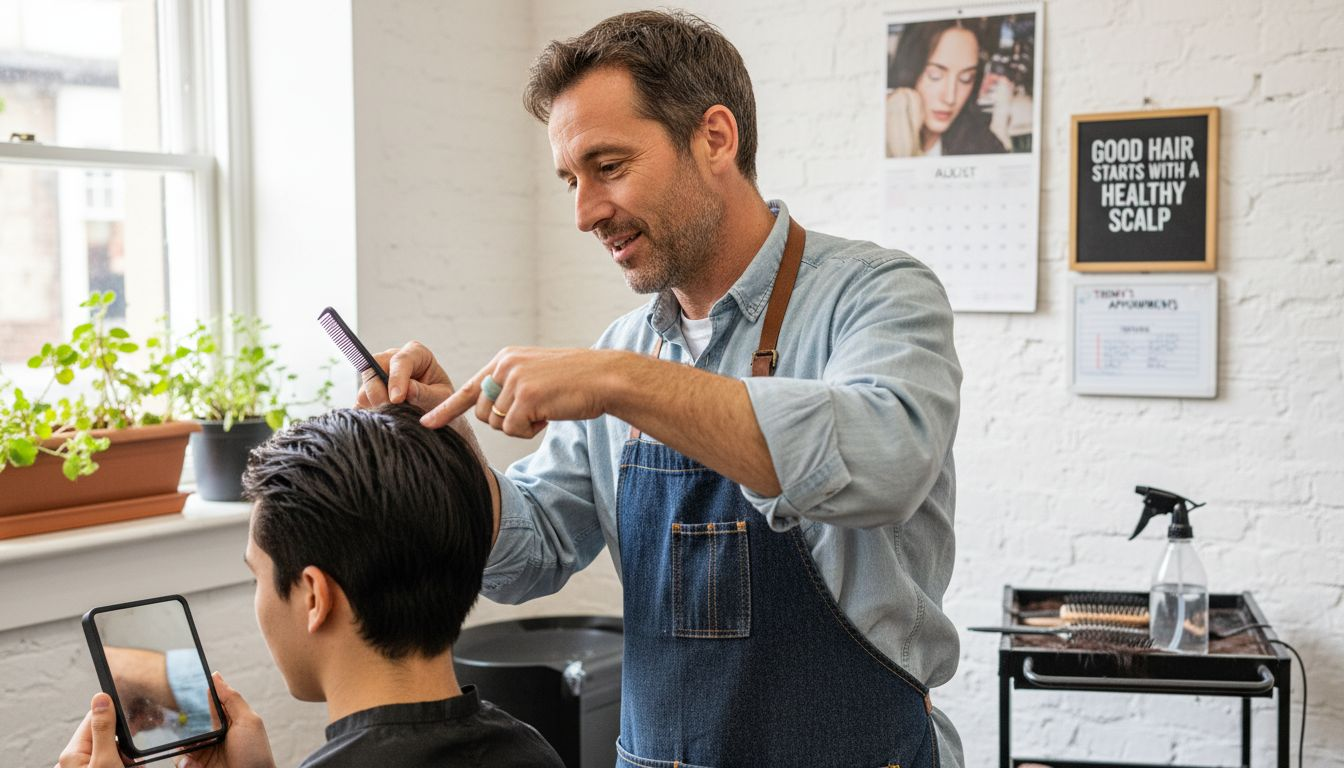
Hair follicles are living structures that depend on scalp health to function properly. When your scalp microbiome is balanced, it sends growth signals directly to your hair roots.

Research demonstrates that scalp microbiota balance upregulates growth factors including IGF-1R, VEGF, and KGF, molecules that trigger hair cell division and regeneration.
A healthy scalp microbiome is the foundation for dense, strong hair growth.
How Scalp Inflammation Disrupts Hair Cycles
Hair grows in cycles: anagen (growth), catagen (transition), and telogen (resting and shedding). Scalp dysbiosis disrupts this natural rhythm.
Inflammation shifts follicles out of the growth phase prematurely. This causes:
- Telogen effluvium: Excessive shedding as hair enters resting phase too early
- Reduced hair density: Fewer follicles actively growing at any given time
- Thinner, weaker hair: Follicles producing lower-quality strands
- Slowed regrowth: Recovery takes longer between shedding cycles
Restoring Growth Through Scalp Balance
Research shows that microbiome-targeted treatments restore hair growth cycles by rebalancing microbial communities and reducing inflammation.
The process is not instant. Hair grows on its own timeline, typically 6 to 12 months to see visible density changes. But the foundation shifts immediately when scalp health improves.
Pro tip: Prioritise scalp health before investing in hair treatments, as a balanced, inflammation-free scalp creates the conditions for any hair intervention to actually work.
Risks of Harsh Ingredients and Wrong Routines
Your scalp care routine either supports your microbiome or destroys it. Many common products and practices damage the very ecosystem you are trying to heal.
How Harsh Ingredients Damage Your Scalp Microbiome
Sulphates, alcohols, and aggressive surfactants strip your scalp of natural oils and beneficial microbes simultaneously. When you use harsh cleansers that damage scalp microbiome balance, you create a void. Harmful microbes colonise the damaged ecosystem faster than beneficial ones can recover.
Common culprits include:
- Sodium lauryl sulphate (SLS): Strips natural oils and disrupts barrier function
- High alcohol content: Dries and irritates the scalp intensely
- Strong fragrances: Often irritate sensitive, inflamed scalps further
- Antifungal actives used daily: Kill both harmful and beneficial fungi indiscriminately
Aggressive treatments may temporarily reduce symptoms whilst permanently damaging the microbiome underneath.
The Problem With Over-Washing and Harsh Routines
Wrong routines include:
- Washing daily with harsh shampoos
- Using water that is too hot
- Scrubbing aggressively with nails or rough tools
- Applying multiple strong treatments simultaneously
- Switching products constantly without giving them time to work
Pro tip: Stop all harsh treatments and switch to one gentle, microbiome-friendly product for at least six weeks before evaluating results. Switching too frequently prevents your scalp from actually healing.
Benefits of Microbiome-Friendly Scalp Treatments
Microbiome-friendly treatments work differently from traditional scalp products. Instead of attacking your scalp, they work with your natural ecosystem to restore balance and lasting relief.
How Microbiome-Friendly Treatments Restore Scalp Health
These treatments work through multiple mechanisms:
- Supporting beneficial bacteria: Prebiotics and postbiotics feed good microbes
- Reducing inflammation: Gentle actives calm immune responses without harming the ecosystem
- Restoring barrier function: Formulations strengthen your scalp's natural protective layer
- Balancing sebum production: Normalised oil levels reduce flaking and greasiness
- Supporting hair follicles: A healthy microbiome sends growth signals to hair roots
Microbiome-friendly treatments heal your scalp from the inside out, not just mask symptoms.
Why Personalised Care Matters
Your scalp's specific microbial profile is unique. What works for oily, flaky scalps differs from dry, irritated scalps. The microbes involved are different. The inflammatory profiles differ. The treatment approach must too.
The Sustainable Alternative
Traditional scalp treatments often create cycles of dependency. Microbiome-friendly approaches break this cycle. Your scalp gradually becomes less dependent on external intervention as the ecosystem stabilises. You are not managing a chronic condition indefinitely. You are actually healing it.
Pro tip: Commit to one microbiome-friendly treatment routine for at least 8 to 12 weeks before expecting full results, as scalp microbiota restoration is gradual but progressively improves once you give it consistency.
Discover Victory Serums
Victory Serums offers pharmacist-formulated treatments designed specifically to support and reset your scalp's delicate microbiome. Our range targets your unique scalp concerns with effective, gentle ingredients that reduce inflammation, balance sebum production, and promote hair follicle health without harsh chemicals.

The Dandruff Control Intensive Scalp Serum targets yeast imbalance and scalp inflammation with minimal application, reducing fungal load without creating dependency. The Microbiome-Friendly Conditioning Shampoo cleanses at a pH that supports the acid mantle and preserves beneficial organisms. The free 1-Week Scalp Health Guide provides the structured framework for restoring scalp balance in the right sequence, giving follicles the environment they need to support healthy hair growth.
FAQ
What is the scalp microbiome, and why is it important?
The scalp microbiome consists of billions of microorganisms that live on your scalp, including bacteria and fungi. A balanced microbiome is crucial for scalp health and affects hair growth, as it helps maintain pH levels, moisture, and natural oils without irritation.
What causes dandruff and how can I treat it?
Dandruff is often caused by microbial dysbiosis, where harmful microbes overgrow and trigger inflammation. To treat it effectively, use gentle, microbiome-friendly shampoos that support beneficial bacteria rather than harsh anti-dandruff products that may worsen the imbalance.
How does scalp health affect hair growth?
A healthy scalp creates an optimal environment for hair follicles to thrive. When the scalp is inflamed or imbalanced, it can lead to stunted hair growth, shedding, or thinning. Restoring scalp health through microbiome balance can enhance hair growth and density.
What ingredients should I avoid in scalp care products?
Avoid harsh ingredients like sulphates, alcohol, and strong fragrances, as they can strip natural oils and damage the scalp microbiome. Instead, look for gentler formulations that preserve the scalp's barrier function and support microbial balance.
Recommended
- Scalp pH Part 1: why scalp pH matters more than most people realise
- What is a healthy scalp pH and why it matters long term
- Why less hair product can mean a healthier scalp
- Gut health and scalp stability: the role of fermented foods

Get the free 1-Week Guide to Scalp Health and uncover the real cause of your flakes.
Download the free guide
Matt Heron is the founder of Victory Serums, an Australian microbiome focused scalp care brand specialising in severe dandruff, yeast imbalance and chronic scalp instability. With more than four decades of personal experience managing persistent dandruff and extensive study of scalp biology, skin pH and barrier function, he developed targeted scalp serums that work within minutes or as leave in treatments. His Reset, Rebalance and Restore approach challenges daily anti-dandruff shampoo dependence and is helping redefine the way chronic dandruff is treated.