

Updated July 2026
In Brief:
- Chronic dandruff comes from microbial imbalance involving Malassezia, not simple dryness.
- Overnight treatments work because extended contact time supports rebalancing without harsh concentrations.
- Success depends on consistency and on using less over time, not more.
Chronic dandruff does not just affect how you look. It disrupts sleep, creates constant self-consciousness, and for many Australians it becomes a cycle that never truly breaks. Most treatments focus on suppressing symptoms rather than addressing what is actually happening at the scalp. This guide takes a different approach, covering the science behind overnight scalp care, what you need to get started, a practical routine, and how to track real progress. The goal is lasting relief built on microbiome-friendly principles, not daily chemical dependency.
Why overnight scalp care matters
Dandruff is not simply dry skin. It is driven by an imbalance in the scalp's microbial environment, most commonly involving Malassezia. This yeast is naturally present on all scalps, but when conditions shift it proliferates and triggers an inflammatory response, producing flaking, itching and irritation.
Understanding dry vs oily scalp types matters here, because the two present differently and respond to different treatments. Dry dandruff produces fine, white flakes with a tight, itchy feeling. Oily dandruff produces larger, yellowish flakes and is more closely linked to excess sebum feeding Malassezia.
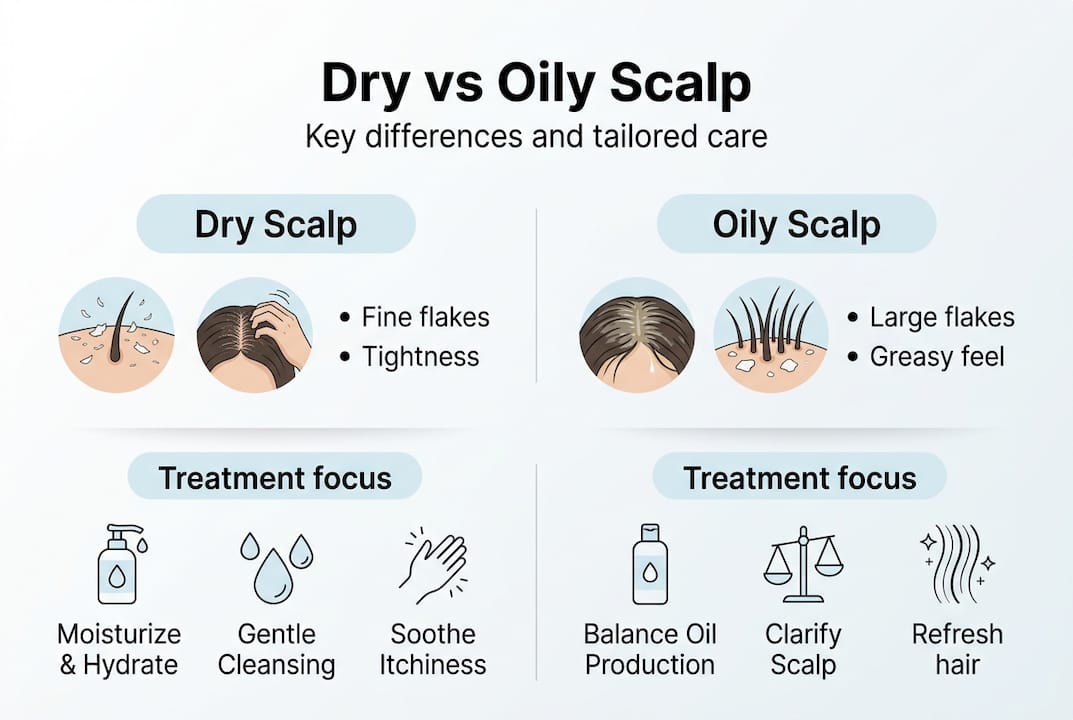
Overnight treatments work because extended contact time lets active ingredients interact with the scalp for longer. A rinse-off shampoo sits on the scalp for under two minutes. An overnight treatment has six to eight hours. That sustained contact supports a more thorough rebalance without requiring harsh concentrations of actives.
Clinical research shows that a sustained anti-dandruff protocol reduces inflammatory markers over a period of weeks, which confirms that effective treatment is measurable at a biochemical level, not just cosmetic.
| Feature | Dry dandruff | Oily dandruff |
|---|---|---|
| Flake appearance | Fine, white, powdery | Larger, yellowish, waxy |
| Scalp feel | Tight, itchy, parched | Greasy, heavy, inflamed |
| Primary driver | Moisture imbalance | Malassezia and excess sebum |
| Best overnight approach | Nourishing oils or serums | Targeted serums |
Supporting microbiome balance is not about eliminating all microbes. It is about restoring the right balance so the scalp can regulate itself.
What you will need: tools, ingredients and preparation
Preparing properly makes a real difference. Rushing the setup or skipping a patch test can lead to avoidable irritation, especially on a sensitive scalp.
Essential supplies:
- A soft-bristle scalp brush for gentle product distribution
- A shower cap or loose wrap to retain warmth and improve absorption
- A pillow protector or old pillowcase
- Your chosen overnight formula: serum or oil
- A gentle, sulphate-free shampoo for morning removal
Ingredients like tea tree oil and neem have genuine antifungal activity and can support the scalp microbiome, which makes them functional rather than merely traditional.
| Option | Best for | Key benefit | Caution |
|---|---|---|---|
| Tea tree oil (diluted) | Oily dandruff | Antifungal, microbiome-friendly | Must be diluted to 2 to 5% |
| Neem oil | Both types | Anti-inflammatory, calming | Strong odour, use sparingly |
| Clinical scalp serum | Oily flare-ups | Fast-acting, pH-formulated | Use weekly, not daily |
| Lightweight jojoba oil | Dry dandruff | Mimics sebum, non-comedogenic | Avoid if the scalp is very oily |
For those exploring dry scalp remedies, plant-based oils offer a gentler entry point. For oily dandruff, a targeted serum is more appropriate. Understanding sustainable anti-dandruff agents helps you choose ingredients that work without compromising long-term scalp function.
Pro Tip: Always patch-test any new overnight product on the inner arm for 24 hours before applying to the scalp. This matters especially for neem and tea tree formulations.
Step-by-step overnight routine
This routine is designed for weekly use during active flares, or fortnightly maintenance once symptoms settle. Adjust based on how your scalp responds.
- Cleanse gently. Wash with a sulphate-free shampoo, then allow the scalp to dry fully before applying the treatment.
- Section your hair. Use clips to expose the scalp in manageable parts so coverage is even.
- Apply to a dry scalp. For oily dandruff, apply a small amount of serum directly to the scalp with the dropper. For dry dandruff, use a lightweight oil such as jojoba. Applying to a dry scalp matters: water dilutes the formulation and lifts its low pH. Less is more.
- Distribute gently. Work the product across the scalp with fingertips or a soft brush in circular motions.
- Cover with a shower cap. This retains warmth and keeps product off your pillow.
- Protect your pillow with an old pillowcase as a backup.
- Rinse in the morning with a gentle, low-pH shampoo. Avoid hot water, which strips the acid mantle.
Safety note: If you experience burning, increased redness or swelling during or after treatment, remove the product immediately with cool water and do not repeat it. Consult a pharmacist or dermatologist before continuing.
Pro Tip: Keep a simple log of what you applied, when, and how your scalp responded the next morning. It will accelerate your ability to identify what actually works.
Checking results and refining your approach
Progress with microbiome-focused care is not always linear. Some weeks show clear improvement, others feel stagnant. That is normal.
Signs of genuine recovery:
- Reduced flake volume over consecutive treatments
- Less tightness or itching between wash days
- A scalp that feels balanced rather than swinging between oily and dry
- Longer intervals between flare-ups
Signs to address:
- Increased redness or swelling after treatment
- New or worsening irritation in areas not previously affected
- No change after four to six treatment cycles
Consistent treatment over weeks is required to see measurable change. Expecting a transformation after a single treatment is unrealistic.
For prevention tips that complement overnight care, reducing wash frequency and avoiding hot showers are two of the highest-impact changes. Those managing persistent oil should review oily scalp management alongside overnight treatment.
Common mistakes include applying too much product, treating too frequently, and switching formulas before giving any approach enough time. Patience and consistency outperform product-switching every time.
What most guides miss about sustainable scalp care
Most scalp care guides focus entirely on what to apply. Very few address how often, and almost none address when to stop. That gap is where most people get stuck.
The scalp has a remarkable capacity to self-regulate when given the right conditions. Chronic dandruff is not evidence that the scalp is broken. It is evidence that something in the environment, whether product overload, diet, stress or microbial imbalance, has disrupted its normal function.
The instinct to treat aggressively is understandable, but overusing actives, even gentle ones, can delay recovery by keeping the scalp in constant chemical exposure. Real progress comes from applying less over time, not more. The most consistent feedback from people who achieve lasting relief is not that they found the right product. It is that they learned to read their scalp and reduced their intervention accordingly.
Discover Victory Serums
After more than 45 years of living with severe dandruff, the founding insight behind Victory Serums is straightforward: overnight care only works when the product supports the scalp's biology rather than overriding it. The range is pharmacist-developed with pH awareness and microbiome compatibility at its core, built for targeted, low-frequency use rather than daily suppression.

The scalp serum is designed for targeted application during flares, not daily use. It supports barrier function and microbiome balance without disrupting the scalp's natural defences, and it is the practical next step for anyone moving from symptom management to genuine scalp health.
Frequently asked questions
Is an overnight scalp treatment suitable for sensitive skin?
Overnight treatments can be well tolerated by sensitive skin when you patch-test first and choose gentle ingredients. Tea tree and neem may suit sensitive scalps when properly diluted and applied at low frequency.
How long does it take to see results from overnight scalp care?
Many people notice reduced flaking and irritation within one to two weeks, with stronger results after three to four treatment cycles. Clinical evidence over a longer period shows measurable reductions in inflammatory markers, which confirms that consistency drives real improvement.
Can I use the same treatment for both dry and oily dandruff?
Dry and oily dandruff have different drivers and respond better to tailored ingredients. Lighter serums generally suit oily scalps, while richer oils suit dry scalps.
What if irritation gets worse after overnight treatment?
Stop immediately and consult a pharmacist or dermatologist. Increased irritation may signal an ingredient sensitivity or an underlying condition that needs professional assessment.
Victory Serums products are designed to support scalp comfort and scalp health practices. They are not intended to diagnose, treat, cure or prevent medical conditions. If symptoms are severe, persistent, cracked, bleeding or worsening, seek guidance from a qualified healthcare professional.
Recommended
- Fast Acting Dandruff Relief for Oily Scalp in 2026 – Victory Serums
- Dry scalp remedies list for effective relief in 2026 – Victory Serums
- Oily scalp management guide for microbiome balance in 2026 – Victory Serums
- Dandruff treatment step by step for lasting relief – Victory Serums

Get the free 1-Week Guide to Scalp Health and uncover the real cause of your flakes.
Download the free guide
Matt Heron is the founder of Victory Serums, an Australian microbiome focused scalp care brand specialising in severe dandruff, yeast imbalance and chronic scalp instability. With more than four decades of personal experience managing persistent dandruff and extensive study of scalp biology, skin pH and barrier function, he developed targeted scalp serums that work within minutes or as leave in treatments. His Reset, Rebalance and Restore approach challenges daily anti-dandruff shampoo dependence and is helping redefine the way chronic dandruff is treated.