

TL;DR:
- Pharmacist-formulated serums offer personalized control over ingredients, pH, and excipients to better manage scalp conditions. They meet strict pharmacopeial standards, ensuring quality and stability, which can lead to faster, more consistent clinical outcomes and long-term scalp health. This tailored approach allows for precise actives, microbiome protection, and therapeutic adjustments beyond what mass-market products can provide.
Pharmacist-formulated serums are scientifically customised preparations that give clinicians and consumers precise control over active ingredients, excipient selection, and pH to manage scalp conditions more effectively than mass-market alternatives. The advantages of pharmacist-formulated serums are most visible when standard products fail: when fragrance triggers a flare-up, when a concentration is too weak to produce results, or when preservatives disrupt the scalp microbiome. Compounding pharmacists, operating under pharmacopeial standards set by bodies such as the United States Pharmacopeia (USP) and the European Pharmacopoeia, build formulations from the ground up to match individual tolerance and therapeutic need. For anyone managing chronic dandruff, scalp irritation, or persistent flaking, this level of formulation control is not a luxury. It is the difference between a regimen that works and one that gets abandoned.
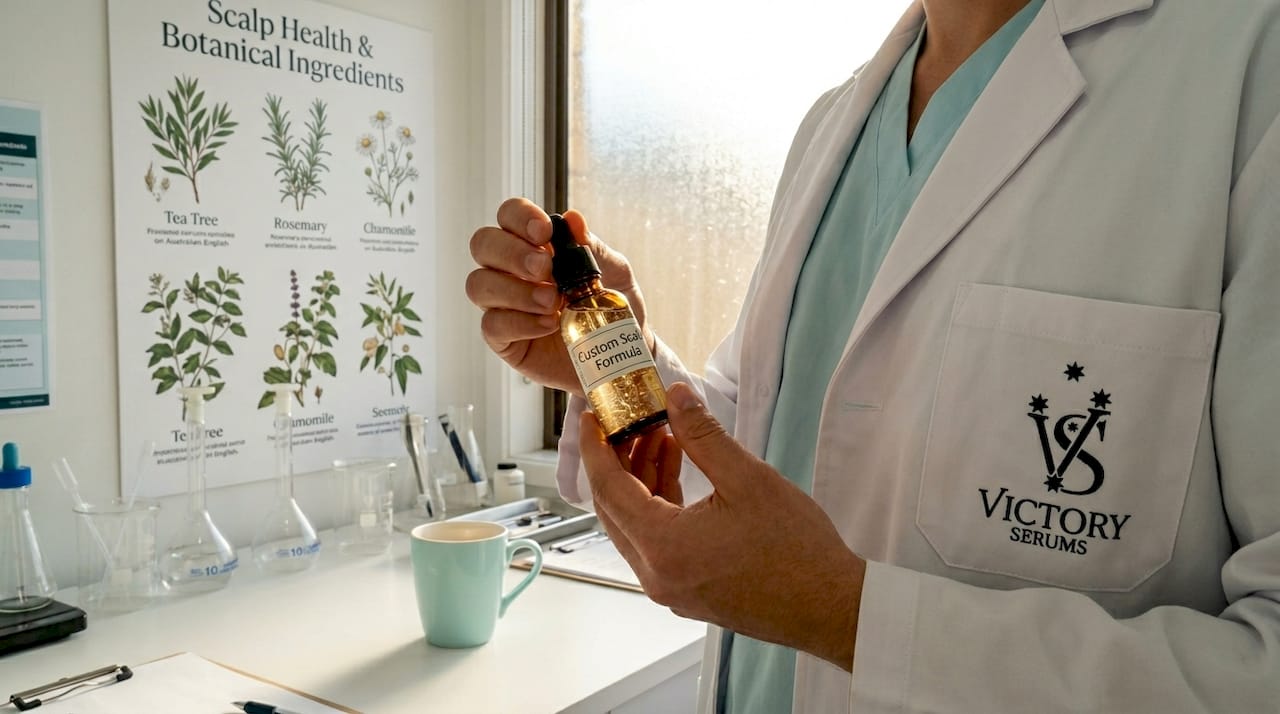
1. Advantages of pharmacist-formulated serums: customisation beyond the label
Mass-market serums are built for the broadest possible consumer base. That means average concentrations, standard preservative systems, and fragrance blends that make a product shelf-appealing but clinically imprecise. Pharmacist compounding inverts this model entirely.
Personalisation in pharmacist compounding involves adjusting not only active ingredients but also the vehicle and pH to fit individual tolerance, which lowers adverse events and supports sustained use. For scalp conditions specifically, this means a pharmacist can formulate a serum that sits at a pH compatible with the scalp’s natural acidic range of 4.5 to 5.5, uses a lightweight, non-occlusive vehicle suited to an oily scalp environment, and excludes every ingredient the patient has previously reacted to.
Key customisation levers pharmacists control include:
- Excipient selection: Removal of fragrances, essential oils, and unnecessary preservatives that commonly trigger contact dermatitis on the scalp
- Vehicle adjustment: Choosing between gels, serums, and lotions based on scalp oiliness and occlusion tolerance
- pH calibration: Matching formulation pH to the scalp’s optimal acidic range to support microbiome stability
- Active concentration: Setting therapeutic doses above or below what is available over the counter
Pro Tip: When consulting a compounding pharmacist for a scalp serum, ask specifically for a fragrance-free and essential-oil-free formulation. These two ingredient categories are the most common hidden triggers in scalp irritation, and their removal alone can produce measurable improvement within weeks.
2. Pharmaceutical-grade quality and stability management
The quality of a compounded serum is not governed by marketing claims. It is governed by pharmacopeial standards that define identity, purity, strength, stability, and microbiological quality as non-negotiable critical quality attributes.
Pharmacist compounding depends on pharmacopeial standards for identity, purity, strength, stability, and microbiological quality rather than marketing authorisation. This means a compounded scalp serum must meet the same rigorous quality benchmarks as a dispensed medicine, not the looser standards applied to cosmetic products. The practical implication for consumers is significant: you are receiving a preparation where every batch is accountable to documented quality criteria.
| Quality attribute | Mass-market cosmetic | Pharmacist-compounded serum |
|---|---|---|
| Active ingredient verification | Not required by law | Required per pharmacopeial standards |
| pH testing | Discretionary | Specified and documented |
| Microbiological testing | Brand-dependent | Governed by USP and European Pharmacopoeia |
| Stability documentation | Shelf-life set by manufacturer | Beyond-use dating assigned by compounder per USP guidelines |
| Excipient transparency | INCI listing only | Full formulation disclosure to prescriber |
Beyond-use dating (BUD) is based on chemical stability and sterility risk, assigned by the compounder for each preparation. This is distinct from a manufacturer’s expiration date, which is set for sealed, mass-produced batches under controlled factory conditions. For a scalp serum that contains active ingredients at therapeutic concentrations, verifying BUD documentation is a practical safeguard against potency loss.
3. Clinical outcomes: faster results and fewer treatment failures
The clinical case for pharmacy-formulated serum benefits rests on two outcomes: faster visible improvement and fewer regimen failures caused by intolerance.
Custom serum formulas can be adjusted to remove triggers without abandoning treatment plans, avoiding the trial-and-error product switching common with reactive scalp conditions. This is a structural advantage. When a patient reacts to an ingredient in a compounded serum, the pharmacist reformulates rather than the patient abandoning treatment. The therapeutic direction stays intact.
Clinical protocols using tailored excipient selection show measurable improvements in conditions including acne, rosacea, and pigmentation within two to three weeks. For scalp-specific presentations, this translates to faster reduction in flaking, less irritation, and improved skin barrier function. The mechanism is straightforward: fewer irritants in the formula means the scalp spends less energy managing inflammation and more time responding to the active ingredient.
Key clinical benefits include:
- Reduced contact dermatitis risk through fragrance and preservative elimination
- Faster visible improvement because the formula contains no competing irritants
- Improved adherence because the cosmetic experience (texture, scent, feel) is matched to patient preference
- Sustained treatment because formula adjustments replace product abandonment when reactions occur
- Therapeutic precision because active concentrations are set within the clinical window, not the commercial average
Pro Tip: If you have tried multiple over-the-counter scalp products without lasting results, ask a compounding pharmacist or dermatologist whether a personalised scalp regimen could address your specific triggers. The issue is often the excipient burden, not the active ingredient.
4. Targeted actives for specific scalp conditions
One of the most practical advantages of expert-formulated skincare is the ability to use actives at concentrations and in delivery formats that are simply not available in retail products.
Pharmacist formulations can precisely control actives such as Azelaic Acid up to 20%, Hydroquinone between 0.8% and 10%, and corticosteroids to optimise treatment of scalp conditions. Retail Azelaic Acid products typically cap at 10%. A compounded serum at 20% delivers a meaningfully different clinical effect for conditions like seborrhoeic dermatitis or scalp rosacea, where higher concentrations are required to produce a therapeutic response.
| Active ingredient | Retail concentration | Compounded concentration | Primary scalp application |
|---|---|---|---|
| Azelaic Acid | Up to 10% | Up to 20% | Seborrhoeic dermatitis, scalp rosacea |
| Hydroquinone | Not available OTC in Australia | 0.8% to 10% | Post-inflammatory pigmentation |
| Corticosteroids | Low-potency only | Tailored potency and vehicle | Scalp psoriasis, severe irritation |
| Salicylic Acid | 1% to 2% | Up to 6% | Flaking, sebum regulation |
| Zinc Pyrithione | Fixed commercial doses | Adjusted concentration | Dandruff, Malassezia control |
Structured dosing strategies matter as much as concentration. Hydroquinone, for example, requires a tapered protocol to avoid rebound pigmentation. A compounding pharmacist builds this into the formulation plan from the start, adjusting strength over time rather than leaving the patient to self-manage a fixed-dose retail product. Formulation adaptations for oily or sensitive scalp environments also include minimising preservatives and fragrance to protect the scalp microbiome and avoid flare-ups, which is a direct benefit for anyone managing chronic dandruff or scalp sensitivity.
5. Protecting the scalp microbiome through minimalist formulation
The scalp microbiome is a community of bacteria, fungi, and other microorganisms that maintain scalp health when in balance. Disrupting it with unnecessary chemical load is one of the most common causes of chronic scalp conditions that do not resolve with standard products.
Pharmacist compounding enables minimisation or elimination of preservatives and fragrances, protecting the skin’s microbiome and reducing common irritants in scalp care. This is not a minor formulation detail. Preservatives like methylisothiazolinone and fragrances including linalool and limonene are among the most frequently identified contact allergens in scalp and facial skincare. Their removal from a compounded serum reduces the total chemical burden on the scalp environment, giving the microbiome space to stabilise. You can read more about microbiome-friendly scalp treatments and why this matters for long-term scalp health.
Pharmacist compounding is also iterative. Formulations can be modified over time to build tolerance or de-escalate potency without changing the overall clinical plan. This is particularly relevant for sensitive scalp conditions where starting at a lower concentration and titrating upward produces better long-term outcomes than beginning at full therapeutic strength.
6. Therapeutic continuity when standard products fail
Pharmacist-led extemporaneous compounding serves as a complementary strategy ensuring therapeutic continuity when authorised products fail individual needs. This is the defining clinical role of compounding in scalp care. When a patient cannot tolerate any available retail or prescription product in its standard form, compounding provides a path forward rather than a dead end.
Trial-and-error cycles with over-the-counter products are mitigated when pharmacists adjust formulations rather than patients abandoning treatment. The cost of this cycle is not just financial. Repeated product failures erode confidence in treatment, delay resolution of the underlying condition, and often lead to more aggressive interventions that could have been avoided. A compounding pharmacist who understands scalp physiology can interrupt this cycle at the formulation level, adjusting the vehicle, reducing the preservative system, or modifying the active concentration to produce a formula the scalp can tolerate and respond to.
Key takeaways
Pharmacist-formulated serums outperform mass-market products for scalp conditions because they control every variable that determines tolerability and clinical effect.
| Point | Details |
|---|---|
| Customised excipient control | Pharmacists remove fragrances and preservatives that trigger scalp irritation and microbiome disruption. |
| Pharmacopeial quality standards | Compounded serums meet USP and European Pharmacopoeia criteria for identity, purity, and stability. |
| Faster clinical results | Tailored formulations reduce irritant load and produce measurable scalp improvement within two to three weeks. |
| Therapeutic continuity | Formula adjustments replace product abandonment when reactions occur, keeping treatment on track. |
| Microbiome-protective formulation | Minimalist ingredient lists protect the scalp’s microbial balance and support long-term self-regulation. |
Why pharmacist formulation changed how I think about scalp care
I spent more than 45 years trying products that were built for the average consumer, not for my scalp. The pattern was always the same: initial improvement, then a reaction to something in the formula, then abandonment. What I eventually understood is that the active ingredient was rarely the problem. The problem was everything else in the bottle.
What pharmacist compounding makes possible is a level of formulation honesty that retail products cannot offer. When a pharmacist builds a serum, every ingredient has a documented reason to be there. There is no fragrance added for consumer appeal, no preservative included at a concentration that exceeds what stability actually requires. The formula is built around the patient’s scalp, not around a shelf-life target or a marketing brief.
The iterative model is what I find most clinically valuable. A compounding pharmacist does not hand you a fixed product and wish you well. The formulation can be adjusted as your scalp responds, which means the treatment adapts to you rather than the other way around. For sensitive scalp conditions, this is not a minor convenience. It is the mechanism by which long-term tolerance is actually built.
Trusting a qualified compounding pharmacist with your scalp regimen is a different kind of decision than buying a product. It is a clinical relationship, and the outcomes reflect that difference.
— Matthew
How Victoryserums applies pharmacist expertise to scalp health
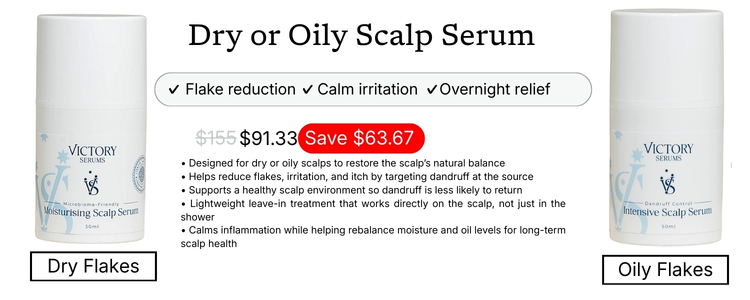
Victoryserums is an Australian scalp health brand built on pharmacist-formulated principles. Every product in the range is developed with pH awareness, microbiome compatibility, and minimalist ingredient selection as non-negotiable criteria. The Dandruff Control Intensive Scalp Serum is formulated for short-term, targeted use during flare-ups, not daily chemical suppression. The microbiome-friendly conditioning shampoo and dandruff control intensive shampoo support long-term maintenance at a pH below 5, designed to work with the scalp’s natural environment rather than against it. The full range is structured around the Victory Serums Pathway, a 12-week Reset Rebalance Restore programme that addresses the functional drivers of scalp imbalance, not just the surface symptoms.
FAQ
What makes pharmacist-formulated serums different from retail products?
Pharmacist-formulated serums are compounded to individual specifications, allowing control over active concentrations, pH, vehicle, and excipient selection that retail products cannot offer. This means fragrances, preservatives, and other common irritants can be removed entirely.
Are compounded scalp serums safe to use long-term?
Compounded serums are governed by pharmacopeial standards including USP and European Pharmacopoeia guidelines, with beyond-use dating assigned by the compounder to confirm stability and safety. Long-term use is managed through iterative formula adjustments rather than fixed-dose application.
Can a pharmacist formulate a serum for chronic dandruff?
Yes. Compounding pharmacists can tailor actives such as Zinc Pyrithione, Salicylic Acid, and Azelaic Acid at concentrations suited to chronic dandruff, while minimising preservatives and fragrance to protect the scalp microbiome.
How quickly do pharmacist-formulated serums show results?
Clinical protocols using tailored excipient selection show measurable improvements in skin condition within two to three weeks, particularly when common irritants have been removed from the formulation.
Do I need a prescription for a compounded scalp serum?
This depends on the active ingredients included. Formulations containing corticosteroids or Hydroquinone require a prescription in Australia, while serums using cosmetic-grade actives may be available without one. A compounding pharmacist can advise on the appropriate pathway for your condition.
Recommended
- How to Apply Scalp Serums – Victory Serums
- Australian scalp care: microbiome balance for 2026 – Victory Serums
- What are microbiome friendly treatments for scalps? – Victory Serums
- What is scalp serum for healthy scalp care 2026 – Victory Serums

Matt Heron is the founder of Victory Serums, an Australian microbiome focused scalp care brand specialising in severe dandruff, yeast imbalance and chronic scalp instability. With more than four decades of personal experience managing persistent dandruff and extensive study of scalp biology, skin pH and barrier function, he developed targeted scalp serums that work within minutes or as leave in treatments. His Reset, Rebalance and Restore approach challenges daily anti-dandruff shampoo dependence and is helping redefine the way chronic dandruff is treated.