

Updated July 2026
Half of Australian adults deal with dandruff or scalp irritation at some point, yet the default response is still to reach for the strongest anti-dandruff shampoo on the shelf and use it every day. That approach feels logical. Wash more, use stronger products, eliminate the problem. But the science tells a different story. Aggressive routines often make chronic scalp issues worse over time, not better. This article covers what is actually happening on your scalp, why harsh treatments backfire, and what a genuinely effective gentle care routine looks like in practice.
Table of Contents
- The scalp microbiome and why it matters
- How harsh treatments backfire: the case for gentle care
- Gentle care explained: ingredients, frequency, and approach
- Barriers, resilience, and when to escalate care
- Gentle care is misunderstood: why less is more for lasting scalp health
- Discover Victory Serums
- Frequently Asked Questions
- Recommended
Key Takeaways
| Point | Details |
|---|---|
| Microbiome balance is key | Keeping your scalp microbiome healthy is the single most important factor in reducing chronic dandruff and irritation. |
| Gentle regimens prevent rebounds | Intermittent, low-pH, and minimally disruptive scalp routines lower the risk of flare-ups and chemical dependence. |
| Choose targeted ingredients | Natural antifungals, urea, and targeted scalp serums may manage pathogens without harming scalp defences. |
| Escalate care if chronic | Persistent symptoms may require medicated treatments, but gentle routines should always be your first line of defence. |
The scalp microbiome and why it matters
Your scalp hosts a complex community of bacteria, fungi, and other microorganisms. This community is called the scalp microbiome. When it is balanced, it protects your skin barrier, regulates sebum (your scalp's natural oil), and keeps inflammation in check. When it is disrupted, you get flakes, itch, and irritation.
The two main drivers of dandruff are well established. Malassezia and Staphylococcus overgrowth, combined with altered sebum breakdown, irritates the scalp barrier and triggers the flaking cycle. Malassezia restricta alone is believed to be implicated in up to 80% of dandruff cases. When sebum is broken down by these microbes, the byproducts can inflame the skin and speed up skin cell turnover, producing visible flakes.
Understanding the difference between oily and dry scalp imbalances matters here. Oily scalp dandruff is driven by excess sebum feeding Malassezia overgrowth. Dry scalp issues are more about barrier breakdown and moisture loss. They look similar but need different approaches. You can read more about this in the dandruff science insights article on the Victory Serums blog.
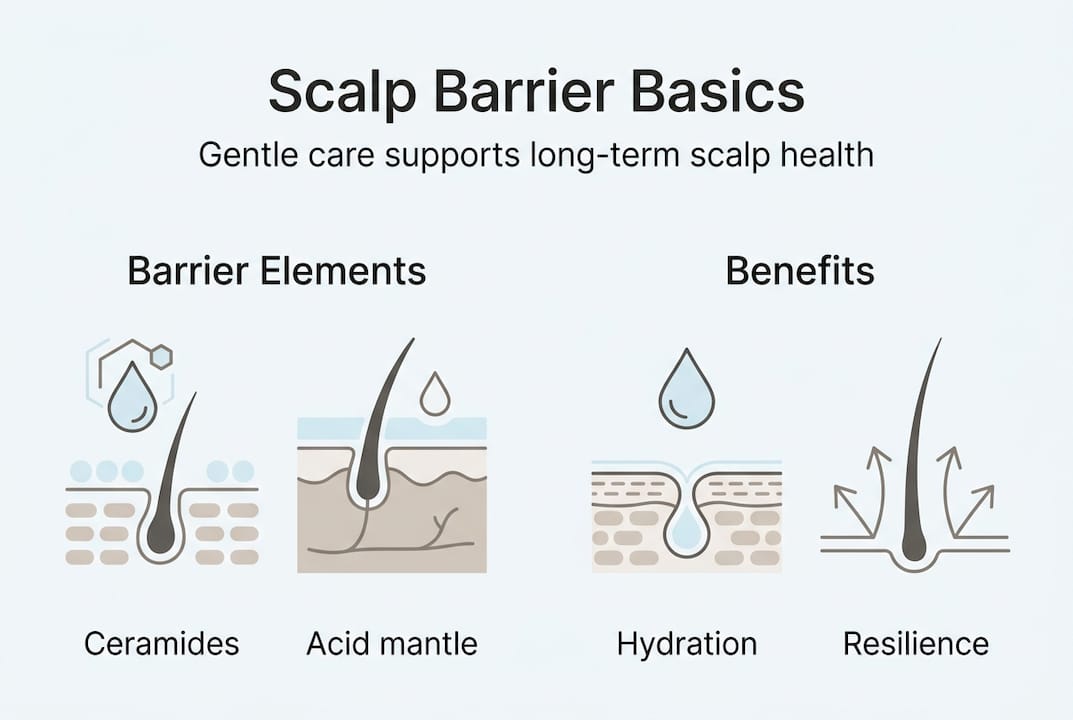
The scalp barrier itself relies on ceramides (lipid molecules that hold skin cells together) and a healthy acid mantle sitting around pH 4.5 to 5.5. When this barrier is intact, it resists microbial overgrowth and retains moisture. When it is compromised, the microbiome loses diversity and opportunistic microbes can take over.
Key microbes on a healthy versus disrupted scalp:
| Microbe | Healthy scalp role | Disrupted scalp role |
|---|---|---|
| Malassezia restricta | Minor presence, controlled | Dominant, drives flaking |
| Staphylococcus epidermidis | Barrier protection | Overgrowth, inflammation |
| Cutibacterium acnes | Sebum regulation | Imbalanced, contributes to irritation |
| Diverse bacteria | Microbiome stability | Reduced diversity, dysbiosis |
Research suggests that gentle, low-pH scalp care products can reduce Malassezia levels and inflammation markers, and may restore ceramide levels over time. The Australian scalp microbiome balance article on the Victory Serums blog explains this process in detail.
Scalp health is fundamentally a microbiome management challenge. The goal is not to eliminate microbes but to restore the conditions where the right ones thrive. Microbiome and dandruff management research supports this view.
How harsh treatments backfire: the case for gentle care
Once you understand scalp biology, the problem with aggressive products becomes clear. Daily use of alkaline or chemically heavy shampoos strips the acid mantle, disrupts the microbiome, and weakens the barrier. The scalp then compensates by producing more sebum and triggering inflammation. This is the rebound effect, and it is very common.
Daily chemical and alkaline regimens can disrupt microbiome stability, often causing rebound and dependence. Many people using daily anti-dandruff shampoos find their scalp gets worse when they stop, not because the product was working, but because the scalp has lost its ability to self-regulate.
Chemical suppression versus microbiome-friendly care:
| Approach | Frequency | pH | Result |
|---|---|---|---|
| Daily anti-dandruff shampoo | Daily | Alkaline (7+) | Rebound, dependence |
| Microbiome-friendly routine | 2 to 3 times per week | Acidic (below 5) | Self-regulation over time |
| Intermittent targeted serum | Weekly or as needed | Controlled (around 6) | Fast relief, minimal disruption |
The steps that lead to rebound are predictable:
- Harsh product strips the acid mantle and removes protective microbes.
- Scalp compensates with increased sebum production.
- Malassezia feeds on excess sebum and multiplies.
- Flaking and itch return, often worse than before.
- User reaches for a stronger product, repeating the cycle.
A gentle regimen study suggests that intermittent, low-pH approaches may outperform daily chemical suppression for chronic scalp conditions. The key is not more treatment. It is smarter, less frequent treatment that gives the scalp room to recover.
If you are unsure whether your scalp issue is oily or dry in origin, the oily scalp management guide is a practical starting point. Understanding your scalp's pH is also covered in the scalp pH balance guide.
Pro tip: Use pH test strips on your scalp after washing to check whether your current products are pushing your scalp alkaline. A healthy scalp sits between pH 4.5 and 5.5. If your readings are consistently above 6, your routine may be contributing to the problem.
Gentle care explained: ingredients, frequency, and approach
Gentle scalp care is not about doing less and hoping for the best. It is about choosing the right ingredients at the right frequency, so your scalp can do more of the work itself.
Ingredients that may support the microbiome without disrupting it:
- Piroctone olamine: A targeted antifungal that may reduce Malassezia without broad microbiome disruption.
- Urea: Supports hydration and gentle exfoliation, helping the barrier repair itself.
- Eucalyptus extract: Natural antimicrobial with anti-inflammatory properties, effective without harsh chemical load.
- Salicylic acid (low concentration): Loosens flakes and supports mild exfoliation when used intermittently.
- Low-pH formulas (below pH 5): Maintain the acid mantle and support healthy microbial balance.
Intermittent use and low-pH formulas with ingredients like piroctone olamine and herbal actives can selectively target pathogens while preserving the broader microbiome. This is the core difference between a microbiome-friendly approach and a chemically suppressive one.
Up to 80% of dandruff cases are believed to be linked to Malassezia overgrowth. Targeted antifungal ingredients address the root cause without the collateral damage of broad-spectrum chemical treatments.
Washing frequency matters as much as product choice. Most people with chronic dandruff may benefit from washing two to three times per week rather than daily. Over-cleansing removes the sebum that beneficial microbes rely on, leaving the scalp vulnerable. Using a gentle, low-pH cleanser on a reduced schedule gives the scalp the recovery time it needs.
For more context on how Australian conditions affect scalp health, the Australian scalp care article covers climate-specific factors worth knowing. Practical routines are also outlined in the dandruff prevention tips guide.
Pro tip: Start by reducing wash frequency by one day per week and observe your scalp's response over two weeks. Most people notice reduced irritation before they notice reduced flaking. That is a sign the barrier is beginning to recover.
Barriers, resilience, and when to escalate care
Gentle routines do more than reduce flakes. They actively support repair of the scalp's protective barrier. A healthy barrier means lower transepidermal water loss (TEWL), better hydration, and restored ceramide levels. These are measurable outcomes, not just subjective impressions.
Gentle regimens have been shown to restore hydration and ceramide levels, and to reduce inflammatory markers over 10-week study periods. Dandruff-affected scalps consistently show higher TEWL, lower ceramide concentrations, and elevated markers like IL-8. Addressing these through gentle care can produce real, trackable improvement.
Barrier recovery markers over a gentle care programme:
| Marker | Dandruff scalp | After 10 weeks gentle care |
|---|---|---|
| TEWL (water loss) | Elevated | Reduced |
| Ceramide levels | Depleted | Restored |
| IL-8 (inflammation) | High | Lowered |
| Scalp hydration | Low | Improved |
Signs your scalp is building resilience include reduced itch between washes, less visible flaking on dark clothing, and a longer comfortable interval between wash days. These are practical indicators that self-regulation is returning.
When to escalate to medicated care:
- Symptoms persist beyond six to eight weeks of consistent gentle care.
- Flaking is accompanied by significant redness, crusting, or pain.
- You are in the 20 to 50 age group with a consistently oily scalp and no improvement.
- A GP or dermatologist identifies seborrhoeic dermatitis or psoriasis.
Gentle care is first-line for most, but Australia's high prevalence means edge cases are common, particularly in the 20 to 50 age group with oily scalps and more severe dysbiosis. Escalating to medicated options when needed is appropriate. The goal is to avoid getting there by building resilience early.
The sustainable relief options article covers how to evaluate when and whether medicated products are warranted. The scalp dandruff control range includes solutions for both maintenance and more active flare-up periods.
Preventing escalation to chronic medicated cycles is possible for most people. The barrier just needs the right conditions to repair itself.
Gentle care is misunderstood: why less is more for lasting scalp health
Most scalp care content focuses on which product to buy next. That framing misses the point entirely. The real variable in long-term scalp health is not product selection. It is consistency, minimalism, and patience.
The scalp vs hair care distinction matters here. Most people treat their scalp like their hair, prioritising appearance over function. The scalp is skin. It responds to the same principles as skin elsewhere on the body: less interference, more recovery time, and protection of the natural barrier.
Australians dealing with rebound scalp issues almost always have one thing in common. They have been using too many products, too often, for too long. Switching to a gentler approach is a start, but the bigger shift is reducing overall product volume and frequency over time.
Conventional advice says to treat flares aggressively. The data suggests the opposite. Intermittent, thoughtful care builds genuine resilience. The scalp becomes less reactive, not more dependent.
Pro tip: Track scalp comfort, not just flake count. Reduced itch and longer comfortable intervals between washes are more meaningful signs of progress than a flake-free day after washing.
Discover Victory Serums
For Australians ready to put gentle care into practice, Victory Serums builds every product around microbiome compatibility and minimal chemical interference. The scalp serum is designed for targeted, intermittent use during flare-ups, working as a leave-in treatment that can calm symptoms quickly without disrupting the broader microbiome. It sits within the Reset Rebalance Restore framework, reducing product dependency over time rather than replacing one daily habit with another.
Pharmacist-informed. Australian-made. Structured for long-term results, not short-term suppression. Explore the full scalp dandruff control range to find the right starting point for your scalp.

Frequently Asked Questions
What makes a scalp care product microbiome-friendly?
A microbiome-friendly scalp product is formulated to support your scalp's natural microbial balance, typically using a low pH and gentle actives that avoid stripping beneficial bacteria and fungi. Low-pH formulas with targeted ingredients like piroctone olamine can address pathogens without broad disruption to the scalp ecosystem.
How often should I wash my hair to avoid aggravating dandruff?
Washing two to three times per week with a gentle, low-pH formula suits most people. Daily alkaline regimens can disrupt microbiome stability and cause rebound, while intermittent acidic approaches support self-regulation over time.
Can gentle care address severe scalp irritation, or do I need medicated products?
For most people, gentle care can restore balance and reduce irritation progressively. If symptoms persist after six to eight weeks of consistent gentle care, consulting a GP or dermatologist is appropriate. Gentle is first-line, but escalation to medicated options is warranted for persistent chronic cases.
What is the difference between dandruff from oily versus dry scalps?
Dandruff is primarily associated with oily scalp conditions driven by Malassezia yeast overgrowth, not simple dryness. Restoring microbiome balance is generally more effective than moisturising alone, as the root cause is microbial rather than hydration-related.
FAQ
Why do harsh anti-dandruff shampoos make things worse?
Aggressive washing strips the scalp and disrupts its microbiome, which drives rebound oil and flaking. Over time the scalp becomes dependent on the treatment rather than self-regulating.
What does gentle scalp care actually involve?
A microbiome-friendly, pH-balanced routine used at a sensible frequency, with ingredients that support the scalp barrier rather than strip it.
Is washing every day bad for dandruff?
For many people daily washing with a strong medicated shampoo prolongs the problem. Frequency should match your scalp, not a fixed rule.
How common are scalp issues in Australia?
About half of Australian adults deal with dandruff or scalp irritation at some point, yet the default response is still the strongest product on the shelf.
Recommended
- What Are Clinical Scalp Treatments? A 2026 Guide – Victory Serums
- Australian scalp care: microbiome balance for 2026 – Victory Serums
- Scalp pH Balance Guide: Restore Microbiome Harmony 2026 – Victory Serums
- Dandruff prevention tips: microbiome-friendly care 2026 – Victory Serums

Get the free 1-Week Guide to Scalp Health and uncover the real cause of your flakes.
Download the free guide
Matt Heron is the founder of Victory Serums, an Australian microbiome focused scalp care brand specialising in severe dandruff, yeast imbalance and chronic scalp instability. With more than four decades of personal experience managing persistent dandruff and extensive study of scalp biology, skin pH and barrier function, he developed targeted scalp serums that work within minutes or as leave in treatments. His Reset, Rebalance and Restore approach challenges daily anti-dandruff shampoo dependence and is helping redefine the way chronic dandruff is treated.