

Updated July 2026
In Brief:
- Prebiotics feed the beneficial microbes already on your scalp rather than killing everything indiscriminately.
- That approach reduces yeast overgrowth and inflammation without the rebound that follows harsh antifungals.
- It works gradually. Expect four to eight weeks, not overnight results.
Most Australians with chronic dandruff have tried the same cycle: medicated shampoo, short relief, then the flakes return. The problem is rarely the dandruff itself. It is the approach. Disrupting the scalp microbiome often leads to recurring dandruff and irritation, yet most mainstream treatments do exactly that. Prebiotic scalp care takes a different path. Instead of suppressing symptoms with harsh chemicals, it works with your scalp's natural biology to restore balance.
Understanding the scalp microbiome and prebiotics
Your scalp is home to a complex ecosystem of bacteria, fungi and other microorganisms. When it is balanced, it keeps irritation, flaking and excess oil in check. When it is disrupted, that is when problems start. Dysbiosis is the term for that microbial imbalance, and it is a root cause of persistent dandruff.
So where do prebiotics fit in?
- Prebiotics feed and support the beneficial microbes already living on your scalp
- Probiotics introduce new live microorganisms to the skin
- Antifungals suppress or kill specific fungi, often without regard for the broader community
Both prebiotics and probiotics have a role, but prebiotics are particularly suited to scalp care because they work with what is already there rather than introducing something foreign. Short-term antifungals clear visible symptoms quickly, but repeated use strips beneficial bacteria alongside the harmful ones. That leaves the scalp vulnerable, which is why flakes often return worse than before.
Supporting the natural microbiome, rather than repeatedly suppressing it, is increasingly recognised as the more sustainable path to long-term scalp health.
Pro Tip: If your dandruff returns within weeks of finishing a medicated shampoo, your microbiome may need support rather than more chemical treatment.
How does prebiotic scalp care work?
Prebiotic agents work by selectively feeding beneficial bacteria. Common examples include inulin, derived from chicory root, and alpha-glucan oligosaccharide, a sugar-based compound. These ingredients do not kill anything. They create conditions where good microbes thrive and harmful ones struggle to dominate.
When beneficial bacteria flourish, they naturally keep Malassezia and problematic bacteria in check. Less overgrowth means less inflammation, less flaking and a calmer scalp. The science behind dandruff confirms the connection between yeast activity and visible symptoms.
| Ingredient | Effect on scalp | Long-term benefit | Safety profile |
|---|---|---|---|
| Inulin (prebiotic) | Feeds beneficial bacteria | Reduces recurrence | Gentle, non-irritating |
| Alpha-glucan oligosaccharide | Supports microbial diversity | Maintains balance | Suits sensitive scalps |
| Zinc pyrithione (antifungal) | Suppresses Malassezia | Symptom control only | Risk of rebound with overuse |
| Selenium sulphide (antifungal) | Reduces yeast and cell turnover | Short-term relief | Can disrupt the microbiome |
Long-term prebiotic use can help prevent recurrence by addressing root causes, unlike symptom-only antifungals. This is supported by scalp microbiome research highlighting the importance of microbial diversity for scalp resilience. Most prebiotic products are gentle, non-stripping and suitable for ongoing use.
- Look for clear ingredient lists with named prebiotics
- Avoid products with sodium lauryl sulphate, which strips the scalp
- Choose formulations below pH 5.5 for regular use
Pro Tip: Ingredient transparency matters. If a product lists "fragrance" without detail, it may contain irritants that undermine any prebiotic benefit.
Prebiotics vs traditional dandruff treatments
Traditional antifungals deliver rapid symptom relief but often disrupt the microbiome and cause rebound flares. That is the core trade-off: speed versus sustainability.
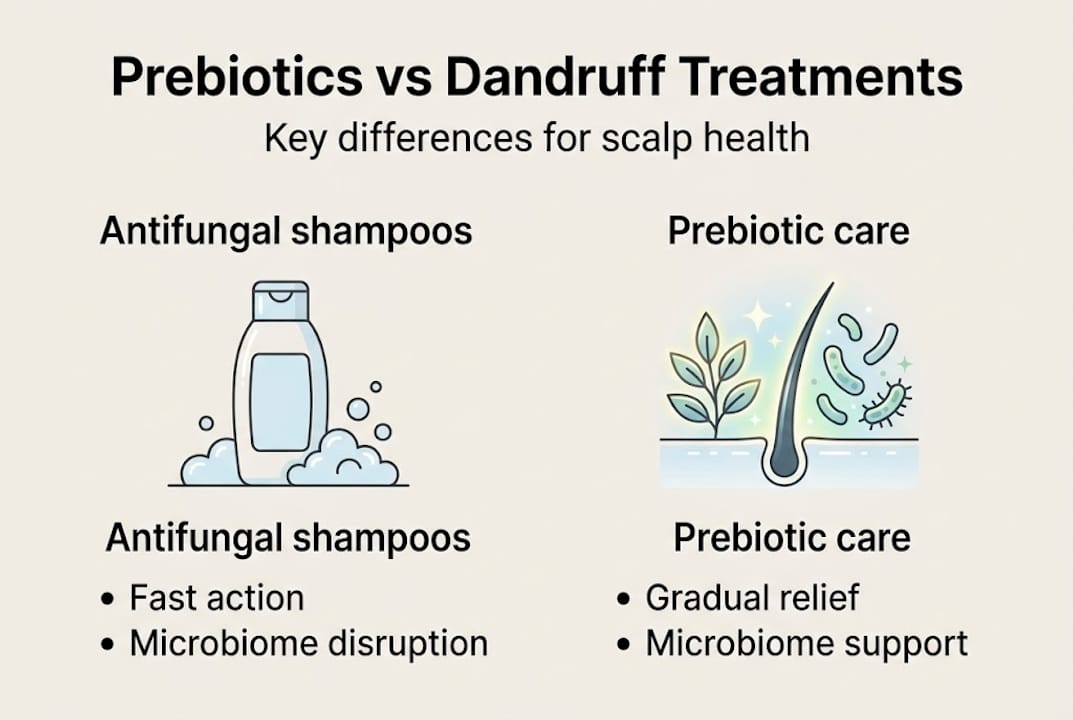
| Factor | Antifungal shampoos | Prebiotic scalp care |
|---|---|---|
| Symptom onset | Fast (days to weeks) | Gradual (weeks to months) |
| Recurrence risk | High with repeated use | Lower with consistent use |
| Microbiome impact | Disruptive | Supportive |
| Long-term safety | Concerns with daily use | Suitable for ongoing use |
Understanding anti-dandruff agents clarifies when each approach fits. Antifungals have a place, particularly during acute flares, but relying on them daily is where dependency begins.
How to transition from harsh shampoos to a prebiotic routine:
- Reduce medicated shampoo frequency gradually rather than stopping abruptly
- Introduce a prebiotic or microbiome-friendly cleanser on alternate wash days
- Add a targeted scalp serum between washes to maintain balance
- Monitor symptoms over four to six weeks before adjusting further
- Avoid over-washing, which strips natural oils and disrupts balance
Personalisation is key. What works for one scalp type may worsen another. A one-size-fits-all approach is rarely effective for chronic dandruff.
Applying prebiotic scalp care in daily life
Start with two core products: a microbiome-friendly cleanser and a targeted scalp serum. Those form the foundation of a low-intervention, high-impact routine. Australian conditions matter too, since heat and humidity shift oil production and microbial activity across the seasons.
- Check ingredient lists carefully. Look for named prebiotics like inulin or alpha-glucan oligosaccharide, and avoid SLS, artificial fragrance and alcohol-heavy formulas.
- Adapt to the weather. In humid summer months you may need to wash more often but with gentler products. In dry winter conditions, focus on moisture retention.
- Use gentle technique. Apply serum to a dry scalp with fingertip pressure in small circular motions. A dry scalp matters, because water dilutes the formulation and lifts its pH.
- Be patient. Prebiotic care works gradually. Expect four to eight weeks before consistent improvement.
- Avoid over-washing. Two to three times a week is a good starting point.
For those managing an oily scalp routine, prebiotic care pairs well with low-frequency washing and pH-balanced formulations.
Why the microbiome is the missing link
Many people stuck in the quick-fix cycle never realise their microbiome needs care as much as their skin. They switch shampoos, try stronger formulas and repeat. The symptoms ease briefly, then return.
Decades of stubborn dandruff often respond not to stronger chemicals but to smarter, microbiome-focused changes. The shift in thinking is significant. Rather than asking "what can I use to stop the flaking?", the better question is "what does my scalp need in order to regulate itself?" That reframe changes everything about product selection, frequency and expectations.
Sustainable relief comes from working with your biology, not against it. The scalp is capable of self-regulation when given the right conditions. It is not about adding more. It is about doing less, but smarter.
Find your microbiome-friendly scalp solution
Ready to turn the science into relief? Victory Serums offers pharmacist-developed, microbiome-compatible products designed for chronic scalp concerns, each built around pH awareness and minimal chemical interference.

The scalp serum supports scalp balance without stripping natural oils, and the full dandruff control range covers both flare control and ongoing maintenance. For a structured approach, the free free 1-Week Scalp Health Guide also looks at the internal triggers that may be driving imbalance.
Frequently asked questions
What exactly are prebiotics in scalp care?
Prebiotics nourish beneficial scalp microbes, feeding healthy bacteria to help restore your skin's natural balance for long-term relief rather than short-term suppression.
Can prebiotic scalp care replace medicated dandruff shampoos?
For chronic issues, prebiotics can offer safer long-term relief, but severe flares may still require short-term antifungal treatment first. Prebiotics help prevent recurrence, while antifungals address acute symptoms.
Is prebiotic scalp care supported by research?
Research into scalp prebiotics is growing but currently less extensive than the evidence base for traditional antifungals. The emerging findings are promising.
Can I use prebiotics with other scalp treatments?
Yes. Prebiotic care works well alongside gentle routines and can help maintain balance when transitioning away from medicated shampoos.
Victory Serums products are designed to support scalp comfort and scalp health practices. They are not intended to diagnose, treat, cure or prevent medical conditions. If symptoms are severe, persistent, cracked, bleeding or worsening, seek guidance from a qualified healthcare professional.
Recommended
- Oily scalp management guide for microbiome balance in 2026 – Victory Serums
- Australian scalp care: microbiome balance for 2026 – Victory Serums
- Why Scalp Care Differs from Hair Care – Victory Serums
- Scalp pH Balance Guide: Restore Microbiome Harmony 2026 – Victory Serums

Get the free 1-Week Guide to Scalp Health and uncover the real cause of your flakes.
Download the free guide
Matt Heron is the founder of Victory Serums, an Australian microbiome focused scalp care brand specialising in severe dandruff, yeast imbalance and chronic scalp instability. With more than four decades of personal experience managing persistent dandruff and extensive study of scalp biology, skin pH and barrier function, he developed targeted scalp serums that work within minutes or as leave in treatments. His Reset, Rebalance and Restore approach challenges daily anti-dandruff shampoo dependence and is helping redefine the way chronic dandruff is treated.