

Updated July 2026
In Brief:
- Dandruff is not dry skin. It is a mild inflammatory condition driven by an imbalance in the scalp microbiome, mainly Malassezia overgrowth.
- The yeast feeds on sebum and produces irritating by-products that speed up skin cell turnover, creating the flakes.
- Manage it by using antifungals strategically, not daily, and supporting barrier and microbiome balance for the long term.
Most people assume dandruff is just dry skin flaking off the scalp. That is wrong. Dandruff is a mild inflammatory condition driven by an imbalance in the scalp microbiome, particularly an overgrowth of Malassezia yeast. These fungi feed on sebum and produce irritating by-products that speed up skin cell turnover, creating the visible flakes. This guide explains what dandruff really is, why it happens, how to tell it apart from similar conditions, and how to manage it with microbiome-friendly approaches that support long-term scalp health rather than building chemical dependency.
What is dandruff? Understanding the scalp condition
Dandruff is a mild form of seborrheic dermatitis marked by excessive flaking and itching from accelerated skin cell turnover. Unlike simple dryness, it involves a complex interaction between the scalp microbiome, sebum and the immune response. In its mild form it is non-inflammatory, but it can progress to more severe seborrheic dermatitis, with redness and irritation, if left unmanaged.
The hallmark symptoms are white or yellowish flakes that shed from the scalp, often visible on the shoulders, along with itching that ranges from mild to intense. The flakes vary in size and texture depending on whether you have dry or oily dandruff, and scratching tends to worsen the cycle.
Dandruff differs fundamentally from a dry scalp. Dry scalp produces small, white flakes without the oiliness or inflammation of dandruff, and its flakes are finer and less sticky. Dandruff flakes are larger, greasier and come with visible irritation. The distinction matters, because the treatments differ.
The key characteristics that define dandruff:
- Visible white or yellow flakes that shed continuously
- Scalp itching from mild to severe
- An oily or greasy appearance on the scalp and hair
- Flaking that worsens with stress, hormonal changes or seasonal shifts
- Symptoms that improve with antifungal treatment but often return
Dandruff usually begins after puberty, when the sebaceous glands become more active and produce more sebum to feed Malassezia. That is why it is less common in children and peaks in young adulthood. Because it is chronic, it needs ongoing management rather than a one-time cure, and many people cycle through improvement and relapse, particularly in winter when indoor heating dries the air.
Causes of dandruff: microbiome imbalance and contributing factors
The primary driver is dysbiosis of the scalp microbiome, particularly overgrowth of Malassezia species. These yeasts naturally live on your scalp, but problems arise when they proliferate. Malassezia metabolises sebum into oleic acid and other fatty acids that penetrate the skin barrier, triggering inflammation and speeding up skin cell turnover. That is what produces the flakes you recognise as dandruff.
Your scalp hosts a complex ecosystem that normally sits in balance. When that equilibrium shifts, opportunistic species dominate. They thrive in sebum-rich environments, which is why oilier scalps tend to experience more severe dandruff. The by-products irritate the scalp and push skin cells to shed far faster than the normal cycle of around 28 days.
Several factors amplify the imbalance. Genetics shape your sebum production and how strongly your immune system reacts to Malassezia by-products, so some scalps are simply more reactive. Hormonal fluctuations, particularly androgens, increase oil production and create ideal conditions for the yeast. Stress raises cortisol, which can suppress immune function and worsen inflammation. Cold, dry weather and indoor heating compromise the barrier, while hot, humid conditions increase sweating and sebum.
Dandruff affects around half of adults worldwide, with higher prevalence in men after puberty due to increased androgen-driven sebum. It can persist for decades if not properly managed.
Two main types exist:
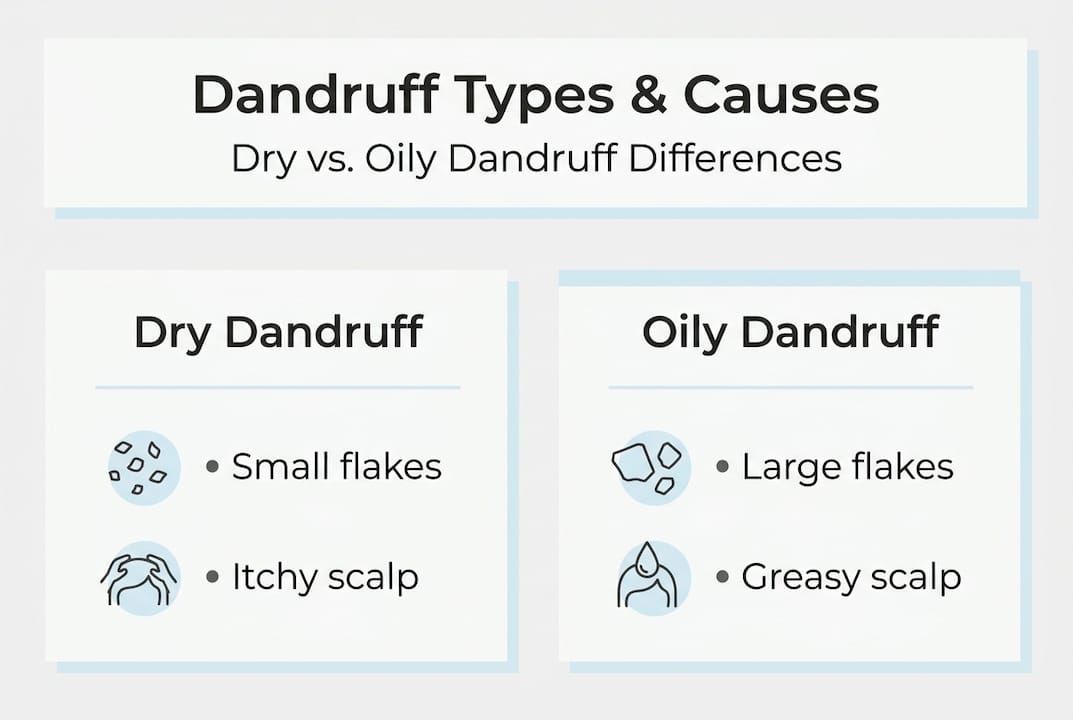
- Dry dandruff, with small, loose white flakes that fall easily, often without much oiliness
- Oily dandruff, with larger, yellowish flakes that stick to the scalp and hair, plus greasy buildup and a stronger odour
Pro Tip: Knowing whether you have dry or oily dandruff guides treatment. Oily dandruff responds better to antifungal and sebum-regulating approaches, while dry dandruff benefits from gentle hydration and barrier repair.
Nuances and differential diagnosis
Not all scalp flaking is dandruff. Several conditions produce similar symptoms but need different approaches.
Within dandruff itself, the dry-versus-oily distinction is the most common. Dry dandruff involves smaller, powdery flakes that scatter easily, with a tight or dry feeling that often worsens in winter. Oily dandruff features larger, greasier flakes that stick, a shiny scalp and sometimes a musty odour, and it correlates more strongly with Malassezia overgrowth.
Persistent dandruff that does not improve with standard treatment may point to severe seborrheic dermatitis or another condition. Seborrheic dermatitis goes beyond flaking to include redness, inflammation and involvement of other oily areas like the eyebrows, sides of the nose and chest. Psoriasis produces thicker, silvery scales with well-defined plaques that often extend beyond the hairline. Eczema creates dry, inflamed patches that may weep or crust.
Some persistent flaking involves bacterial species, particularly Staphylococcus, that form biofilms on the scalp and resist standard treatment. Tinea capitis, a fungal infection caused by dermatophytes rather than Malassezia, causes patchy hair loss with scaling and needs systemic treatment. Contact dermatitis from a product causes localised irritation that clears once you stop using the culprit.
| Condition | Flake appearance | Scalp characteristics | Key distinguishing features |
|---|---|---|---|
| Dry dandruff | Small, white, powdery | Tight, dry feeling | Worsens in cold weather, minimal oiliness |
| Oily dandruff | Larger, yellow, greasy | Shiny, oily appearance | Strong Malassezia link, responds to antifungals |
| Psoriasis | Thick, silvery scales | Red, well-defined plaques | Extends beyond hairline, affects other areas |
| Seborrheic dermatitis | Yellow, greasy, adherent | Red, inflamed, widespread | Affects face, chest, other oily zones |
| Eczema | Dry, fine scales | Inflamed, may weep | History of atopy, responds to moisturisers |
Signs you should seek medical evaluation include flaking with significant hair loss, severe inflammation or crusting, symptoms spreading beyond the scalp, no improvement after four to six weeks of proper treatment, or signs of infection like pain, warmth or pus.
Pro Tip: Take clear photos of your scalp in good lighting before you start, and review them every two weeks. Visual tracking helps you tell genuine improvement from day-to-day fluctuation, and makes it easier to talk to a healthcare provider if needed.
Managing dandruff: treatments and long-term care
Standard treatments rely on antifungal agents that target Malassezia. Ketoconazole, zinc pyrithione, selenium sulphide and coal tar are the most common. These temporarily reduce fungal populations and relieve symptoms, but they do not address microbiome balance or barrier function. Worse, daily use disrupts beneficial microbes and builds dependency, so symptoms rebound when you stop.
The problem with conventional approaches is that they suppress rather than rebalance. Using antifungal shampoo every day continuously alters the scalp environment and prevents it from re-establishing its own equilibrium. Many people end up trapped in a cycle where stopping treatment immediately triggers a flare.
Best practice is to use antifungals strategically rather than continuously. Apply a medicated product one to three times a week during an active flare, then taper to maintenance once symptoms improve. That intermittent approach controls the overgrowth while giving the microbiome space to recover. Between treatments, use a gentle, pH-balanced cleanser that does not strip oils.
Long-term scalp health rests on three foundations: barrier repair, sebum regulation and microbiome support. A strong barrier reduces reactivity to Malassezia by-products. Sebum regulation comes through diet, stress reduction and appropriate topical care. And a diverse, balanced microbiome creates an environment where beneficial species outcompete the opportunists.
| Treatment agent | Mechanism | Microbiome impact | Best use frequency |
|---|---|---|---|
| Ketoconazole | Disrupts fungal cell membranes | Broad antifungal, may reduce diversity | 1 to 2 times weekly |
| Zinc pyrithione | Antifungal and antibacterial | Reduces both fungi and bacteria | 2 to 3 times weekly |
| Selenium sulphide | Reduces cell turnover, antifungal | Strong antimicrobial, use cautiously | 1 to 2 times weekly |
| Coal tar | Slows cell growth, anti-inflammatory | Minimal microbiome impact | 1 to 2 times weekly |
| Tea tree oil | Natural antifungal | Gentler on microbiome diversity | 2 to 3 times weekly |
A microbiome-friendly routine follows a clear structure:
- Start with a gentle, low-pH cleanser (4.5 to 5.5) that matches your scalp's acidity and preserves beneficial microbes.
- Apply targeted treatment during active flares, one to three times a week rather than daily.
- Support barrier repair with ingredients like ceramides, niacinamide and panthenol.
- Regulate sebum through diet, reducing high-sugar foods and dairy that can drive oil production.
- Track your symptoms and product use to identify personal patterns.
- Gradually reduce treatment frequency as symptoms improve, aiming for minimal intervention that maintains balance.
Pro Tip: Apply treatments to a dry scalp, not wet hair. Water dilutes the active ingredients and lifts the low pH, reducing the effect. Part the hair into sections and apply directly to the scalp with a dropper, massage gently for 30 to 60 seconds, then leave on for the recommended time before rinsing.
A common recommendation is to use antifungal shampoos two to three times a week during active treatment, tapering to once weekly or less for maintenance. The goal is not permanent suppression but guiding the scalp back to self-regulation. A step-by-step dandruff treatment guide helps you apply this systematically, and pairing it with microbiome-friendly prevention addresses both the immediate symptoms and long-term health.
Explore microbiome-friendly scalp care solutions
Victory Serums offers targeted products designed to rebalance the scalp microbiome without building chemical dependency. The range includes pH-optimised formulations developed by pharmacists with microbiome compatibility as a core principle, reducing Malassezia during flares while supporting natural recovery.

The dandruff control range covers both dry and oily dandruff. The scalp serum delivers fast-acting relief for oily dandruff, formulated at pH 6 for short-term use during active symptoms, and as your scalp improves you transition to lower-pH maintenance. It all integrates with the free free 1-Week Scalp Health Guide, a structured programme covering gut health, food triggers and tracking, so you can reduce product dependency over time.
Frequently asked questions about dandruff
What triggers dandruff at the microbiome level?
Dandruff occurs when Malassezia overgrows and metabolises sebum into oleic acid and other irritating fatty acids that penetrate the skin barrier. That triggers inflammation and speeds up skin cell turnover, creating visible flakes. The process reflects microbiome imbalance, where opportunistic fungi dominate the beneficial species.
How can I tell if my flaking is dandruff or another condition?
Dandruff produces white or yellow flakes with itching but minimal inflammation. Psoriasis creates thicker silvery scales extending beyond the hairline. Eczema causes dry, inflamed patches that may weep. Seborrheic dermatitis involves redness spreading to the face and chest. If standard antifungal treatments do not help within four to six weeks, see a dermatologist.
How often should I use antifungal shampoo for effective control?
Use medicated shampoos one to three times a week during active flares, not daily. That controls Malassezia while preserving beneficial microbes. Once symptoms improve, taper to weekly or fortnightly maintenance, and cleanse gently in between. The goal is minimal intervention that maintains balance without building dependency.
When should I consult a dermatologist about persistent dandruff?
Seek evaluation if you have significant hair loss, severe inflammation, oozing or crusting, symptoms spreading beyond the scalp, or no improvement after six weeks of proper treatment. Persistent flaking may indicate psoriasis, severe seborrheic dermatitis, bacterial biofilms or another condition that needs prescription treatment.
What holistic approaches support long-term scalp health beyond shampoos?
Address scalp health as a whole. Manage stress through exercise and sleep, both of which affect cortisol and immune function. Reduce high-sugar foods and dairy that can increase sebum. Support gut health with fermented foods and fibre, since the gut and skin are connected. Track food triggers and symptom patterns to find your own sensitivities.
Victory Serums products are designed to support scalp comfort and scalp health practices. They are not intended to diagnose, treat, cure or prevent medical conditions. If symptoms are severe, persistent, cracked, bleeding or worsening, seek guidance from a qualified healthcare professional.
Recommended
- Dandruff prevention tips for microbiome-friendly care 2026 – Victory Serums
- What causes scalp flakes? Malassezia affects 80% of cases – Victory Serums
- Understanding anti-dandruff agents: sustainable relief – Victory Serums
- Australian scalp care: microbiome balance for 2026 – Victory Serums

Get the free 1-Week Guide to Scalp Health and uncover the real cause of your flakes.
Download the free guide
Matt Heron is the founder of Victory Serums, an Australian microbiome focused scalp care brand specialising in severe dandruff, yeast imbalance and chronic scalp instability. With more than four decades of personal experience managing persistent dandruff and extensive study of scalp biology, skin pH and barrier function, he developed targeted scalp serums that work within minutes or as leave in treatments. His Reset, Rebalance and Restore approach challenges daily anti-dandruff shampoo dependence and is helping redefine the way chronic dandruff is treated.