

Updated July 2026
In Brief:
- Chronic scalp itching typically results from microbial imbalance involving Malassezia yeast and skin barrier issues.
- An integrated routine using low pH, microbiome-friendly products addresses root causes for long-term relief.
- Consistency and barrier support are key; avoid over-washing and harsh ingredients for lasting scalp health.
Standing in the chemist aisle, staring at a wall of anti-dandruff shampoos, is a familiar frustration for many Australians. You pick one, it works for a week, then the itch returns. That cycle is not a coincidence. Chronic scalp itching is rarely a simple hygiene problem. It is a sign that the scalp's microbial ecosystem is out of balance. Standard shampoos suppress symptoms without addressing the underlying drivers. This guide covers an evidence-based, microbiome-first routine that targets root causes, not just surface flaking, so you can build lasting comfort rather than short-term relief.
Table of Contents
- Understanding chronic scalp itching and its real causes
- What you need: Tools and products for a microbiome-safe routine
- Step-by-step scalp itching reduction: Your daily and weekly routine
- Troubleshooting, edge cases and when to seek help
- A fresh take: Why sustainable scalp relief means focusing on your microbiome
- Discover Victory Serums
- Frequently asked questions
Key Takeaways
| Point | Details |
|---|---|
| Address root causes | Long-term itch relief targets scalp microbiome balance and barrier health, not just symptoms. |
| Choose safe products | Use evidence-based, microbiome-friendly products and avoid prolonged steroid use. |
| Follow a set routine | Clear daily and weekly care steps boost effectiveness and prevent flare-ups. |
| Know when to escalate | Persistent symptoms or sudden changes may indicate a need for professional medical assessment. |
Understanding chronic scalp itching and its real causes
Chronic scalp itching affects a significant portion of the population. Up to 50% of adults experience recurring scalp discomfort tied to microbial imbalance at some point. That number alone signals this is not a niche problem.
The scalp hosts a complex community of microorganisms. When that community falls out of balance, the consequences are visible and uncomfortable. Scalp itching is believed to stem from Malassezia yeast overgrowth, microbial dysbiosis involving Staphylococcus epidermidis, excess sebum, disrupted skin barrier, and immune response. These are not isolated issues. They interact and amplify each other.
Key triggers at a glance:
- Malassezia yeast overgrowth feeding on excess scalp oil
- Overactive immune response generating inflammation and itch signals
- Excess sebum production creating a favourable environment for yeast
- Weakened skin barrier allowing irritants to penetrate more easily
- Microbial dysbiosis where harmful bacteria outcompete beneficial ones
The problem with most over-the-counter solutions is that they address only one of these triggers. An antifungal shampoo may reduce Malassezia temporarily, but if the barrier remains compromised or sebum production stays elevated, the yeast returns quickly.
| Trigger | Effect on scalp | Typical response |
|---|---|---|
| Malassezia overgrowth | Flaking, itch, inflammation | Antifungal treatment |
| Excess sebum | Feeds yeast, clogs follicles | Clarifying wash |
| Barrier dysfunction | Increased sensitivity, dryness | Moisturising treatment |
| Immune overreaction | Redness, persistent itch | Topical steroid (short-term) |
| Microbial dysbiosis | Recurring symptoms | Microbiome support |
Statistic: Research links seborrhoeic dermatitis to Malassezia in the majority of chronic adult cases, making antifungal intervention a core but incomplete strategy.
Understanding Malassezia and scalp flakes is the first step. Managing the full ecosystem is the goal. With the itch properly defined, it is time to prepare for lasting change.
What you need: Tools and products for a microbiome-safe routine
Now you know what you are up against. Let us assemble the right toolkit for success.
Standard first-line treatments per Australian guidelines include frequent scalp washing with anti-yeast actives containing ketoconazole, zinc pyrithione, selenium sulfide, or coal tar. Pairing these with a short-term topical steroid lotion like mometasone can help with itch, but long-term steroid use carries real risks including skin thinning and rebound flaring.
Ingredients to look for:
- Zinc pyrithione: antifungal and antibacterial, widely available
- Ketoconazole: prescription-strength antifungal for persistent cases
- Piroctone olamine: gentler antifungal suited to sensitive scalps
- Prebiotic and probiotic actives: support beneficial microbial balance
- Low pH formulations (below pH 5): preserve the scalp's natural acid mantle
Ingredients to avoid for long-term use:
- Sodium lauryl sulfate (SLS): strips natural oils and disrupts barrier
- Long-term topical steroids: risk of skin thinning and dependency
- Harsh coal tar at high concentrations: effective but damaging with daily use
- Synthetic fragrance: common irritant that worsens inflammation
| Product type | Benefit | Limitation |
|---|---|---|
| Antifungal treatment | Reduces Malassezia quickly | Does not restore microbiome balance |
| Low pH serum | Supports acid mantle and barrier | Requires consistent, targeted use |
| Prebiotic conditioner | Feeds beneficial bacteria | Slower acting |
| Topical steroid lotion | Fast itch relief | Short-term use only |
| Herbal/probiotic formula | Emerging support for balance | Not yet in routine guidelines |
Look for sustainable anti-dandruff ingredients that work with the scalp rather than against it. Options like piroctone olamine and prebiotic actives are gaining traction precisely because they do not strip the scalp bare.
Pro Tip: If you are exploring treating dandruff naturally, focus first on reducing wash frequency and switching to a low pH, sulphate-free formula before adding actives. Less disruption often produces faster stabilisation.
Step-by-step scalp itching reduction: Your daily and weekly routine
With your kit ready, you are set for actionable change.
A well-structured routine does not need to be complicated. Consistency matters far more than complexity. The goal is to reduce Malassezia load, support barrier repair, and give the microbiome space to rebalance.
Weekly routine (days 1, 4, and 7):
- Wet hair thoroughly with lukewarm water. Hot water increases sebum production and worsens inflammation.
- Apply an antifungal treatment (zinc pyrithione or ketoconazole). Leave on for 3 to 5 minutes before rinsing.
- Follow with a low pH, sulphate-free conditioner on lengths only. Avoid applying conditioner directly to the scalp.
- On days with active flaring, apply a targeted scalp serum after washing. Leave in or rinse depending on formulation instructions.
- If a topical steroid lotion is prescribed, apply it after the serum, on affected areas only, for a maximum of two weeks at a time.
Daily maintenance (non-wash days):
- Avoid touching or scratching the scalp. Nails introduce bacteria and worsen barrier damage.
- Keep hair loose where possible. Tight styles increase friction and heat.
- Stay hydrated. Internal hydration supports barrier function from within.
Standard care prioritises antifungal treatments and short-term steroids; emerging care focuses on barrier repair and microbiome restoration for sustainable relief. The two approaches are not mutually exclusive. The most effective routines layer both.
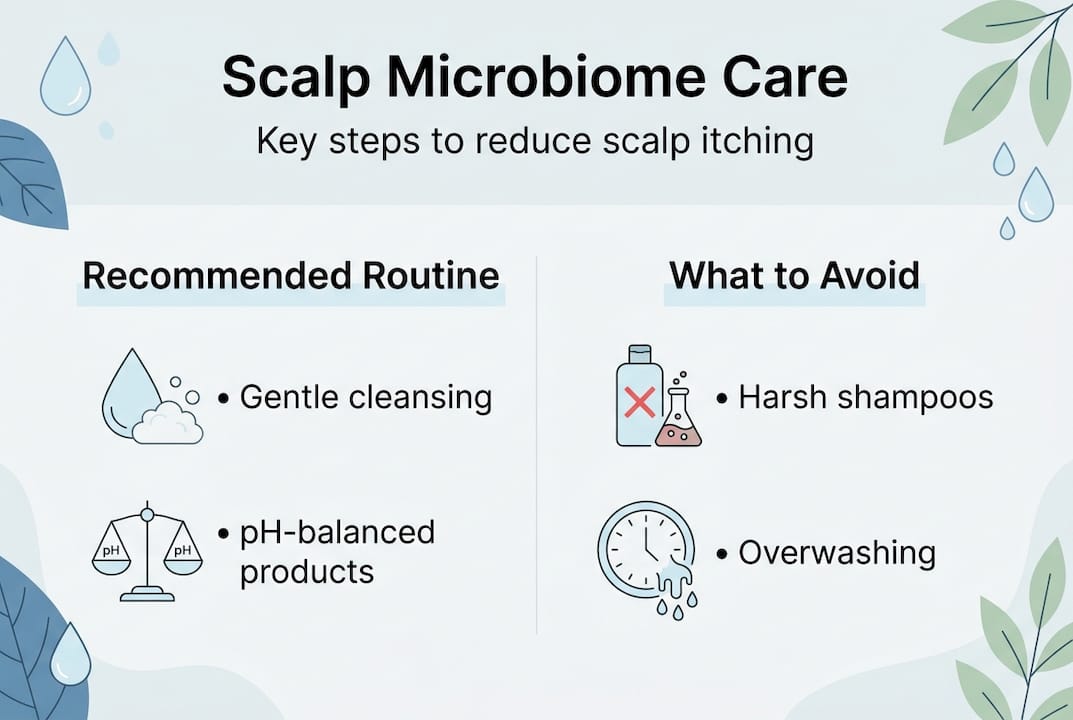
Herbal formulations and emerging probiotics show promise but are not yet in routine guidelines. They are worth considering as a complement to established actives, not as a replacement.
Pro Tip: Review your dandruff treatment steps every four weeks. If symptoms have reduced, begin stepping down wash frequency gradually rather than stopping abruptly.
Common mistakes to avoid:
- Over-washing: daily antifungal use strips the microbiome and increases rebound
- Harsh physical scrubbing: damages the barrier and worsens inflammation
- Skipping conditioner: leaves the scalp and lengths vulnerable to dryness
- Stopping treatment too early: symptoms settle before the microbiome has fully stabilised
Following dandruff prevention tips consistently is what separates short-term clearing from genuine long-term control.
Troubleshooting, edge cases and when to seek help
Mastering your day-to-day routine is just part of the process. Anticipating hurdles ensures lasting comfort.
Most people see measurable improvement within two to four weeks of a consistent routine. If that is not happening, the cause is usually one of a few common issues.
Signs that something needs to change:
- No improvement after four weeks of consistent antifungal use
- Symptoms spreading beyond the scalp to the face, ears, or chest
- Sudden or patchy hair loss alongside itching
- Bleeding, crusting, or open sores on the scalp
- Rash pattern that does not match typical dandruff presentation
These signals are worth taking seriously. Antifungal vs microbiome approaches differ significantly in how they address persistent or complex cases, and some situations require both.
"Refractory cases may need referral for isotretinoin or oral antifungals, and clinicians should rule out tinea and psoriasis. Immunodeficiency, including HIV, and hormonal changes during pregnancy can worsen seborrhoeic dermatitis significantly." FSH Dermatology Guidelines
Adjusting when progress stalls:
- Switch antifungal active if no response after four weeks (e.g., from zinc pyrithione to ketoconazole)
- Reduce wash frequency if the scalp feels dry or reactive despite treatment
- Introduce a barrier repair serum if dryness and sensitivity are prominent
- Review diet and stress levels. Both are documented triggers for seborrhoeic dermatitis flares
Effective oily scalp management requires adjusting the approach as the scalp changes. What works during a flare is not always what works for maintenance. Flexibility is part of the strategy.
For Australians navigating climate-specific challenges, Australian scalp care resources provide locally relevant guidance on humidity, UV exposure, and seasonal triggers that affect scalp health year-round.
A fresh take: Why sustainable scalp relief means focusing on your microbiome
Conventional scalp care has a dependency problem. Most mainstream products are designed to be used daily, indefinitely. That model keeps symptoms manageable but never addresses why they keep returning. It is the equivalent of taking pain relief every day instead of finding out what is causing the pain.
The emerging science is clear. A resilient scalp is one where the microbial ecosystem is stable, the barrier is intact, and the immune response is not chronically activated. That state is achievable. But it requires a different philosophy. Less intervention over time, not more.
The contrarian view worth considering: clearing your scalp quickly is not the same as healing it. Fast results from strong actives can mask an underlying imbalance that will resurface the moment you stop. True progress looks like needing fewer products, less often, while maintaining comfort.
Understanding the difference between scalp vs hair care is foundational here. The scalp is skin. It deserves the same thoughtful, microbiome-aware approach that functional skincare has adopted. Readers who grasp this shift become far more effective at managing their own scalp health long-term.
Discover Victory Serums
Real scalp change comes from a consistent routine, not a single product swap. The steps in this guide are designed to work together: reduce the microbial load, repair the barrier, support the ecosystem, and step down intervention as stability builds.

Victory Serums products are pharmacist-developed and formulated with pH awareness and microbiome compatibility as core design principles. The soothing scalp serum delivers targeted relief as a leave-on or rinse-off treatment, applied weekly or during flare-ups rather than daily. For intensive support, the dandruff control intensive scalp serum addresses persistent flaking and scalp imbalance with a concentrated microbiome-friendly formula. For a full view of targeted options, explore the scalp dandruff solutions range. Science-informed. Minimalist. Designed for lasting results.
Frequently asked questions
Are microbiome-based treatments safe for sensitive skin?
Yes. Microbiome approaches avoid dysbiosis and support beneficial bacteria, making them generally well tolerated on sensitive skin compared to harsh chemical alternatives.
How fast can I expect results from an anti-itching scalp routine?
Itch reduction can begin within days, but full effect may be seen after 2 to 6 weeks of consistent, guideline-based care.
What is the most common cause of chronic itchy scalp?
Malassezia yeast overgrowth is believed to cause a significant proportion of chronic scalp itch cases in adults, particularly those with dandruff or seborrhoeic dermatitis.
When should I see a doctor about my itchy scalp?
Seek medical help if symptoms worsen, spread, or do not improve after several weeks of consistent routine care. Stubborn or worsening cases may need referral and specialist input.
Recommended
- Why Does My Scalp Itch? Microbiome Care Guide – Victory Serums
- Dandruff prevention tips for microbiome-friendly care 2026 – Victory Serums
- Oily scalp management guide for microbiome balance in 2026 – Victory Serums
- Australian scalp care: microbiome balance for 2026 – Victory Serums

Get the free 1-Week Guide to Scalp Health and uncover the real cause of your flakes.
Download the free guide
Matt Heron is the founder of Victory Serums, an Australian microbiome focused scalp care brand specialising in severe dandruff, yeast imbalance and chronic scalp instability. With more than four decades of personal experience managing persistent dandruff and extensive study of scalp biology, skin pH and barrier function, he developed targeted scalp serums that work within minutes or as leave in treatments. His Reset, Rebalance and Restore approach challenges daily anti-dandruff shampoo dependence and is helping redefine the way chronic dandruff is treated.