

Updated July 2026
In Brief:
- A scalp detox should remove buildup without stripping the microbiome or the moisture barrier.
- Chronic dandruff is driven by microbial imbalance, not simply surface debris.
- Gentle, pH-aware routines and infrequent detoxes support long-term scalp health.
Chronic dandruff is not a hygiene failure. For most people dealing with persistent flakes and irritation, the real issue runs deeper than a dirty scalp. It comes down to microbiome imbalance, barrier disruption and the wrong products making things worse over time. "Scalp detox" has become a popular term, but most guides skip the science and go straight to product recommendations. This article covers what a scalp detox actually does, what the research says about chronic dandruff, and how to build a routine that supports long-term health without harsh chemicals.
What is a scalp detox and how does it work?
The term gets used loosely, but a scalp detox refers to removing product buildup, excess oil, dead skin cells and debris to unclog follicles, reduce irritation and support a healthier environment. What it does not mean is stripping the scalp bare with aggressive chemicals and calling it clean.
Understanding scalp care versus hair care is the starting point. Hair products are designed for the hair shaft. Scalp products need to work with the skin, the follicles and the microbial community living there. Those are very different targets.
| Impurity type | Source | Effect on scalp |
|---|---|---|
| Excess sebum | Overactive sebaceous glands | Feeds Malassezia, clogs follicles |
| Dead skin cells | Natural skin turnover | Blocks pores, contributes to flaking |
| Product residue | Styling products, dry shampoo | Disrupts pH, creates a film |
| Environmental debris | Pollution, dust | Adds oxidative stress |
| Microbial waste | Yeast and bacterial metabolism | Triggers inflammation |
Harsh detox products, particularly those with sulphates, alcohol or strong antimicrobials, do not distinguish between harmful buildup and beneficial microbes. They remove everything. That is the core problem with most commercial detox treatments: they achieve short-term clarity at the cost of long-term stability.
A scalp detox done right is not about maximum removal. It is about precise removal. The goal is to clear what disrupts balance, not to sanitise the scalp into a sterile state.
Scalp microbiome balance also depends on hydration at the barrier level. A detox that strips moisture alongside buildup leaves the scalp more vulnerable, not less.
The science behind chronic dandruff
Dandruff affects close to half the population at some point. That is not a minor cosmetic issue, and the science behind it has shifted significantly in recent years.
The old explanation was simple: dry scalp, poor hygiene or product sensitivity. The current evidence points to something more specific. Chronic dandruff is linked to dysbiosis, a shift in the microbial community on the scalp. In dandruff-affected scalps, researchers consistently find Malassezia overgrowth alongside elevated problem bacteria and reduced overall microbial diversity.
These shifts do not just cause flaking. They alter barrier function. Research shows dandruff scalps carry altered ceramide profiles, which increases transepidermal water loss. The scalp loses moisture faster and becomes more reactive.
Signs your dandruff may be microbiome-related:
- Flaking that returns quickly after washing
- A scalp that feels oily at the roots but tight or dry at skin level
- Irritation that worsens with frequent washing or strong shampoos
- Flares that coincide with stress, dietary changes or illness
- No improvement despite consistent anti-dandruff shampoo use
Anti-dandruff shampoos can reduce Malassezia and inflammatory markers over a period of weeks, but they do not restore microbial diversity. That is a critical gap. Reducing one organism without rebuilding the broader community leaves the scalp vulnerable to rebound.
Pro Tip: If your dandruff keeps coming back within days of washing, focus on restoring microbiome diversity rather than just removing flakes. Symptom control without addressing dysbiosis is a short-term fix.
Scalp detox methods: what works and what to avoid
| Method | Evidence level | Microbiome impact | Best for |
|---|---|---|---|
| Sulphate-free clarifying shampoo | Moderate | Low disruption | Most scalp types |
| Physical scrub (grainy) | Low for chronic issues | High disruption risk | Healthy, non-irritated scalps only |
| Chemical exfoliant (salicylic acid) | Moderate to high | Moderate, use with care | Oily, flaky scalps |
| Clay-based scalp mask | Low to moderate | Low disruption | Product buildup, oily scalps |
| Microbiome-friendly serum | Emerging, promising | Minimal disruption | Sensitive, chronically irritated scalps |
Over-detoxing is a real risk. Doing it too often strips natural oils and disrupts the microbiome further, leading to more dryness and irritation. For most people, once every one to four weeks is appropriate, adjusted for oiliness and product use.
For exfoliation techniques that are safe for sensitive scalps, gentle chemical options outperform physical scrubs.
Steps for a safe detox at home:
- Brush hair gently before washing to loosen surface debris
- Apply a sulphate-free clarifying or low-pH shampoo to a wet scalp
- Massage with fingertips, not nails, for two to three minutes
- Rinse thoroughly with lukewarm water
- Follow with a microbiome-compatible conditioner, or a serum applied to a dry scalp once the hair has dried
- Allow the scalp to air dry where possible
What matters most is whether the formulation respects the scalp's pH and microbial environment. Natural does not automatically mean safe for a compromised scalp.
Pro Tip: If your scalp feels tight, itchy or more irritated after a detox, that is a sign the method was too aggressive. Step back to a gentler approach and prioritise hydration.
Creating a scalp-friendly routine for lasting relief
Building a routine that works long term means moving away from daily suppression and toward periodic, targeted support. The goal is to reduce frequency and volume over time, not to swap one dependency for another.
Start by assessing whether your current routine is helping or hurting. A routine that works shows gradual improvement over weeks, not just temporary relief after each wash. If flaking returns within 24 to 48 hours, the routine is managing symptoms without addressing the cause.
For oily scalp routines, the temptation is to wash more often. That usually backfires, because stripping sebum triggers the scalp to produce more.
Signs your microbiome is improving:
- Flaking reduces between washes without increasing product use
- The scalp feels less reactive after washing
- You can extend time between washes without discomfort
- Irritation and itching decrease over two to four weeks
Herbal formulations can meaningfully reduce problem organisms without the broad-spectrum disruption of synthetic actives. Scalp pH balance is another factor most routines ignore. Products above pH 6 used daily gradually shift the environment and favour Malassezia, while products below pH 5 support the natural acidic state.
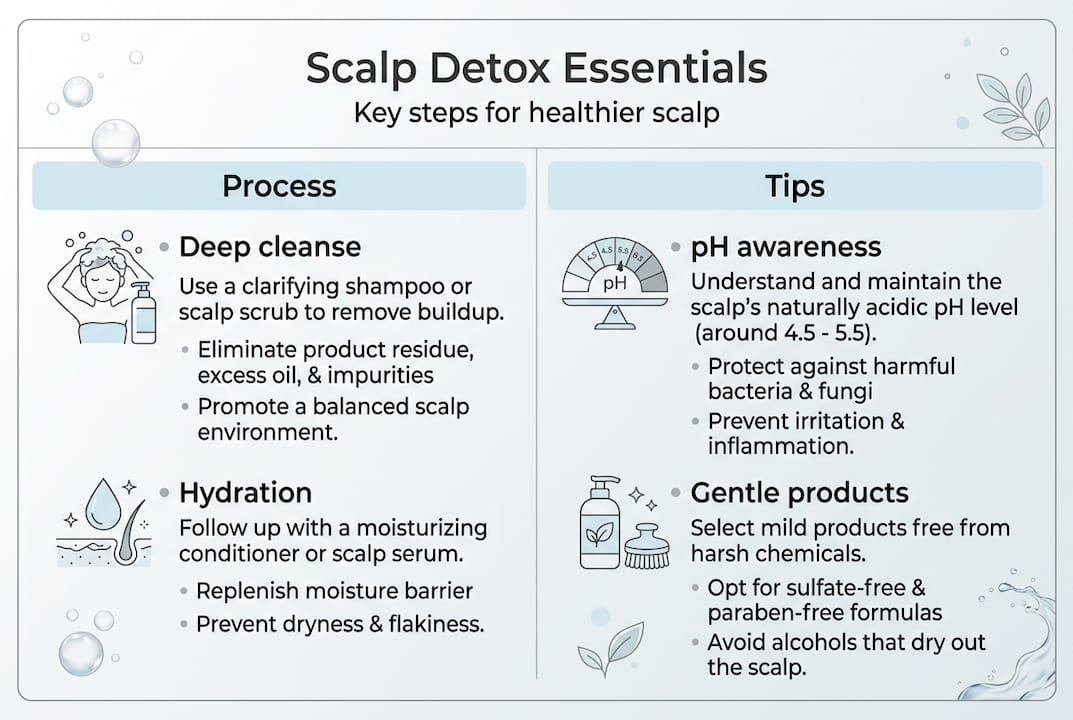
What most scalp detox guides miss
Most scalp detox content is built around selling a product. Identify a problem, recommend a treatment, repeat. What gets left out is the more important question of whether frequent intervention is necessary at all.
The trendy detox narrative prioritises dramatic results over sustainable ones. People who work with scalp microbiome science consistently point to gentle, infrequent deep cleans as more effective than daily harsh products, and the science supports that. Dysbiosis, not mere buildup, is the primary driver of chronic dandruff.
The most effective long-term strategy is the one that does the least harm while delivering targeted relief. Aggressive detoxing can feel productive, but it often resets the problem rather than resolving it. For anyone with a persistently itchy scalp, the answer is rarely more product. It is usually a better-chosen product, used less often. The goal is self-regulation, not permanent dependency.
Science-backed solutions for your scalp
If chronic dandruff or irritation has not responded to standard anti-dandruff shampoos, the issue is likely microbiome-related rather than surface buildup. Victory Serums offers pharmacist-developed formulations designed to address the functional drivers behind persistent flaking.

The dandruff control range is built around pH awareness and microbiome compatibility. The scalp serum delivers targeted relief during active flares while supporting balance between treatments.
Frequently asked questions
How often should you do a scalp detox?
Once every one to four weeks, adjusted for how oily your scalp is and how many styling products you use. Overdoing it strips natural oils and worsens irritation.
Can a scalp detox cure chronic dandruff?
A detox can reduce buildup and calm irritation, but chronic dandruff is driven by microbiome imbalance. Lasting relief requires restoring microbial balance, not just cleansing the surface.
Are home remedies safe for a scalp detox?
Gentle, evidence-backed options are generally safe, but sensitive scalps should avoid grainy scrubs and always follow with a hydrating, fragrance-free product to restore the barrier.
What ingredients should I avoid during a scalp detox?
Avoid harsh sulphates, synthetic fragrance and physical abrasives. These disrupt the microbiome and can trigger rebound irritation, particularly on a scalp that is already reactive.
Victory Serums products are designed to support scalp comfort and scalp health practices. They are not intended to diagnose, treat, cure or prevent medical conditions. If symptoms are severe, persistent, cracked, bleeding or worsening, seek guidance from a qualified healthcare professional.
Recommended
- Why Does Dandruff Occur? Science-Backed Scalp Insights 2026 – Victory Serums
- Understanding anti-dandruff agents: sustainable relief – Victory Serums
- Master effective scalp exfoliation steps for dandruff relief – Victory Serums
- Scalp pH Balance Guide: Restore Microbiome Harmony 2026 – Victory Serums

Get the free 1-Week Guide to Scalp Health and uncover the real cause of your flakes.
Download the free guide
Matt Heron is the founder of Victory Serums, an Australian microbiome focused scalp care brand specialising in severe dandruff, yeast imbalance and chronic scalp instability. With more than four decades of personal experience managing persistent dandruff and extensive study of scalp biology, skin pH and barrier function, he developed targeted scalp serums that work within minutes or as leave in treatments. His Reset, Rebalance and Restore approach challenges daily anti-dandruff shampoo dependence and is helping redefine the way chronic dandruff is treated.