

Updated July 2026
In Brief:
- Chronic dandruff is tied to scalp barrier dysfunction, not just surface flakes.
- The barrier's lipids and skin cells hold moisture in, keep irritants out and support the microbiome.
- Restoring the barrier with gentle, low-pH care works better than relying on antifungal shampoos alone.
Most people treat dandruff as a surface problem. Flakes appear, so they reach for a medicated shampoo. The itch returns, so they wash more often. The cycle repeats. What rarely gets addressed is the structural breakdown underneath: a compromised scalp barrier that leaves skin unable to defend itself, hold moisture, or keep microbial populations in check. Research confirms that chronic dandruff is closely tied to measurable barrier dysfunction. Understanding why that barrier fails, and how to restore it, is where lasting change begins.
What is the scalp barrier and why does it matter?
The scalp barrier is the outermost layer of scalp skin. It follows a "brick and mortar" model: corneocytes, or skin cells, act as the bricks, and lipids like ceramides, fatty acids and cholesterol act as the mortar between them. Together they form a seal that keeps harmful things out and useful things in.
When that seal is intact, the scalp barrier supports several critical processes:
- Prevents water loss. The scalp stays hydrated without relying on products.
- Blocks environmental aggressors. Pollution, allergens and pathogens are held at bay.
- Maintains pH. A healthy scalp sits at pH 4.5 to 5.5, which is slightly acidic.
- Supports a balanced microbiome. That acidic environment favours beneficial bacteria while naturally limiting Malassezia overgrowth.
The scalp barrier is not just skin. It is a living, dynamic system that directly regulates your microbiome and your scalp's ability to self-correct.
| Barrier component | Role |
|---|---|
| Corneocytes | Structural cells that form the outer wall |
| Ceramides | Lipid mortar that fills gaps and seals in moisture |
| Fatty acids | Maintain acidity and antimicrobial defence |
| Cholesterol | Adds flexibility and structural stability |
When the barrier degrades, the mortar breaks down first. Ceramide depletion is one of the earliest measurable signs, and it sets off a chain reaction: moisture escapes, pH rises, and the microbial environment shifts. Malassezia thrives in that altered state, producing oleic acid that irritates the scalp further. Understanding microbiome balance is central to breaking that chain.
How barrier dysfunction drives dandruff
Barrier dysfunction does not announce itself all at once. Most people notice it as recurring flaking that never fully resolves, a persistent itch that products seem to worsen, or skin that swings between oily and dry with no clear cause.
Research shows a consistent pattern: increased water loss, decreased hydration, more redness, dryness, flaking, itch, altered ceramide profiles and microbiome imbalance. These are not separate issues. They are interconnected signs of the same underlying failure.
| Scalp state | Water loss | Hydration | Ceramide levels | Dominant microbe |
|---|---|---|---|---|
| Healthy | Low | High | Normal | Beneficial bacteria |
| Dandruff-affected | Elevated | Reduced | Depleted | Malassezia |
| Severely compromised | High | Very low | Significantly altered | Opportunistic bacteria |
The cycle is self-reinforcing. A weakened barrier lets Malassezia overgrow. The yeast releases fatty acids that inflame the scalp and further disrupt the lipid structure. That inflammation damages the barrier, the immune response generates more inflammation, and round it goes.
This explains why Malassezia-driven flaking returns the moment people stop using antifungal shampoo. The shampoo suppresses the fungus but does nothing to repair the structural weakness that allowed the overgrowth in the first place.
Recognisable signs of barrier dysfunction:
- Flakes that return within days of washing
- A scalp that feels tight or itchy between washes
- Sensitivity to products that previously caused no reaction
- Red or inflamed patches alongside flaking
- Oiliness followed rapidly by dry, irritated skin
What wrecks your scalp barrier
Most barrier damage is not dramatic. It accumulates quietly through daily habits and product choices that seem harmless individually but add up.
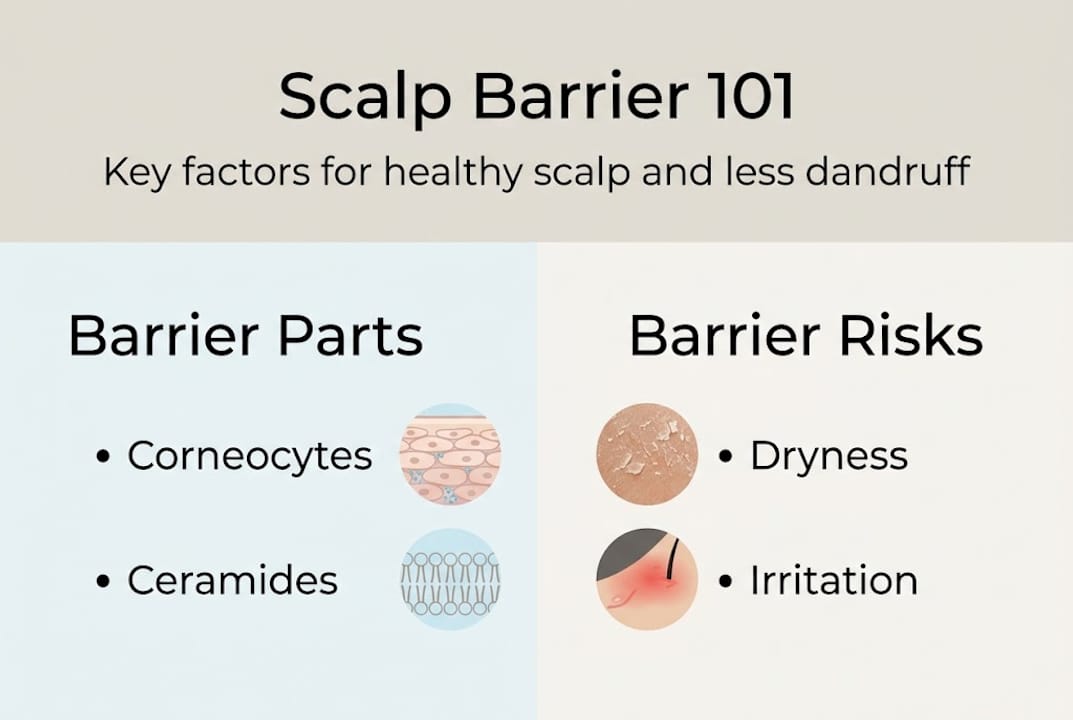
Research identifies the main culprits as harsh surfactants, heat styling, overwashing, yeast-induced irritation, oxidative stress and environmental factors including pollution and stress. Each one strips or disrupts the lipid layer holding the barrier together.
- Sulphate-heavy shampoos. Effective cleansers, but they do not distinguish between sebum, barrier lipids and dirt. Regular use strips the mortar out of the wall.
- Washing too frequently. Daily washing removes the sebum the scalp needs to maintain its acidic pH.
- Heat styling. Dryers and straighteners raise surface temperature and accelerate lipid loss.
- Antifungal overuse. Broad antifungals target Malassezia but also disturb the beneficial microbes that help maintain the barrier.
- Diet and stress. Scalp microbiome differences are influenced by diet, stress hormones and systemic inflammation, all of which alter sebum composition and microbial diversity.
Oily scalps are not inherently healthier. An oily scalp often signals imbalance, where excess sebum feeds problematic microbes rather than protecting the barrier.
Whether you have a dry or oily scalp matters, because barriers fail differently in each case. Dry scalps lose lipids directly, while oily scalps often have altered lipid composition driven by microbial activity.
Pro Tip: If your scalp becomes oilier after washing, it is likely compensating for lipid loss caused by over-cleansing. Reducing wash frequency often normalises oil production within two to three weeks.
Repairing the scalp barrier
Barrier repair is not about adding more products. It is about removing what is harming the barrier and replacing what has been lost, in the right order and at the right frequency.
The framework is consistent: gentle sulphate-free cleansing, targeted barrier-repairing ingredients, prebiotic and probiotic support to restore microbial balance, and avoiding broad-spectrum antifungals for long-term use. Ingredients that actively support repair:
- Ceramides: replenish the depleted lipid mortar directly
- Niacinamide: reduces inflammation and supports ceramide synthesis
- Zinc PCA: regulates sebum and has mild antimicrobial properties
- Prebiotic and probiotic actives: encourage beneficial bacteria while limiting Malassezia
- Low-pH formulations: products below pH 5 maintain the acidic environment the barrier depends on
Pro Tip: Check the pH of your current shampoo. Most mainstream products sit between pH 6 and 8, alkaline enough to disrupt both the barrier and the microbiome with every wash. Switching to something below pH 5 is one of the highest-impact changes you can make.
The goal is not symptom suppression but barrier restoration. A repaired barrier means the scalp can self-regulate again, reducing the need for ongoing intervention. Reductions in water loss and improvements in hydration are measurable within weeks of switching to sulphate-free, pH-balanced care, without daily antifungal treatment.
Why barrier repair beats antifungals alone
Here is the uncomfortable reality. Most scalp care products, including prescription-strength antifungals, are designed to control symptoms. They are not designed to fix what caused them.
Research contrasting antifungal and holistic microbiome approaches makes it clear: antifungal dependency does not resolve barrier dysfunction, while barrier repair actively prevents the dependency cycle. People who shift focus from suppression to restoration experience fewer relapses, less product reliance, and a scalp that progressively needs less intervention.
That is the exact principle behind the approach here. Minimal chemical interference. Targeted, short-term actives when needed. Low-pH maintenance in small volumes. And a structured framework that reduces product dependence over time rather than swapping one daily habit for another. If your scalp has never fully recovered despite years of antifungal shampoo, that is not a coincidence. It is a signal that the underlying barrier has never been addressed.
Microbiome-friendly scalp solutions that work
Understanding scalp barrier science is useful. Applying it is what creates change.

Victory Serums is pharmacist-developed and formulated with pH awareness and microbiome compatibility at the core. The dandruff control range brings together targeted barrier support, flare control and low-pH maintenance designed to reduce chemical dependency rather than extend it. The Moisturising Scalp Serum supports the exact barrier repair process outlined here. Australian-made, structured for lasting results.
Frequently asked questions
What exactly is the scalp barrier, and why is it important?
The scalp barrier is the outermost layer of scalp skin that prevents moisture loss, blocks irritants and supports a healthy microbiome. When it breaks down, chronic dandruff and irritation follow.
How can I tell if my scalp barrier is damaged?
Signs include persistent dandruff, itch, red or flaky patches, increased oiliness or dryness, and sudden sensitivity to products that previously caused no reaction.
Do antifungal shampoos fix scalp barrier problems?
They can reduce symptoms by targeting Malassezia, but they do not repair the deeper barrier dysfunction or replenish the lipids the barrier needs to self-regulate.
What ingredients support the scalp barrier best?
Ceramides, niacinamide, zinc PCA and prebiotic or probiotic actives all help rebuild barrier lipids and favour the healthy microbes the scalp depends on.
Is the same approach needed for oily and dry scalps?
Both need gentle, microbiome-friendly care, but oily scalps need different sebum management, while dry scalps benefit most from direct lipid replenishment.
Victory Serums products are designed to support scalp comfort and scalp health practices. They are not intended to diagnose, treat, cure or prevent medical conditions. If symptoms are severe, persistent, cracked, bleeding or worsening, seek guidance from a qualified healthcare professional.
Recommended
- Understanding anti-dandruff agents: sustainable relief – Victory Serums
- What causes scalp flakes? Malassezia affects 80% of cases – Victory Serums
- Dry vs oily scalp: 50% of people face dandruff care issues – Victory Serums
- Dandruff treatment step by step for lasting relief – Victory Serums

Get the free 1-Week Guide to Scalp Health and uncover the real cause of your flakes.
Download the free guide
Matt Heron is the founder of Victory Serums, an Australian microbiome focused scalp care brand specialising in severe dandruff, yeast imbalance and chronic scalp instability. With more than four decades of personal experience managing persistent dandruff and extensive study of scalp biology, skin pH and barrier function, he developed targeted scalp serums that work within minutes or as leave in treatments. His Reset, Rebalance and Restore approach challenges daily anti-dandruff shampoo dependence and is helping redefine the way chronic dandruff is treated.