

Updated July 2026
In Brief:
- Oily scalp and dandruff are not a hygiene problem. They are a microbial imbalance, where excess sebum feeds Malassezia overgrowth.
- Harsh anti-dandruff shampoos strip the scalp and trigger more oil, worsening the cycle they claim to fix.
- Gentle, weekly care restores balance over four to six weeks without building a new daily dependency.
Oily scalp and dandruff affect a large number of Australians, and for many the problem keeps coming back no matter what shampoo they try. Harsh anti-dandruff formulas often strip the scalp of its natural defences, triggering more oil production and worsening the very cycle they claim to fix. The real issue is rarely hygiene. It is microbial imbalance. This guide covers practical, low-intervention steps to restore scalp balance, reduce flaking and support long-term microbiome health without creating a new daily dependency.
Understanding the oily scalp and dandruff connection
Oily scalp and dandruff are not signs of poor hygiene. They are signs of a disrupted environment. When the scalp produces excess sebum, it creates ideal conditions for Malassezia, a naturally occurring yeast, to overgrow. That overgrowth triggers inflammation, irritation and the visible flaking most people associate with dandruff.
Wash frequency is part of restoring balance. Read how often to wash your hair when you have dandruff.
Malassezia overgrowth accounts for up to 80% of dandruff cases, with microbial imbalance affecting roughly half of all adults. This is a functional imbalance that standard shampoos rarely address at the root.
Common symptoms of oily scalp imbalance:
- Greasy flakes that stick to the scalp or hair
- Persistent itching, especially after washing
- A scalp that feels oily within hours of shampooing
- Redness or mild irritation around the hairline
- Flaking that worsens with stress or dietary changes
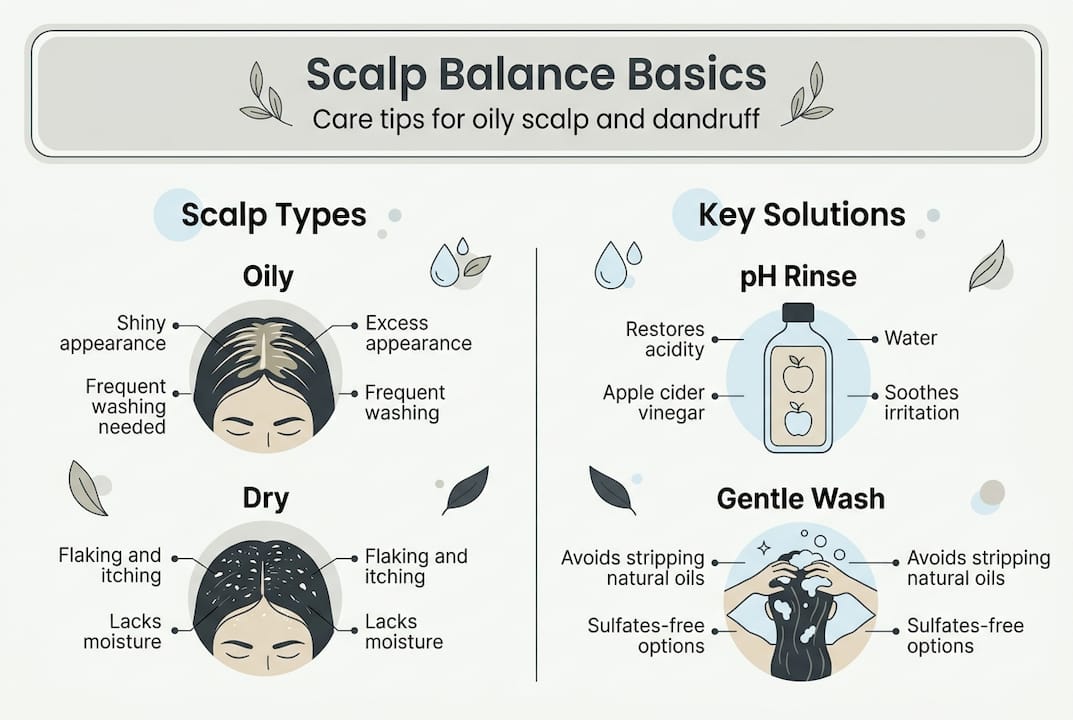
Understanding the dry vs oily scalp differences matters here, because the approach is different. Oily dandruff involves excess sebum feeding fungal growth. Dry dandruff involves a compromised barrier. Treating them the same way leads to poor results.
What you need for healthy scalp balance
Before starting any routine, gather the right tools and ingredients. Using the wrong concentrations or skipping preparation is one of the most common reasons gentle approaches fail.
| Ingredient or tool | Purpose | Notes |
|---|---|---|
| Apple cider vinegar (ACV) | Supports scalp pH, reduces fungal growth | Dilute 1:4 to 1:8 with water |
| Aloe vera gel | Soothes inflammation, supports barrier repair | Use pure, additive-free gel |
| Tea tree oil | Antifungal, antimicrobial action | Always dilute in a carrier oil |
| Coconut oil | Pre-wash scalp massage | Use sparingly, rinse thoroughly |
| pH-balanced cleanser | Maintains a microbiome-friendly environment | Look for a pH below 5 |
A diluted ACV rinse at a 1:4 to 1:8 ratio supports scalp pH balance in the healthy range of 4.5 to 5.5, reduces fungal activity and clarifies the scalp without stripping beneficial microbes.
Pro Tip: Always patch test new ingredients on a small area of skin before applying to the full scalp. This is especially important with essential oils like tea tree, which can cause sensitivity reactions in some people.
A weekly routine for balancing an oily scalp
This routine is designed to be used weekly, not daily. Spacing out treatments gives the scalp time to rebalance. Over-treating is one of the fastest ways to worsen oily dandruff.
- Day 1: pre-wash coconut oil massage. Apply a small amount to the scalp, massage gently for five minutes, leave for 20 to 30 minutes, then wash out with a pH-balanced cleanser.
- Day 2: ACV rinse. Mix ACV with water at 1:6. After cleansing, pour over the scalp, leave for two to three minutes, then rinse with cool water.
- Day 4: aloe vera soothing treatment. Apply pure aloe vera gel to the scalp, leave for 20 minutes, then rinse. It calms inflammation and supports barrier repair without adding greasiness.
- Day 6: diluted tea tree treatment. Add two to three drops of tea tree oil to a tablespoon of carrier oil, apply to affected areas, leave for 15 minutes, then wash out.
For more options, microbiome-compatible natural remedies can be rotated into this routine.
Pro Tip: Less is more. If your scalp feels irritated or overly dry after a treatment, extend the gap between applications. The goal is to support the scalp, not overwhelm it.
Troubleshooting and common mistakes
- Washing too frequently. Daily washing strips the acid mantle and disrupts beneficial bacteria. Aim for two to three washes a week at most.
- Using undiluted actives. Undiluted ACV or tea tree oil can cause burns or sensitisation. Always dilute.
- Switching products too quickly. Give each approach two to three weeks before judging. Microbiome shifts take time.
- Using harsh surfactants. Sulphate-heavy shampoos undo the work of every other step.
- Skipping patch testing. Sensitivity reactions are more common than people expect, especially with essential oils.
Never ignore signs of burning, worsening flakes or scalp discomfort. Pause the routine and consult a health professional if symptoms escalate.
With consistent gentle care, the scalp microbiome tends to shift toward a healthier profile within about four weeks, with sebum regulation over four to six weeks. Patience is part of the process.
How to tell your scalp is rebalancing
Progress with a gentle routine is gradual but measurable. Signs your scalp is rebalancing:
- Reduced visible flaking within the first two to three weeks
- Less itching and sensitivity after washing
- Comfort that lasts longer between washes
- Oil production that feels regulated, not absent but not excessive
- Normal scalp sensation without tightness or burning
Sebum regulation and microbiome recovery typically occur within four to six weeks of consistent care. Once symptoms settle, the goal is to reduce treatment frequency further, not maintain the same intensity. Maintaining a healthy scalp pH below 5.5 long term is one of the most effective ways to keep Malassezia in check without ongoing chemical intervention. If you see no improvement after six weeks, or if burning or spreading redness occurs, consult a dermatologist or pharmacist.
Take the next step to healthy scalp balance
The routines here are a strong foundation. For faster results and structured support, Victory Serums offers pharmacist-developed products built for oily dandruff and microbiome recovery.

The Intensive Scalp Serum is formulated at around pH 6 for short-term, targeted use during flares, not daily application. The full dandruff control range is designed around the Reset, Rebalance, Restore framework, reducing product dependency over time. A free 1-Week Scalp Health Guide is also available to guide the full recovery process.
Frequently asked questions
How long does it take to balance an oily scalp naturally?
Microbiome recovery and sebum regulation typically occur within four to six weeks of consistent, gentle care. Results vary with severity and consistency.
Can I use apple cider vinegar and tea tree oil together?
Yes. Apply a diluted ACV rinse first to support scalp pH, then follow with a diluted tea tree treatment. Never apply either undiluted.
Does avoiding harsh chemicals really help my scalp microbiome?
Gentle routines support microbiome diversity and reduce Malassezia overgrowth, both key drivers of long-term scalp health and reduced flaking.
What if my scalp stings after applying natural remedies?
Stop immediately and rinse thoroughly with cool water. Patch test before any future applications, and consult a health professional if irritation continues.
Victory Serums products are designed to support scalp comfort and scalp health practices. They are not intended to diagnose, treat, cure or prevent medical conditions. If symptoms are severe, persistent, cracked, bleeding or worsening, seek guidance from a qualified healthcare professional.
Recommended
- Oily scalp management guide for microbiome balance in 2026 – Victory Serums
- Dry vs oily scalp: 50% of people face dandruff care issues – Victory Serums
- Scalp pH Balance Guide: Restore Microbiome Harmony 2026 – Victory Serums
- What causes scalp flakes? Malassezia affects 80% of cases – Victory Serums

Get the free 1-Week Guide to Scalp Health and uncover the real cause of your flakes.
Download the free guide
Matt Heron is the founder of Victory Serums, an Australian microbiome focused scalp care brand specialising in severe dandruff, yeast imbalance and chronic scalp instability. With more than four decades of personal experience managing persistent dandruff and extensive study of scalp biology, skin pH and barrier function, he developed targeted scalp serums that work within minutes or as leave in treatments. His Reset, Rebalance and Restore approach challenges daily anti-dandruff shampoo dependence and is helping redefine the way chronic dandruff is treated.