

Updated July 2026
In Brief:
- If flakes persist despite regular washing, the issue is often buildup trapping dead skin and feeding microbial imbalance.
- Gentle scalp exfoliation clears that buildup, but only when done sparingly. Once a week is plenty.
- Over-exfoliating strips protective oils and disrupts the microbiome, which makes flaking worse, not better.
You wash your hair regularly, yet the flakes and irritation persist. Often the problem is not your shampoo. It is buildup trapping dead skin and feeding a microbial imbalance. Gentle exfoliation clears the follicles and lifts that debris, and done the microbiome-friendly way it supports healing rather than triggering more irritation. This guide walks through effective exfoliation, step by step.
Before you start: what you need
Before exfoliating, gather the right tools and check your scalp. Rushing in without preparation can do more harm than good.
Choose mild products that will not disrupt your scalp's natural defences, and use a soft silicone scalp brush or simply your fingertips for gentle massage without scratching. Then check for open sores, cuts or active infection. If any are present, wait until they heal completely. Applying product to broken skin increases irritation and slows recovery.
Weekly sessions give the skin barrier enough time to recover in between. Gather these essentials first:
- A mild chemical exfoliant (salicylic acid 0.5 to 2%) or a fine, rounded-particle physical exfoliant
- A soft silicone scalp brush or clean fingertips
- A low-pH shampoo and conditioner
- A clean towel and sectioning clips
Pro Tip: Patch-test any new exfoliant behind your ear 24 hours before full application to check for a reaction.
Choosing the right exfoliant: chemical vs physical
Which exfoliant suits you depends on your scalp sensitivity, how much buildup you have and personal preference. Both chemical and physical options work when chosen well.
Chemical exfoliation with 0.5 to 2% salicylic acid dissolves buildup gently and suits sensitive scalps. Salicylic acid is oil-soluble, so it penetrates the follicle to break down sebum and dead skin without mechanical friction. Physical exfoliants use fine, rounded particles or a silicone brush to lift debris manually.
| Exfoliant type | Best for | Key benefits | Cautions |
|---|---|---|---|
| Chemical (salicylic acid) | Sensitive scalps, oily buildup | Dissolves sebum, unclogs follicles | May dry the scalp if overused |
| Physical (fine beads) | Moderate buildup, normal scalp | Immediate tactile removal | Avoid sharp particles |
| Silicone brush | All scalp types | Massage boosts circulation | Use gentle pressure only |
Keep your products near the scalp's natural acidity of 4.5 to 5.5. High-pH formulas disrupt the acid mantle and let opportunistic microbes proliferate. Check the label, and favour products that state a low pH. Avoid products containing:
- Walnut shell or apricot kernel particles, whose jagged edges cause microtears
- Sodium lauryl sulphate, which strips natural oils
- Synthetic fragrance, a common irritant
- Alcohol as a primary ingredient, which is drying
Pro Tip: If you are unsure which type suits you, start with a chemical exfoliant once every 10 days and assess how your scalp responds before increasing frequency.
Step-by-step scalp exfoliation
A structured process lets you exfoliate effectively without causing damage. Each step builds on the last.
-
Wet hair and scalp thoroughly under lukewarm water for 60 seconds. This softens buildup so it lifts without heavy scrubbing.
-
Part hair into four to six sections with clips or your fingers, so product reaches the scalp evenly and no patches are missed.
-
Apply exfoliant directly to the scalp in small amounts per section. Keep it off the hair strands, where it can cause dryness and tangling.
-
Massage gently with fingertips or a soft silicone brush for three to five minutes total. Use light, circular motions, never your nails.
-
Rinse thoroughly until the water runs clear. Leftover product causes irritation and undoes the benefit.
-
Follow with a gentle, low-pH shampoo to clear any remaining debris, then apply conditioner to the lengths only, keeping it off the scalp.
Limit exfoliation to once a week, or every 7 to 10 washes. More often than that strips protective oils and disrupts microbial balance, which can worsen dandruff.
Pro Tip: Exfoliate in the evening rather than the morning. That gives the scalp overnight to rebalance before sun exposure or styling product.
Common mistakes and how to avoid them
Even with good intentions, poor exfoliation practice can set you back. The frequent errors:
-
Exfoliating daily or several times a week. The scalp needs recovery time. Over-exfoliation strips the barrier and triggers more oil and flaking as the skin compensates.
-
Using coarse or sharp scrubs. Irregular particles create microscopic tears that become entry points for bacteria and fungi.
-
Ignoring product pH. Formulas above pH 6 disrupt the acid mantle and create conditions where dandruff-causing microbes thrive.
-
Applying conditioner to the scalp. Conditioning agents clog follicles and add buildup. Keep them to the mid-lengths and ends.
-
Pushing through irritation. If you notice more redness, burning or flaking after exfoliation, reduce frequency immediately and switch to gentler products.
Minor tingling during application is normal. A persistent burning or raw sensation is not.
What to expect and how to measure success
Realistic expectations keep you consistent. Scalp healing is gradual. A visible reduction in flakes and itching usually appears within four to six weeks of consistent weekly exfoliation. Early on, you may notice reduced oiliness and a cleaner-feeling scalp between washes.
Measure success through observable changes:
- Fewer visible flakes on shoulders and clothing
- Less frequent, less intense itching
- Longer between washes without the scalp feeling greasy
- Less product buildup despite the same washing routine
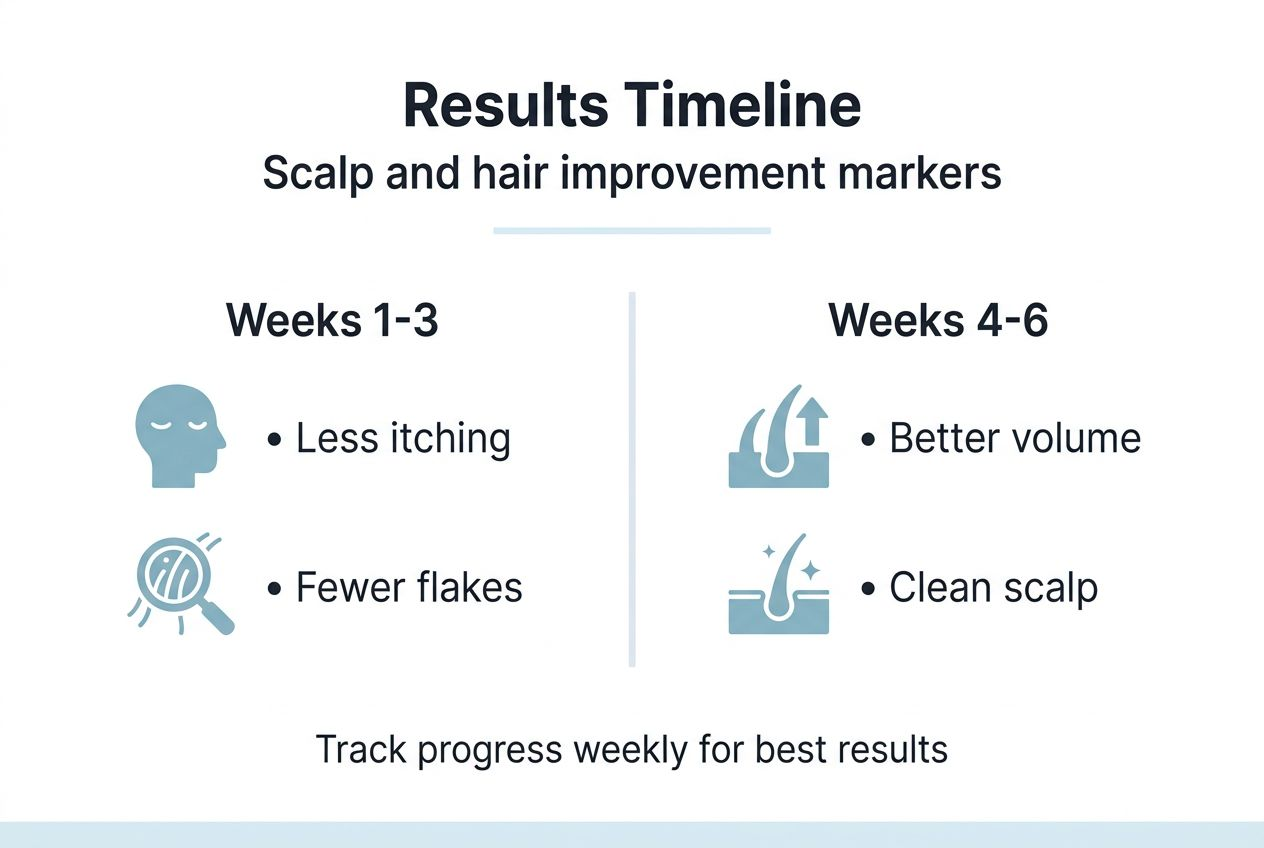
Longer-term microbiome balance reduces recurrence by creating an environment where beneficial microbes outcompete the problem species, and that typically takes 8 to 12 weeks of sustained care. Track your progress in a simple log noting flake severity, itch level and days between washes. The patterns will help you fine-tune your frequency and product choices.
Holistic care and long-term maintenance
Exfoliation is one part of scalp health. Supporting the microbiome from several angles is what creates lasting results:
-
Feed the beneficial microbes. Prebiotic and postbiotic ingredients such as inulin and lactobacillus ferment support microbial diversity.
-
Mind your gut. Identify food triggers that affect your skin. Dairy, refined sugar and high-sugar foods commonly worsen inflammatory scalp conditions.
-
Reduce the product load. Every extra product adds buildup potential. Alternate active treatments and minimise styling products.
-
Follow a structured program like the Reset, Rebalance, Restore framework, which addresses root causes rather than symptoms.
Understanding how Malassezia drives most dandruff helps you target the right factors. Over time, as the scalp rebalances, you will need less intervention. Many people reduce exfoliation to once every 10 to 14 days after three months of weekly care.
Discover microbiome-friendly scalp care solutions
Exfoliation works best when paired with products that support rather than disrupt your scalp. Victory Serums offers microbiome-friendly scalp serums, developed by pharmacists with pH awareness and minimal-intervention principles.

The dandruff control range complements your exfoliation routine with targeted treatment designed for controlled-frequency use, not daily dependency. For the full method, the free 1-Week Scalp Health Guide integrates exfoliation with gut health, food-trigger identification and progress tracking.
Frequently asked questions
How often should I exfoliate my scalp to avoid irritation?
Limit scalp exfoliation to once a week, or every 7 to 10 washes. This protects the microbiome and prevents the dryness that comes from over-stripping natural oils. Daily exfoliation risks worsening dandruff by disrupting the barrier and triggering compensatory oil production.
Can I use physical scrubs if I have a sensitive scalp?
Yes, but choose gentle physical exfoliants with fine, rounded particles or a soft silicone brush. Avoid coarse scrubs with walnut shell or apricot kernel fragments, which create microtears that increase irritation and provide entry points for infection.
How soon will I see improvements after starting scalp exfoliation?
A noticeable reduction in flakes and itching usually appears within four to six weeks of consistent weekly exfoliation. Early improvements like reduced oiliness may show within two weeks. Continued care improves comfort and reduces flare-ups over 8 to 12 weeks as the microbiome rebalances.
Should I exfoliate before or after shampooing?
Exfoliate before shampooing. Apply to a wet scalp, massage thoroughly, rinse completely, then follow with a gentle, low-pH shampoo to remove any remaining debris. This sequence cleanses thoroughly without leaving residue that causes buildup.
Victory Serums products are designed to support scalp comfort and scalp health practices. They are not intended to diagnose, treat, cure or prevent medical conditions. If symptoms are severe, persistent, cracked, bleeding or worsening, seek guidance from a qualified healthcare professional.
Recommended
- How to treat dandruff for lasting relief – Victory Serums
- Understanding anti-dandruff agents: sustainable relief – Victory Serums
- What causes scalp flakes? Malassezia affects 80% of cases – Victory Serums
- Australian scalp care: microbiome balance for 2026 – Victory Serums

Get the free 1-Week Guide to Scalp Health and uncover the real cause of your flakes.
Download the free guide
Matt Heron is the founder of Victory Serums, an Australian microbiome focused scalp care brand specialising in severe dandruff, yeast imbalance and chronic scalp instability. With more than four decades of personal experience managing persistent dandruff and extensive study of scalp biology, skin pH and barrier function, he developed targeted scalp serums that work within minutes or as leave in treatments. His Reset, Rebalance and Restore approach challenges daily anti-dandruff shampoo dependence and is helping redefine the way chronic dandruff is treated.