
Updated July 2026
In Brief:
- Chronic dandruff is a microbiome problem, not a hygiene problem. Washing more or harder usually makes it worse.
- Antifungal shampoos work fast but relapse is high once you stop. That is dependency, not recovery.
- Lasting results come from a consistent, low-intervention routine that supports the scalp's own regulation.
More than half of adults deal with recurring dandruff, yet most reach for stronger shampoos or wash more often when symptoms flare. That instinct is understandable, and, according to scalp microbiome science, it is often the wrong move. Scalp dysbiosis is common across the population, and the root cause is rarely poor hygiene. It is a disrupted microbial ecosystem. This guide sets out what the science says about long-term scalp care, why chemical dependency keeps the cycle going, and what a sustainable, microbiome-first routine looks like.
Why chronic scalp issues persist: it is not just flakes
Persistent dandruff is not a cleanliness problem. It is a microbial imbalance problem. Chronic scalp conditions stem from microbiome dysbiosis, where an overgrowth of Malassezia disrupts the barrier and triggers ongoing inflammation. Understanding why so many scalps itch starts here.
The role of Malassezia in flaking is well documented. The fungus feeds on sebum, and when it overgrows it produces irritating by-products that speed up skin cell turnover and cause visible flaking. This is a systemic issue, not a surface one.
Here is what makes chronic cases worse:
- Overwashing strips the beneficial bacteria that keep Malassezia in check
- Harsh sulphates and antifungal chemicals disrupt the whole microbial community
- Removing too much sebum triggers the scalp to overproduce oil, feeding the cycle
- Fragrance and preservatives irritate an already compromised barrier
The takeaway is clear: treating flakes without addressing the underlying imbalance is short-term management at best.
The scalp microbiome explained
The scalp microbiome is a living ecosystem of bacteria, fungi and other microorganisms that work together to maintain the barrier, regulate sebum and keep harmful species in check. When it is balanced, irritation and flaking stay minimal. When it is disrupted, harmful bacteria and yeasts take over and the scalp loses its ability to recover.
| Feature | Healthy scalp | Dysbiotic scalp |
|---|---|---|
| Microbial diversity | High | Low |
| Symptoms | Minimal or none | Flaking, itch, redness |
| Sebum levels | Balanced | Excess or disrupted |
| Resilience | Strong self-regulation | Poor recovery after stress |
| Dominant species | Diverse, balanced flora | Malassezia or pathogenic bacteria |
The difference between scalp care and hair care matters here. Most people focus on the hair. The scalp is where the real work happens, and local climate and lifestyle shape its microbial health too.
Pro Tip: Use gentle, pH-balanced cleansers below pH 5.5 so beneficial microbes can thrive without stripping the scalp's natural acid mantle.
Traditional antifungals vs microbiome-friendly care
Antifungal shampoos work, and fast. That is not in dispute. The problem is what happens after. Relapse is high without ongoing use, so the moment you stop, symptoms return. That is dependency, not recovery.
Microbiome-friendly shampoos have been shown to reduce symptoms and rebalance microbial ratios in clinical testing. The approach is different: instead of suppressing all fungi, these formulations support the conditions that let the scalp regulate itself.
| Approach | Relief time | Relapse likelihood | Impact on scalp flora |
|---|---|---|---|
| Antifungal shampoo | Fast (days) | High without maintenance | Disrupts the broad microbial community |
| Microbiome-friendly care | Moderate (weeks) | Low with consistency | Supports beneficial species |
| Natural antifungals | Variable | Low to moderate | Minimal disruption |
The evidence supports combining approaches rather than relying on one alone. For microbiome-friendly prevention and a breakdown of effective dandruff agents, lasting change needs ecosystem support, not just microbe suppression.
Designing your long-term scalp care routine
A structured routine is the difference between short-term relief and lasting results. A practical weekly framework:
- Cleanse gently two to three times a week with a low-pH, sulphate-free cleanser
- Apply a targeted treatment as needed, not daily
- Use a barrier- or microbiome-supporting serum after cleansing
- Track your triggers including stress, diet and sleep each week
- Reduce product volume over time as symptoms stabilise, rather than maintaining high-frequency use
Consistent, combined routines produce a meaningful reduction in symptoms over the first few weeks, but maintenance is essential to prevent relapse, and lifestyle factors like stress and diet play a significant role.
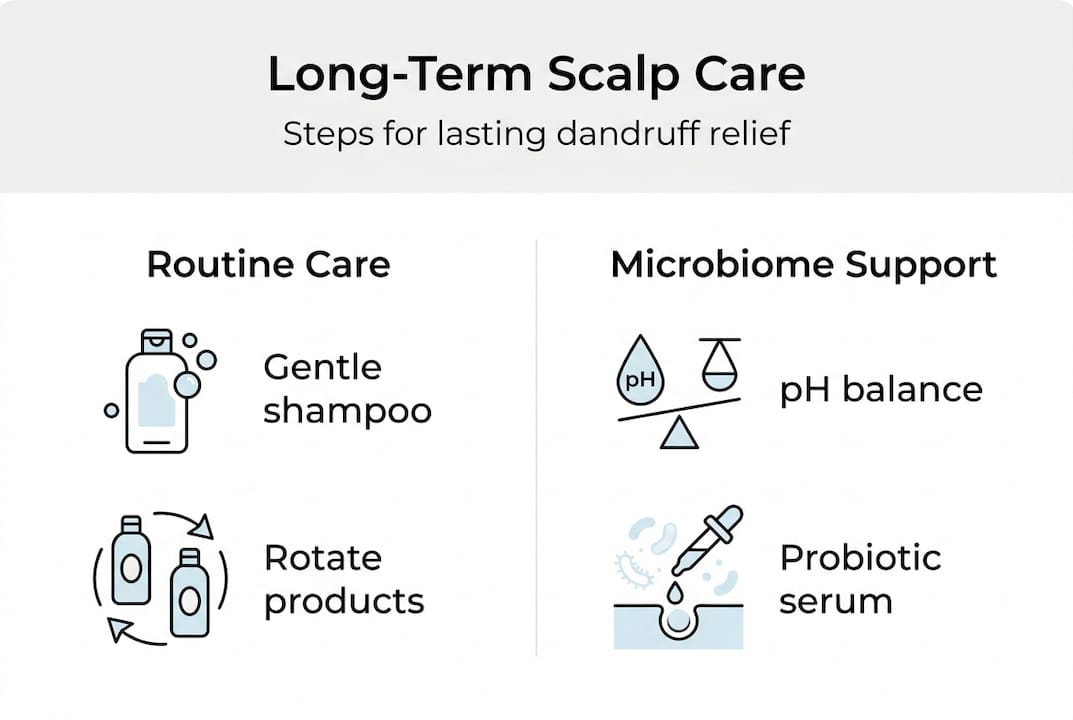
For a detailed step-by-step relief plan or guidance on dry vs oily scalp differences, tailoring the routine to your scalp type matters.
Pro Tip: Rotate between targeted and microbiome-friendly products every few weeks to keep the scalp ecosystem adaptable.
Reducing chemical dependency: can natural solutions last?
The evidence says yes, with the right ingredients and consistency. Natural actives can support the microbiome without the broad disruption of synthetic antifungals. Ingredients worth looking for:
- Tea tree oil: antifungal activity against Malassezia at low concentrations
- Neem: disrupts fungal cell membranes and reduces scalp inflammation
- Eucalyptus oil: eucalyptus formulations can disrupt fungal membranes
- Prebiotic serums: feed beneficial bacteria without introducing live cultures
- Omega-3 and biotin: dietary support that helps regulate sebum from within
Simple product swaps reduce the chemical burden and create space for beneficial microbes to re-establish. Stress management and dietary awareness are equally important. These are not optional extras. They are functional drivers of scalp health.
Next steps: microbiome-friendly scalp solutions
A consistent microbiome-first routine is the foundation of lasting scalp health. Symptom suppression alone does not resolve the underlying imbalance. Structured, targeted support does.

Victory Serums offers pharmacist-developed solutions built for this purpose. The scalp serum is formulated for flare control with minimal chemical interference, and the full dandruff control range supports low-pH maintenance between treatments. For a structured plan, the free free 1-Week Scalp Health Guide walks through the Reset, Rebalance, Restore framework step by step.
Frequently asked questions
How often should I wash my scalp for long-term health?
Cleansing two to three times a week with a gentle, pH-balanced product best supports the scalp microbiome. Overwashing disrupts beneficial bacteria and can worsen symptoms over time.
Can natural remedies really replace medicated shampoos?
Natural antifungals like neem and tea tree are useful for maintenance and reducing chemical use. Severe or persistent cases may still benefit from medical antifungals during flares.
Why do my scalp issues keep coming back if I use anti-dandruff shampoos?
Relapse is high without maintenance because antifungal shampoos suppress Malassezia temporarily without restoring the underlying balance. Ongoing ecosystem support is what prevents recurrence.
Are probiotics and prebiotics safe to use on the scalp?
Yes. They help restore microbiome balance without the harsh side effects of synthetic antifungals, which makes them well suited to long-term use.
How long does it take to see real improvement?
Most people see meaningful improvement within about four weeks of a consistent routine that combines targeted treatment with microbiome support, with further gains over the following weeks.
Victory Serums products are designed to support scalp comfort and scalp health practices. They are not intended to diagnose, treat, cure or prevent medical conditions. If symptoms are severe, persistent, cracked, bleeding or worsening, seek guidance from a qualified healthcare professional.
Recommended
- Dandruff treatment step by step for lasting relief – Victory Serums
- Dandruff prevention tips for microbiome-friendly care 2026 – Victory Serums
- What causes scalp flakes? Malassezia affects 80% of cases – Victory Serums
- Australian scalp care: microbiome balance for 2026 – Victory Serums

Get the free 1-Week Guide to Scalp Health and uncover the real cause of your flakes.
Download the free guide
Matt Heron is the founder of Victory Serums, an Australian microbiome focused scalp care brand specialising in severe dandruff, yeast imbalance and chronic scalp instability. With more than four decades of personal experience managing persistent dandruff and extensive study of scalp biology, skin pH and barrier function, he developed targeted scalp serums that work within minutes or as leave in treatments. His Reset, Rebalance and Restore approach challenges daily anti-dandruff shampoo dependence and is helping redefine the way chronic dandruff is treated.