

Updated July 2026
In Brief:
- Seborrheic dermatitis is a chronic inflammatory scalp condition linked to Malassezia yeast overgrowth.
- Antifungal shampoos are the proven first-line treatment, but only when used correctly and not indefinitely.
- Lasting relief depends on strategic maintenance and microbiome balance, not permanent chemical suppression.
Persistent flakes, an itchy scalp, and that familiar greasy crust returning week after week. For many Australian adults, seborrheic dermatitis is not a one-off problem. It is a chronic condition that cycles through flares and remissions, often worsened by stress, seasonal changes and the wrong products. The good news is that evidence-backed, microbiome-friendly treatment exists. This guide covers what causes seborrheic dermatitis, which ingredients actually work, how to build a practical home routine, and when to seek professional help.
What is seborrheic dermatitis and why does it occur?
Seborrheic dermatitis is a common inflammatory skin condition affecting oil-rich areas of the body. On the scalp it presents as flaking, redness, itching and sometimes a greasy or crusty texture. It is not caused by poor hygiene. The primary driver is an overgrowth of Malassezia, a yeast that lives naturally on all human scalps. When conditions favour its proliferation, the immune system responds with inflammation and symptoms appear.
Antifungal shampoos targeting Malassezia are the primary clinical treatment for seborrheic dermatitis of the scalp in adults. That tells you something important: the yeast is central, but it is not the whole story.
The scalp microbiome, which includes hundreds of bacterial and fungal species, plays a significant role in keeping Malassezia in check. When that balance is disrupted, whether by harsh shampoos, hormonal shifts or illness, the yeast gains an advantage. Understanding how Malassezia drives scalp flakes helps explain why some people relapse repeatedly even after treatment.
Common triggers in Australia:
- Cold, dry winters in southern states like Victoria and Tasmania
- High humidity in Queensland and the Northern Territory, which increases sebum production
- Stress and fatigue, both of which affect immune regulation
- Hormonal changes, including those related to pregnancy or thyroid function
- Illness or immunosuppression
| Feature | Detail |
|---|---|
| Primary driver | Malassezia yeast overgrowth |
| Scalp type affected | Oily or combination |
| Typical onset | Adolescence or middle age |
| Pattern | Relapsing and remitting |
| Australian climate risk | Winter dryness, summer humidity |
Ingredients that actually work
Before starting, it helps to know which ingredients are proven and which are worth considering as gentler alternatives. Not all scalp products are equal, and the wrong one can make things worse.
First-line antifungal ingredients:
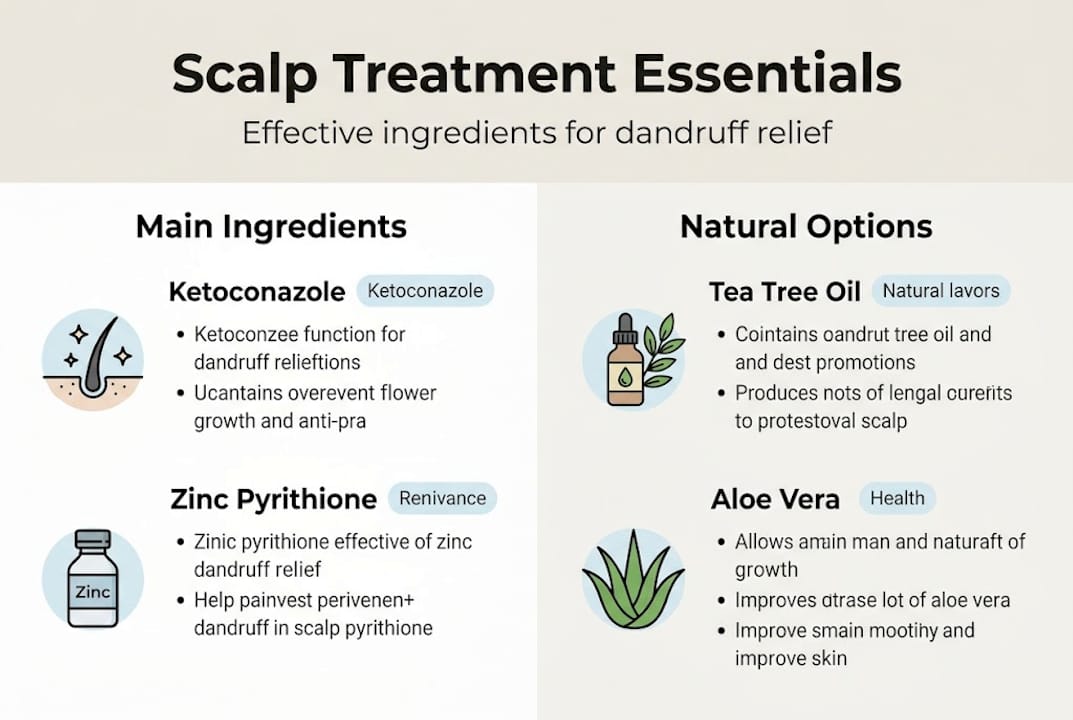
- Ketoconazole (1% or 2%): the most evidence-backed option, available over the counter in Australia at 1%.
- Zinc pyrithione: broad-spectrum antimicrobial, effective and widely available.
- Selenium sulphide: reduces yeast growth and slows skin cell turnover. Useful for stubborn cases.
- Coal tar: anti-inflammatory and antiproliferative. Effective, but strong odour and may not suit sensitive scalps.
Antifungal shampoos used two to three times weekly with three to five minutes of contact time are foundational. That contact time matters. Rinsing immediately reduces the effect significantly.
However, standard antifungals may disrupt the broader scalp microbiome over time. This is a real trade-off. Aggressively killing Malassezia also reduces the beneficial bacteria that help regulate the scalp long term.
Gentler alternatives and adjuncts:
- Topical probiotics, with emerging evidence for rebalancing the scalp microbiome
- Tea tree oil, a natural antifungal with some clinical support for mild cases
- Neem extract, anti-inflammatory and antimicrobial
- Plant-based barrier ingredients that help restore protective function
| Ingredient | Antifungal strength | Microbiome impact | Best for |
|---|---|---|---|
| Ketoconazole | High | Moderate disruption | Active flares |
| Zinc pyrithione | Moderate | Low to moderate | Maintenance |
| Selenium sulphide | Moderate to high | Moderate disruption | Stubborn cases |
| Coal tar | Moderate | Low | Chronic scaling |
| Topical probiotics | Low to moderate | Supportive | Sensitive scalps |
Pro Tip: If your scalp is sensitive, or you have used medicated shampoos for years without lasting results, consider rotating between a targeted antifungal and a gentler, microbiome-supportive option. That reduces the risk of resistance and gives the scalp time to rebalance.
Step-by-step home treatment
- Choose your active shampoo. Start with ketoconazole 1% if available, or zinc pyrithione. Both are accessible at Australian pharmacies without a prescription.
- Apply to a wet scalp. Work the shampoo into the scalp, not just the hair, and massage gently so it contacts the skin.
- Wait three to five minutes. Do not rinse immediately. This contact time is essential.
- Rinse thoroughly to remove all residue and avoid irritation from buildup.
- Repeat two to three times a week. Daily use is not necessary and strips the scalp's protective oils.
- For acute flares, a short course of a mild topical anti-inflammatory may help. Ask your pharmacist or GP rather than self-prescribing, and keep it brief.
- Transition to maintenance. Once symptoms settle, reduce frequency and move to a gentler, low-pH routine for ongoing use.
Ketoconazole is the preferred first-line option, and maintenance is essential given the chronic nature of the condition.
What to watch for: reduced flaking within two to four weeks, less redness and itching, no worsening irritation from the product itself, and a gradual reduction in oiliness as the scalp rebalances.
Pilot research shows microbiome-supportive scalp treatments can improve the ratio of beneficial Cutibacterium to Staphylococcus bacteria by around 20%, suggesting measurable benefit beyond symptom control alone.
Pro Tip: Track your flares in a simple journal. Note what you ate, your stress levels and the weather. Many people find dietary triggers and seasonal patterns are consistent, and spotting them helps you intervene earlier.
Troubleshooting and when to seek help
Home treatment works well for most people, but there are situations where it is not enough. Signs that home treatment is not working:
- No improvement after four weeks of consistent antifungal use
- Symptoms spreading beyond the scalp to the face, ears or chest
- Severe crusting, weeping or secondary infection
- Significant hair shedding alongside scalp inflammation
- Symptoms returning immediately after stopping treatment
Anyone immunocompromised, or with symptoms that resist treatment, should be assessed for underlying conditions. Common mistakes that slow recovery include washing daily with harsh shampoos, using the wrong product for your scalp type, stopping treatment as soon as symptoms clear rather than transitioning to maintenance, and ignoring dietary and lifestyle triggers.
Natural options have a role, particularly for sensitive scalps or as adjuncts during maintenance, but they are not a replacement for proven antifungals during an active flare. If you are unsure whether your symptoms are seborrheic dermatitis or another condition such as psoriasis or tinea, a GP or dermatologist can confirm the diagnosis.
The overlooked truth about modern scalp care
Most people with chronic seborrheic dermatitis have spent years cycling through medicated shampoos. They work, then they stop working, then the flakes return worse than before. The problem is not the shampoo. The problem is the strategy.
Conventional antifungals are designed to suppress Malassezia rapidly, and they do that well. But repeated long-term use without a maintenance plan disrupts the broader microbial community that keeps the scalp self-regulating. The scalp becomes dependent on the product rather than developing its own balance.
This is not a rejection of antifungals. It is a case for using them strategically: at the right frequency, for the right duration, then transitioning to gentler maintenance once symptoms are controlled. The goal of preventive scalp care is not permanent chemical management. It is guiding the scalp back to self-regulation. Less product over time, not more.
Microbiome-friendly solutions for scalp relief
For those dealing with chronic seborrheic dermatitis, Victory Serums offers a structured, pharmacist-developed approach built around the routines and evidence covered in this guide.

The Intensive Scalp Serum targets active flares with precision, and the full dandruff control range supports the maintenance phase without disrupting scalp balance. Both are formulated with pH awareness and designed for minimal, targeted use. The objective is to reduce dependency over time, not create a new one.
Frequently asked questions
What is the fastest way to relieve seborrheic dermatitis on my scalp?
Antifungal shampoos used two to three times weekly with three to five minutes of contact time offer the fastest clinical relief. Ketoconazole or zinc pyrithione are the most accessible options in Australia, but ongoing maintenance is essential to prevent rapid relapse.
Can I use natural remedies instead of medicated shampoos?
Natural options like tea tree oil or neem may support mild cases, but the evidence is weaker than for established antifungals. They work best as adjuncts alongside a proven treatment, not as standalone replacements during an active flare.
How do I know if I need to see a dermatologist?
If symptoms are severe, spreading, or unresponsive after four weeks of consistent home treatment, seek medical advice. Anyone immunocompromised or with resistant cases should be assessed before continuing self-managed treatment.
Are probiotics actually effective for scalp dandruff?
Pilot evidence supports topical probiotics as a way to boost beneficial scalp bacteria and reduce symptoms, particularly for chronic or sensitive scalps. Results vary, and they work best as part of a broader microbiome-focused routine.
Victory Serums products are designed to support scalp comfort and scalp health practices. They are not intended to diagnose, treat, cure or prevent medical conditions. If symptoms are severe, persistent, cracked, bleeding or worsening, seek guidance from a qualified healthcare professional.
Recommended
- Fast Acting Dandruff Relief for Oily Scalp in 2026 – Victory Serums
- Understanding anti-dandruff agents: sustainable relief – Victory Serums
- Dry scalp remedies list for effective relief in 2026 – Victory Serums
- Australian scalp care: microbiome balance for 2026 – Victory Serums

Get the free 1-Week Guide to Scalp Health and uncover the real cause of your flakes.
Download the free guide
Matt Heron is the founder of Victory Serums, an Australian microbiome focused scalp care brand specialising in severe dandruff, yeast imbalance and chronic scalp instability. With more than four decades of personal experience managing persistent dandruff and extensive study of scalp biology, skin pH and barrier function, he developed targeted scalp serums that work within minutes or as leave in treatments. His Reset, Rebalance and Restore approach challenges daily anti-dandruff shampoo dependence and is helping redefine the way chronic dandruff is treated.