

Updated July 2026
In Brief:
- Your scalp is skin. Treating it like skin, with barrier repair and microbiome support, works better than scrubbing it like a dirty surface.
- Dandruff is not one problem. It is barrier breakdown, microbiome imbalance, sebum changes and inflammation together.
- Gentle, microbiome-friendly care preserves the good microbes. Harsh daily antifungals strip them and build dependency.
Your scalp is skin, yet most people treat it as if it only needs a good wash. That single misunderstanding keeps millions stuck in cycles of flaking, itching and irritation that never quite resolve. The idea of "skinification" simply applies proven facial skincare principles to the scalp: barrier repair, microbiome balance and gentle exfoliation rather than harsh chemical suppression. For anyone dealing with chronic dandruff or a sensitive scalp, that shift offers genuine relief without the dependency cycle of daily medicated shampoos. This article sets out the biology, the microbiome-friendly approach, and how to tailor care for lasting results.
Understanding the scalp as skin
The scalp holds more hair follicles and sebaceous glands than facial skin, yet it receives far less thoughtful care. Most people reach for shampoo when flakes appear, treating the scalp as something to scrub clean rather than a living organ that needs barrier support and microbiome balance. Applying skincare principles, barrier repair, hydration, gentle exfoliation and microbiome support, transforms the outcome for chronic sufferers.
Your scalp barrier is made of lipid layers, ceramides and natural moisturising factors that hold water in and keep microbes out. When that barrier breaks down, through harsh surfactants, environmental stress or genetics, water escapes faster and inflammation follows. The microbiome relies on an intact barrier to stay balanced. Once it is disrupted, opportunists like Malassezia dominate and trigger the inflammatory cascade that shows up as flaking and itching.
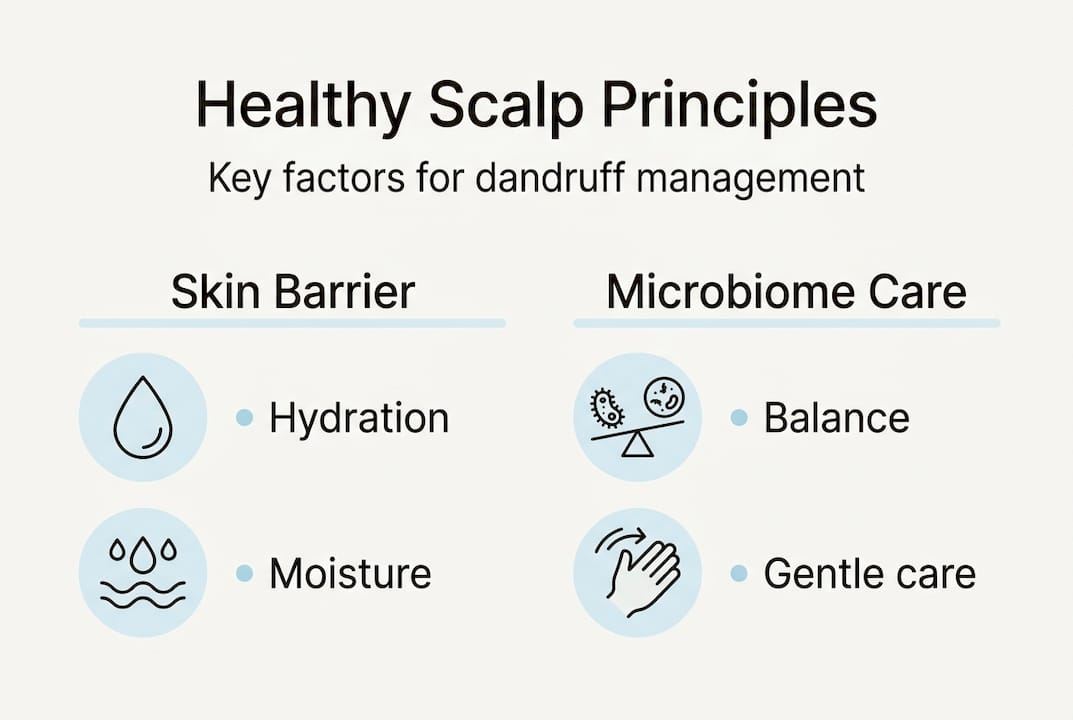
Effective scalp care, as distinct from hair care, recognises these connected systems. The key principles:
- Barrier repair with ceramides and fatty acids that restore the lipid layer
- Hydration with humectants and emollients to reduce water loss
- Gentle chemical exfoliation with salicylic acid or fruit enzymes to clear buildup without scrubbing
- Microbiome balance that feeds beneficial species while holding the problematic ones in check
- pH kept in the scalp's natural acidic range of 4.5 to 5.5
Pro Tip: Most people focus only on killing Malassezia with antifungals while ignoring barrier hydration and microbiome diversity. Supporting beneficial bacteria often brings faster relief than fungal suppression alone, especially for sensitive scalps that react badly to harsh actives.
The science behind dandruff and scalp irritation
Dandruff affects around half the population at some point, yet the biology is widely misunderstood. A clinical evaluation of scalp barrier function and microbiome in dandruff patients found that dandruff-affected scalps show raised transepidermal water loss and reduced ceramide levels compared with healthy scalps. That barrier dysfunction creates the environment for microbial imbalance and chronic inflammation.
The microbiome shifts are striking. Malassezia populations surge while beneficial bacteria decline, and normally neutral residents can become problematic once the barrier fails. These are not just correlations. Malassezia breaks sebum down into irritating free fatty acids that penetrate the weakened barrier, trigger an immune response and speed up skin cell turnover. The result is visible flaking, redness and a persistent itch that worsens with stress or dietary triggers.
| Marker | Healthy scalp | Dandruff scalp |
|---|---|---|
| Transepidermal water loss | Lower | Elevated |
| Ceramide levels | Normal | Reduced |
| Malassezia abundance | Balanced | Overgrown |
| Beneficial bacteria | Diverse | Depleted |
| Inflammation | Low | Elevated |
Sebum adds another layer. An oily scalp does not just feel greasy. It provides fuel for Malassezia and changes the physical properties of the barrier. Understanding how Malassezia drives scalp flakes means recognising that the yeast is present in around 80% of dandruff cases, but only causes trouble when barrier and immune dysfunction let it thrive.
Dandruff is not a single disease. It is a multifactorial condition where barrier disruption, microbiome imbalance, sebum changes and inflammation converge. Effective care must address all four at once, rather than suppressing the symptom with daily antifungal shampoo.
This is why traditional approaches so often fail in the long run. Stripping the scalp with harsh detergents removes flakes for a day or two but worsens the barrier, and the symptoms return within days of stopping. Breaking the pattern means rebuilding the barrier while gently rebalancing the microbiome, not perpetual chemical suppression.
Microbiome-friendly scalp treatments
Moving beyond harsh antifungals means following an approach that respects the scalp's biology. Microbiome-friendly care uses gentle actives and botanicals that preserve the beneficial microbes, and for many people it delivers comparable or better results without the dependency trap of daily medicated washing. The key is a clear routine that moves from an intensive phase into sustainable maintenance:
- Gentle, pH-balanced cleansing two to three times a week, using surfactants that preserve barrier lipids
- Chemical exfoliation with salicylic acid or willow bark to clear scale without scrubbing
- Leave-in serums with barrier-supporting and botanical actives, applied to a dry scalp
- Lightweight hydration that does not weigh the hair down or trigger rebound oiliness
- Reducing frequency over 8 to 12 weeks as symptoms settle and the barrier recovers
The contrast with traditional treatment is significant. Ketoconazole and zinc pyrithione work by directly killing fungi and bacteria, including the beneficial species. They are effective for an acute flare, but prolonged use reduces microbiome diversity and can worsen the barrier through surfactant damage. Gentler, botanical-based approaches aim to control symptoms while supporting, rather than destroying, the resident microbiome.
Pro Tip: The biggest mistake is continuing an intensive routine indefinitely. The scalp needs time to rebuild its own defences. After four to six weeks of regular application, drop back to weekly or fortnightly maintenance. That prevents the dependency cycle and lets the microbiome self-regulate, which is the whole point of microbiome-friendly prevention.
Personalising scalp care for oily and sensitive scalps
Not all scalps respond the same way. Research into the oily scalp microbiome in dandruff shows that oily scalps carry distinct bacterial and inflammatory patterns compared with dry or normal scalps. That calls for a tailored approach, particularly for Australians dealing with harsh sun, chlorinated water and the local climate.
An oily scalp is not simply producing more sebum. The lipid composition shifts toward fats that Malassezia metabolises efficiently, creating more irritating by-products. This is why oil control alone rarely resolves symptoms without also addressing the barrier and the microbiome.
Lifestyle matters too. Chronic stress raises cortisol, which changes both sebum and microbiome diversity. Dietary triggers like high-sugar foods, dairy and alcohol can worsen inflammation in susceptible people. Poor sleep slows barrier repair. This is exactly why the brand treats scalp health as a whole-body issue rather than a surface one.
Practical steps for an oily or sensitive scalp:
- Start with an approach that addresses sebum quality, not just quantity, per our oily scalp management guide
- Choose Australian-made, microbiome-friendly products suited to local conditions
- Track food triggers through careful elimination, focusing on dairy, gluten and high-sugar carbohydrates
- Protect the scalp from UV with a hat or a leave-in with antioxidants
- Manage stress through exercise, sleep and whatever settles you, to reduce cortisol-driven flares
For severe cases, maintenance is critical once the initial symptoms settle, because relapse is common if treatment stops completely. The answer is not perpetual daily treatment. It is strategic weekly or fortnightly application that maintains barrier function without suppressing the scalp's own regulation.
Explore microbiome-friendly scalp care solutions
Ready to move beyond the shampoo bottle? Victory Serums is Australian-made and pharmacist-developed, built on every principle in this article. The scalp serum range targets barrier repair and microbiome balance with pH-optimised formulations that work with your scalp's biology, not against it.

The full dandruff control range covers intensive treatment for active flares and maintenance for long-term balance. Every formula avoids steroids, harsh antifungals and synthetic fragrance, which suits sensitive scalps that react badly to conventional treatments. The Intensive Scalp Serum uses a controlled low pH and minimal application to calm symptoms while giving the scalp space to rebalance.
Want structured guidance? The free 1-Week Scalp Health Guide walks you through the Reset, Rebalance, Restore framework, integrating topical care with gut health, food-trigger identification and progress tracking.
Frequently asked questions
How often should I cleanse my scalp when using skincare-based treatments?
Gentle cleansing two to three times a week is most effective for maintaining barrier function while controlling buildup. Daily washing strips protective lipids faster than the scalp can replace them, which worsens barrier dysfunction and prolongs recovery. Use a pH-balanced, low-foam cleanser that preserves the acid mantle, and follow with a leave-in serum on a dry scalp between wash days.
Can gentle, botanical ingredients replace traditional antifungals in dandruff care?
For many people, yes, as part of a longer-term routine. Traditional antifungals work faster for a severe acute flare but disrupt beneficial microbes with long-term use, creating dependency. A common approach is a short course of a traditional treatment if needed, then a transition to gentler maintenance that preserves microbiome diversity.
What lifestyle factors can worsen scalp microbiome imbalance?
Chronic stress raises cortisol, which alters sebum and suppresses beneficial bacteria. Dietary triggers like high-sugar foods, dairy and alcohol increase inflammation in susceptible people. Poor sleep impairs barrier repair. Addressing these through stress management, careful diet and better sleep meaningfully improves outcomes and reduces relapse.
Is it safe to use leave-in scalp serums daily?
Gentle, pH-balanced leave-in serums are safe, but the goal is to reduce frequency over time, not use them forever. Apply more often during the initial phase for four to six weeks, then move to weekly or fortnightly maintenance as symptoms settle. That prevents dependency while the scalp rebuilds its own regulation.
Victory Serums products are designed to support scalp comfort and scalp health practices. They are not intended to diagnose, treat, cure or prevent medical conditions. If symptoms are severe, persistent, cracked, bleeding or worsening, seek guidance from a qualified healthcare professional.
Recommended
- Dandruff treatment step by step for lasting relief – Victory Serums
- Understanding anti-dandruff agents: sustainable relief – Victory Serums
- Australian scalp care: microbiome balance for 2026 – Victory Serums
- What causes scalp flakes? Malassezia affects 80% of cases – Victory Serums

Get the free 1-Week Guide to Scalp Health and uncover the real cause of your flakes.
Download the free guide
Matt Heron is the founder of Victory Serums, an Australian microbiome focused scalp care brand specialising in severe dandruff, yeast imbalance and chronic scalp instability. With more than four decades of personal experience managing persistent dandruff and extensive study of scalp biology, skin pH and barrier function, he developed targeted scalp serums that work within minutes or as leave in treatments. His Reset, Rebalance and Restore approach challenges daily anti-dandruff shampoo dependence and is helping redefine the way chronic dandruff is treated.