

Updated July 2026
In Brief:
- Gentle, microbiome-friendly care controls dandruff without the dependency cycle of harsh medicated shampoos.
- The routine matters as much as the products: lukewarm water, minimal product, no aggressive scrubbing.
- Give it 2 to 4 weeks. Gentle approaches work with the scalp's own healing rather than forcing rapid suppression.
Chronic dandruff and scalp irritation affect millions of Australians, and most people struggle to find relief without harsh chemicals that damage the scalp microbiome. This guide sets out a gentle, science-informed approach that respects your scalp's natural balance while still delivering results. You will see how microbiome-friendly products and proper technique can transform scalp health without the dependency cycle of traditional anti-dandruff treatments.
What you need for a gentle dandruff relief routine
Before you start, gathering the right tools and products sets the foundation. Unlike harsh approaches that strip the scalp, a microbiome-friendly routine uses gentle formulations that work with your scalp's ecosystem rather than against it.
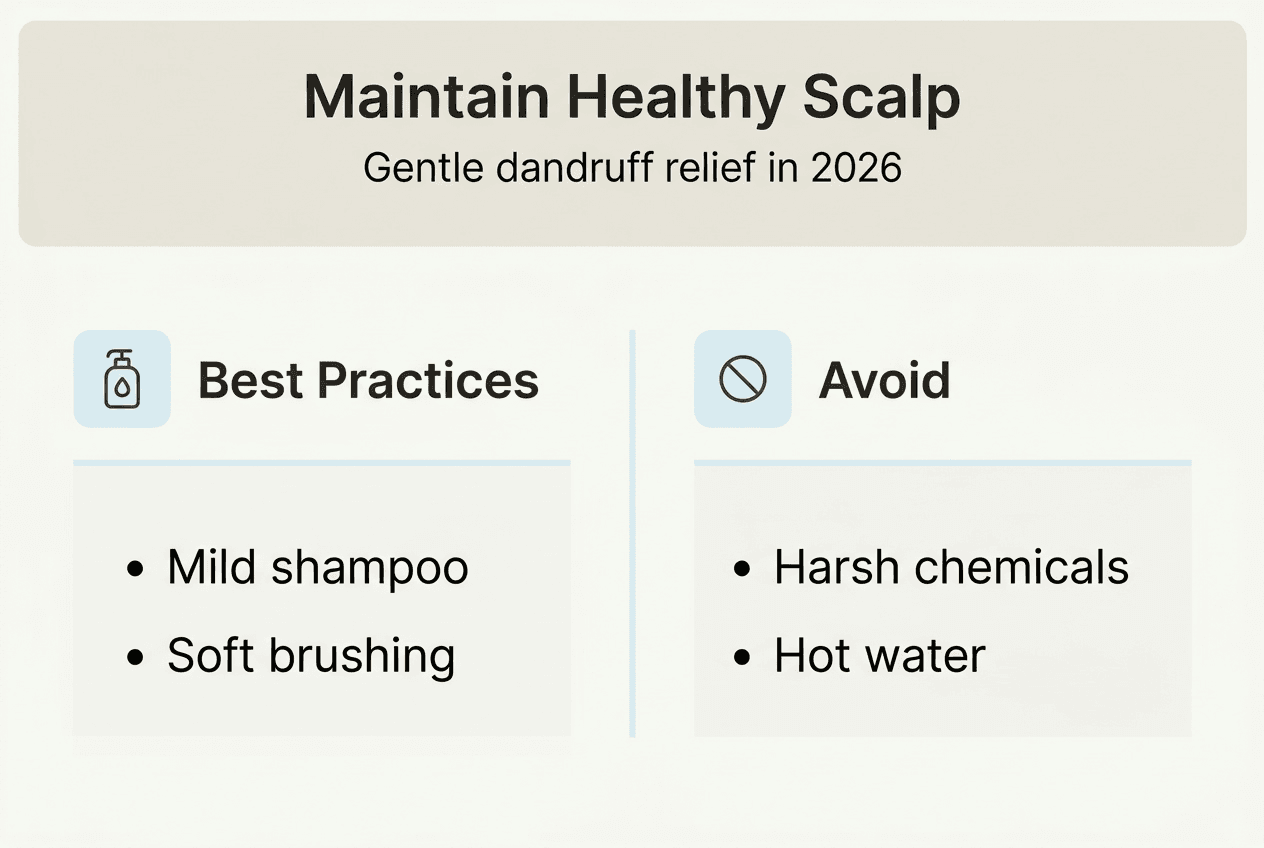
Your core lineup is simple: a gentle, low-pH cleanser that controls flaking without stripping the barrier, a lightweight conditioner for the hair lengths, and a targeted scalp serum for soothing and moisture between washes. Physical tools matter too. A soft silicone scalp brush or your fingertips help lift flakes and distribute product evenly without causing micro-trauma to irritated skin. Keep a clean, soft towel for drying, as rough fabric aggravates a sensitive scalp.
Your washing environment plays a role as well. Lukewarm water protects the barrier better than hot water, which strips natural oils and worsens dryness. Skip high-heat drying in favour of air drying or a cool setting. And eliminating harsh chemical shampoos is not negotiable. Sulphates, parabens and synthetic fragrance disrupt the microbiome and create a cycle where the scalp never regains its balance. Choosing gentler alternatives supports the beneficial bacteria that naturally keep dandruff organisms in check.
| Product type | Key features | Primary role |
|---|---|---|
| Gentle low-pH cleanser | pH-balanced, low fragrance, minimal preservatives | Controls flaking while preserving the microbiome |
| Lightweight conditioner | For the lengths, kept off the scalp | Hydrates hair without scalp buildup |
| Scalp serum | Soothing botanicals, low pH | Soothing and moisture maintenance |
| Soft scalp brush | Silicone or soft bristles | Gentle exfoliation and even product distribution |
Pro Tip: Start with a minimal amount of product and increase only if needed. Most people use several times more shampoo than necessary, which overwhelms the scalp and reduces effectiveness.
Step-by-step process to gently relieve dandruff
-
Wet your hair and scalp thoroughly with lukewarm water for 60 to 90 seconds. This prepares the scalp to receive product. Cold water will not work the ingredients in properly, and hot water triggers a rebound in oil production.
-
Apply a small amount of gentle cleanser directly to the scalp, not the lengths. Massage with your fingertips in slow, circular motions for two to three minutes, focusing on areas with visible flaking. That contact time lets the ingredients do their work.
-
Introduce a soft scalp brush during the final minute. Gentle, sweeping motions lift dead skin and flakes without irritation. Never scrub hard, as that damages the barrier and worsens inflammation.
-
Rinse thoroughly for at least two minutes, until no residue remains. Leftover product causes buildup that mimics dandruff and irritates the scalp. Pay attention to the hairline and behind the ears, where product tends to gather.
-
Apply conditioner from mid-length to ends, keeping it off the scalp unless your skin is very dry. Most scalps produce enough natural oil and do not need extra conditioning. Rinse with cool water.
-
Once the hair is towel-dried, apply your scalp serum to a dry scalp. Part the hair into sections and apply a small amount directly to the scalp, massaging lightly. Applying to a dry scalp matters: a wet scalp dilutes the serum and lifts its low pH, which is exactly what you do not want from a low-pH active.
Your washing frequency should match your scalp's oil production rather than a fixed schedule. Most people do best washing two to three times a week. Oilier scalps may need more, drier scalps less.
Pro Tip: Time your washes for the evening rather than the morning. That lets the scalp's natural repair processes work overnight and reduces morning flaking.
Common mistakes and how to avoid them
Even with the right products, a few common errors can undo your progress.
Very hot water. High temperatures strip protective oils and trigger rebound oil production that feeds dandruff organisms. Stick to lukewarm throughout.
Scratching or vigorous rubbing. It gives temporary relief but worsens inflammation and can introduce bacteria through micro-tears. When you feel the urge, gently press the area or apply a little serum instead.
Overusing medicated shampoos. Even gentler formulas disrupt the microbiome when overused. Keep active treatment to two or three times a week and use a gentle maintenance cleanser between.
Mixing multiple active products. Combining different actives or acids can irritate the skin or cancel each other out. Stick to one system and give it four to six weeks before changing anything.
Not rinsing thoroughly. Residue mimics dandruff and clogs follicles. Rinse for longer than feels necessary, especially at the hairline and nape.
Gentleness is not weakness in scalp care. The mildest approach that gets results always beats aggressive treatment, because it preserves the scalp's ability to self-regulate.
Avoiding these while following evidence-based dandruff prevention creates the right conditions for lasting scalp health. Your scalp is an ecosystem, not a battlefield.
What to expect and how to maintain long-term scalp health
A visible reduction in flaking usually appears within two to four weeks of consistent care. The first thing you notice is less flaking and fewer white particles on dark clothing. Often, the earliest markers of healing come before that: less redness, less itching and smoother skin texture as inflammation settles and the barrier repairs.
| Timeline | Expected improvements | What to watch |
|---|---|---|
| Week 1 to 2 | Less itching, less tightness | Comfort, urge to scratch |
| Week 3 to 4 | Visible flake reduction, less redness | Clothing, scalp appearance |
| Week 5 to 8 | Clearer scalp, improved texture | Flake size and frequency |
| Week 9 to 12 | Minimal flaking, balanced oil | Maintenance needs, wash frequency |
Maintaining results means continuing gentle care rather than returning to harsh products. Keep using microbiome-friendly cleansing even after symptoms settle, and space washes according to your scalp's needs. Avoid the known irritants, synthetic fragrance, sulphates and alcohol-based styling products, that undo your progress.
Diet matters more than most people realise. High-sugar foods and nutrient gaps can trigger or worsen dandruff from within. Favour anti-inflammatory whole foods, adequate omega-3s and enough B vitamins to support the skin barrier.
Pro Tip: Photograph your scalp under consistent lighting every so often. Objective tracking reveals subtle improvements you would miss day to day, and helps you spot triggers if symptoms return.
Discover microbiome-friendly dandruff control products
Victory Serums offers Australian-made solutions that align with the gentle approach in this guide. The scalp serum range is developed by pharmacists with a deep understanding of scalp microbiome science, using a controlled low pH and minimal application to calm symptoms while supporting natural balance.

For a complete approach, explore the dandruff control range, which supports the Reset, Rebalance, Restore framework and helps you break free from daily chemical dependency.
Frequently asked questions
How long does gentle dandruff treatment take to work?
Most people notice initial improvement within the first two weeks, with a clear reduction in flaking by week three or four. Fuller resolution usually takes 8 to 12 weeks as the microbiome rebalances. Results vary with severity and how consistently you follow the routine. Patience during the adjustment period is essential.
Can a gentle dandruff routine prevent scalp dryness?
Yes. Gentle, low-pH products prevent dryness by preserving your natural moisture barrier, unlike harsh antifungal treatments that strip oils. The key is avoiding sulphates and drying alcohols. Keeping the scalp in its natural acidic range helps it resist both dryness and excess oil.
Is it safe to use gentle dandruff remedies long term?
When properly formulated at an appropriate pH, gentle remedies are safe for ongoing use. They support rather than suppress the scalp's natural functions. The goal is to reduce dependency over time, not create a new one.
How often should I wash my hair during dandruff treatment?
Most people do best washing two to three times a week during active treatment. Oilier scalps may need slightly more, drier scalps less. Overwashing strips protective oils and, paradoxically, worsens both dryness and rebound oil. Pay attention to how your scalp responds and adjust.
Victory Serums products are designed to support scalp comfort and scalp health practices. They are not intended to diagnose, treat, cure or prevent medical conditions. If symptoms are severe, persistent, cracked, bleeding or worsening, seek guidance from a qualified healthcare professional.
Recommended
- Dandruff treatment step by step for lasting relief – Victory Serums
- Master effective scalp exfoliation steps for dandruff relief – Victory Serums
- Understanding anti-dandruff agents: sustainable relief – Victory Serums
- Dandruff prevention tips for microbiome-friendly care 2026 – Victory Serums

Get the free 1-Week Guide to Scalp Health and uncover the real cause of your flakes.
Download the free guide
Matt Heron is the founder of Victory Serums, an Australian microbiome focused scalp care brand specialising in severe dandruff, yeast imbalance and chronic scalp instability. With more than four decades of personal experience managing persistent dandruff and extensive study of scalp biology, skin pH and barrier function, he developed targeted scalp serums that work within minutes or as leave in treatments. His Reset, Rebalance and Restore approach challenges daily anti-dandruff shampoo dependence and is helping redefine the way chronic dandruff is treated.