

Updated July 2026
In Brief:
- Dandruff and dry scalp are two different problems. Treating one as the other is what keeps people stuck.
- Dry scalp is a moisture and barrier problem. Dandruff is a microbiome problem, driven by Malassezia overgrowth in an oily environment.
- Get the diagnosis right first. The flakes, the scalp feel and the triggers tell you which one you are dealing with.
Many Australians treat dandruff and dry scalp as the same thing, and that single mistake leads to treatments that do nothing or make matters worse. Treating a dry scalp with a harsh anti-dandruff shampoo strips even more moisture and worsens the very symptoms you are trying to fix. The two conditions have different causes, and knowing which is which is the foundation for lasting relief without chemical dependency.
What is dry scalp? Causes, symptoms and microbiome status
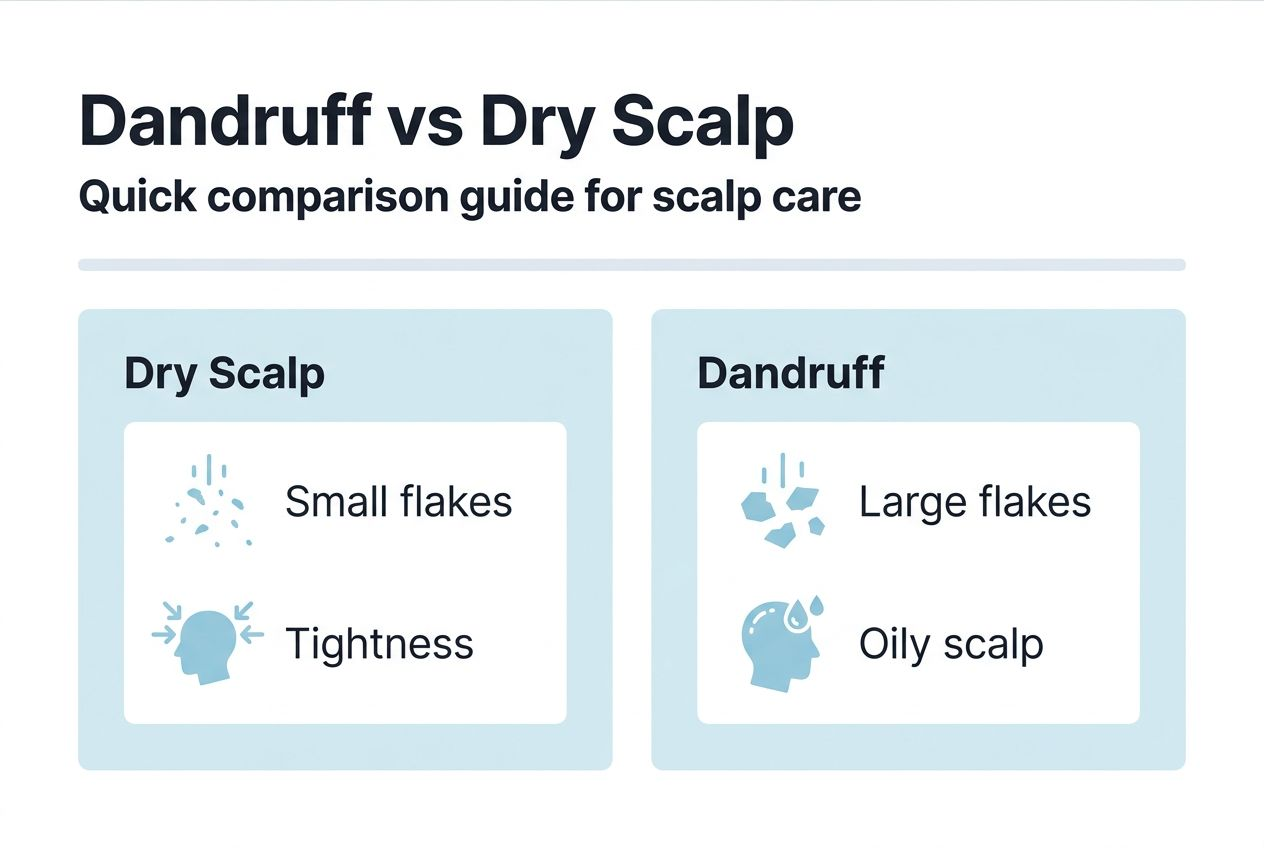
A dry scalp is short of moisture. The skin cannot hold enough hydration, and the result is small, powdery white flakes. Unlike dandruff, the microbiome underneath stays relatively balanced. The core issue is a compromised barrier that lets water escape, leaving the scalp tight, itchy and flaky, especially after washing or in cold, dry weather.
Type matters for treatment. Compare dry versus oily scalp dandruff care.
Several things contribute to it:
- Cold weather, low humidity and indoor heating, which strip moisture from the scalp
- Overwashing with harsh shampoos, which removes natural oils and weakens the barrier
- Age-related decline in sebum, which reduces natural hydration
- Underlying skin conditions such as eczema or psoriasis
In dry scalp the microbiome is largely intact, but a compromised barrier reduces microbial diversity over time. Harsh chemical treatments meant for dandruff only make the moisture loss worse. Understanding what causes a dry, itchy scalp helps you avoid the products that aggravate it and reach for hydrating, barrier-supporting options instead.
Pro Tip: If your flakes are small, white and powdery, and the scalp feels tight rather than oily, this is dry scalp, not dandruff. Focus on hydration and barrier repair, not antifungals.
What is dandruff? Microbiome imbalance and its effects
Dandruff is a chronic condition driven by microbiome imbalance, mainly an overgrowth of Malassezia yeast alongside shifts in the bacterial community. The yeast overgrowth is necessary but not sufficient on its own. Bacterial imbalance, genetics and barrier integrity all play a part. Together they trigger inflammation, speed up skin cell turnover and disrupt the barrier, producing the characteristic flaking and irritation.
Dandruff flakes are larger, often greasy or yellowish, and they stick to the scalp and hair. The scalp tends to look oily, red or inflamed, and the itch persists and worsens with scratching. Unlike dry scalp, this is not primarily a moisture issue, which is why simply adding moisture does not resolve it.
Factors that influence dandruff severity:
- Genetic predisposition affecting immune response and microbial sensitivity
- Excess sebum, which provides fuel for Malassezia
- Hormonal fluctuations during puberty, stress or illness
- Environmental triggers such as humidity and temperature extremes
Understanding how Malassezia drives scalp flakes makes it clear why targeted microbial control combined with barrier support is what actually works.
Pro Tip: If your flakes are larger, greasy and yellowish, with visible redness or oiliness, this is dandruff. Treatment must restore microbial balance, not just add moisture.
Common misconceptions about dandruff and dry scalp
- Dandruff is just severe dry scalp. No. Dandruff comes from microbiome imbalance with yeast overgrowth. Dry scalp comes from moisture deficiency. They need fundamentally different treatments.
- Daily anti-dandruff shampoo is safe for everyone. No. On a dry scalp, harsh anti-dandruff chemicals strip moisture and impair the barrier, worsening the problem and building dependency.
- Malassezia alone causes dandruff. No. It is necessary but not sufficient. Bacterial imbalance, genetics, immune response and barrier integrity all contribute.
- Flakes always mean you need more moisture. Not always. Greasy, yellowish flakes point to dandruff driven by microbial imbalance, and moisture alone will not fix it.
- Anti-dandruff treatments work universally. No. Treatments that ignore the microbiome and barrier fail in the long run, creating dependency and a rebound when you stop.
Proper diagnosis, based on the flakes, the scalp feel and your triggers, is what guides you toward treatment that restores balance rather than masking symptoms.
Comparing symptoms and flakes: a practical guide
Accurate self-assessment comes down to recognising the visual and sensory differences. Use this comparison to work out which condition you have.
| Feature | Dry scalp | Dandruff |
|---|---|---|
| Flake size | Small, fine, powdery | Larger, thicker, more visible |
| Flake colour | White or translucent | Yellowish, greasy, or white with an oily sheen |
| Flake texture | Loose, detaches easily | Sticky, adheres to scalp and hair |
| Scalp feel | Tight, dry, irritated | Oily, greasy, inflamed |
| Scalp appearance | No redness or oiliness | Red, inflamed, shiny with oil |
| Itching pattern | Mild to moderate, worse after washing | Persistent, intense, worse with scratching |
| Triggers | Cold weather, harsh shampoos, low humidity | Stress, hormones, excess oil, heat |
| Relief from hydration | Improves with moisturising products | Minimal; requires microbial control |
A quick sensory check:
- Run your fingers through your hair and note the flake size and texture
- Notice whether the scalp feels tight and dry or oily and inflamed
- Check for redness or visible inflammation, which points to dandruff
- Watch your triggers: cold weather suggests dry scalp, stress or heat suggests dandruff
Science-backed treatment strategies
Evidence-based scalp care prioritises microbiome balance, the right pH and barrier support, rather than daily chemical dependency. Protocols that restore the scalp microbiome and improve barrier function tend to deliver better, more sustainable results than traditional antifungals alone.
The core microbiome-friendly principles:
- Use low-pH cleansers (4.5 to 5.5) that support the scalp's natural acidity
- Favour gentle surfactants that cleanse without stripping the barrier
- Apply targeted treatment weekly rather than daily, so the scalp can rebalance between applications
- Avoid daily heavy exposure to zinc pyrithione, selenium sulphide or coal tar, which reduce microbiome diversity
- Address lifestyle factors: stress, diet and hydration all influence the scalp microbiome
For a dry scalp, focus on barrier repair with ceramides and gentle, non-clogging moisture. For dandruff, use targeted treatment during flares combined with low-pH maintenance that preserves beneficial bacteria.
Pro Tip: Choose products that support both barrier integrity and microbiome balance at once. That dual approach speeds recovery and prevents rebound as you reduce how often you treat.
Explore how to treat dandruff at the root, why scalp pH balance matters, and how sustainable anti-dandruff care reduces dependency and supports self-regulation.
When to seek professional help
Most scalp conditions respond to informed self-care, but some warning signs need a professional. See a dermatologist or trichologist if you experience:
- Persistent redness, soreness or inflammation lasting beyond several weeks despite treatment
- Severe flaking that does not improve or worsens over time
- Open sores, bleeding or oozing, which can indicate infection or severe barrier breakdown
- Sudden hair loss or thinning alongside scalp symptoms
- Symptoms spreading beyond the scalp, which may suggest a systemic skin condition
The fundamentals for ongoing scalp health stay the same: keep the microbiome balanced with low-pH products, support the barrier with hydration, treat weekly or as needed rather than daily, watch your triggers, and reduce treatment frequency as symptoms improve. For the full structured version, the free 1-Week Scalp Health Guide sets out the Reset, Rebalance, Restore framework.
Discover microbiome-friendly scalp care solutions
Once you know which condition you are dealing with, you can match the right product to it. Victory Serums offers pharmacist-developed, Australian-made solutions built around microbiome science to break the cycle of chemical dependency.

The scalp serum delivers relief during a flare and is designed to be used sparingly, letting the scalp rebalance between treatments. Explore the full dandruff control range, all made in Australia with pH awareness and minimal-intervention principles, and use the free 12-week guide for a structured Reset, Rebalance, Restore approach.
Frequently asked questions
How can I tell if I have dandruff or dry scalp?
Dry scalp produces small, powdery white flakes with a tight, dry feeling and no oiliness. Dandruff produces larger, oily or yellowish flakes with redness, inflammation and persistent itching. Check the flake pattern, the scalp oiliness and your triggers to tell them apart.
Can daily anti-dandruff shampoo worsen my dry scalp?
Yes. Overusing harsh anti-dandruff shampoos strips natural moisture and aggravates a dry scalp by further impairing the barrier. Those products are built for microbial control in dandruff, not for hydration. Use moisturising products suited to a dry scalp instead.
What role does scalp pH play in treating dandruff and dry scalp?
A scalp pH of around 4.5 to 5.5 supports microbiome balance and barrier integrity. Products with the wrong pH disrupt beneficial bacteria, worsen inflammation and compromise the barrier. Low-pH formulations preserve balance and improve treatment for both conditions.
When should I see a professional for scalp issues?
See a dermatologist or trichologist if redness, soreness or flaking persists beyond several weeks despite appropriate treatment, or if you have open sores, bleeding, hair loss, or symptoms spreading to other areas. Timely advice ensures the right diagnosis before things become chronic.
Victory Serums products are designed to support scalp comfort and scalp health practices. They are not intended to diagnose, treat, cure or prevent medical conditions. If symptoms are severe, persistent, cracked, bleeding or worsening, seek guidance from a qualified healthcare professional.
Recommended
- Australian scalp care: microbiome balance for 2026 – Victory Serums
- How to treat dandruff for lasting relief – Victory Serums
- Understanding anti-dandruff agents: sustainable relief – Victory Serums
- What causes scalp flakes? Malassezia affects 80% of cases – Victory Serums

Get the free 1-Week Guide to Scalp Health and uncover the real cause of your flakes.
Download the free guide
Matt Heron is the founder of Victory Serums, an Australian microbiome focused scalp care brand specialising in severe dandruff, yeast imbalance and chronic scalp instability. With more than four decades of personal experience managing persistent dandruff and extensive study of scalp biology, skin pH and barrier function, he developed targeted scalp serums that work within minutes or as leave in treatments. His Reset, Rebalance and Restore approach challenges daily anti-dandruff shampoo dependence and is helping redefine the way chronic dandruff is treated.