

Updated July 2026
In brief:
- Dandruff stems from scalp imbalance caused by fungal overgrowth, not hygiene issues.
- Anti-fungal scalp care targets Malassezia to reduce flaking and support scalp health long-term.
- Gentle, microbiome-friendly routines with appropriate frequency and ingredients yield sustained relief.
Dandruff is not a hygiene problem. It is a scalp imbalance, and half of all adults deal with it at some point in their lives. The assumption that fixing it requires harsh, chemical-heavy products keeps many people stuck in a cycle of symptom suppression without real resolution. Microbiome-friendly anti-fungal scalp care offers a different path. One that works with the scalp's natural biology rather than against it. This article explains what anti-fungal scalp care actually involves, how different solutions compare, and how to build a routine that delivers lasting results without creating new problems.
Table of Contents
- What is anti-fungal scalp care?
- Types of anti-fungal scalp solutions
- Why scalp barrier and microbiome health matter
- Best practices for effective and sustainable scalp care
- The truth about scalp care: why gentle, balanced routines beat aggressive treatments
- Discover Victory Serums
- Frequently asked questions
Key Takeaways
| Point | Details |
|---|---|
| Science-backed care | Anti-fungal scalp solutions address fungal imbalances that drive most dandruff and irritation. |
| Options for all sensitivities | Both synthetic and herbal solutions have a role — choose based on scalp needs and how quickly you want results. |
| Healthier scalp barrier | Maintaining the scalp's natural microbiome and moisture supports long-term comfort and reduces relapses. |
| Sustainable routines | Effective care means regular use — 2-3 times weekly — combined with moisturisers to prevent chemical overuse. |
| Personalised approach | Pay attention to your scalp's response and adapt your routine for best results without dependency. |
What is anti-fungal scalp care?
Anti-fungal scalp care refers to products and routines designed to manage fungal imbalances on the scalp. The primary target is a yeast called Malassezia, which lives naturally on most adult scalps. When it overgrows, it triggers an inflammatory response that leads to flaking, itching, and irritation. This is the root cause of most dandruff cases.
Understanding this changes how you approach treatment. The goal is not simply to wash away flakes. It is to address the underlying fungal activity that causes them. Science-backed scalp insights confirm that Malassezia overgrowth is the central driver in the majority of chronic dandruff presentations.
Anti-fungal scalp care works by using active ingredients that suppress fungal overgrowth, reduce inflammation, and help restore the scalp's natural skin barrier. This is meaningfully different from cosmetic treatments that simply coat the scalp or mask flaking without addressing the cause.
What anti-fungal scalp care aims to do:
- Reduce Malassezia activity on the scalp
- Calm inflammation and soothe irritation
- Support the scalp's natural microbiome balance
- Restore the skin barrier to prevent recurrence
- Reduce flaking without stripping the scalp
The widespread need for this type of care is significant. Medicated shampoo used 2-3 times per week can manage dandruff long-term without chemical dependency, which challenges the idea that daily use of strong products is necessary.
Here is a quick overview of how anti-fungal care compares to standard dandruff shampoos:
| Feature | Standard dandruff shampoo | Anti-fungal scalp care |
|---|---|---|
| Primary action | Symptom control | Targets fungal root cause |
| Microbiome impact | Often disruptive | Designed to support balance |
| Frequency required | Often daily | 2-3 times per week or less |
| Long-term outcome | Dependency risk | Reduced relapse potential |
| Suitable for sensitive scalps | Variable | Often yes, with right formula |
Understanding what causes scalp flakes is the first step toward choosing care that actually resolves the problem rather than masking it.
Types of anti-fungal scalp solutions
Not all anti-fungal scalp products work the same way. There are two broad categories: synthetic and herbal. Each has a distinct profile of benefits, limitations, and ideal use cases.
Synthetic anti-fungal ingredients such as ketoconazole and climbazole are well-studied and fast-acting. They are particularly effective for acute or severe flare-ups where rapid symptom control is the priority. However, some users find that prolonged use leads to scalp dryness or disruption of the natural microbiome.
Herbal and polyherbal solutions work more gently. They tend to support the skin barrier and microbiome rather than aggressively suppressing fungal activity. They are better suited to sensitive scalps, long-term maintenance, and people who want to reduce their reliance on synthetic actives over time.
A comparison of herbal and synthetic antifungal treatments confirms that synthetics deliver faster results in severe cases but may dry the scalp, while herbal and polyherbal options are gentler and more microbiome-supportive for sensitive or long-term use.
Comparing anti-fungal approaches:
| Approach | Speed of action | Microbiome impact | Best for |
|---|---|---|---|
| Ketoconazole / climbazole | Fast | Can disrupt | Acute, severe flare-ups |
| Herbal / polyherbal | Gradual | Supportive | Sensitive, long-term use |
| Microbiome-friendly formulas | Moderate | Protective | Ongoing maintenance |
How to choose the right approach:
- Assess severity. Severe, acute flaking may warrant a short course of synthetic treatment.
- Consider sensitivity. Easily irritated scalps respond better to herbal or low-pH formulas.
- Define your goal. Short-term relief versus long-term rebalancing require different strategies.
- Think about frequency. Microbiome-friendly options are designed for sustainable, lower-frequency use.
"The right anti-fungal solution is the one that matches your scalp's current state, not the one with the most active ingredients."
Pro tip: If you are unsure where to start, review the full range of anti-dandruff agents to understand which actives align with your scalp type and sensitivity level. You can also explore natural dandruff treatments as a starting point for gentler care.
Why scalp barrier and microbiome health matter
Suppressing symptoms without addressing the scalp barrier is like patching a leak without fixing the pipe. Flaking and irritation return because the underlying vulnerability remains. The scalp's skin barrier, when functioning well, regulates moisture, limits microbial overgrowth, and resists environmental triggers.
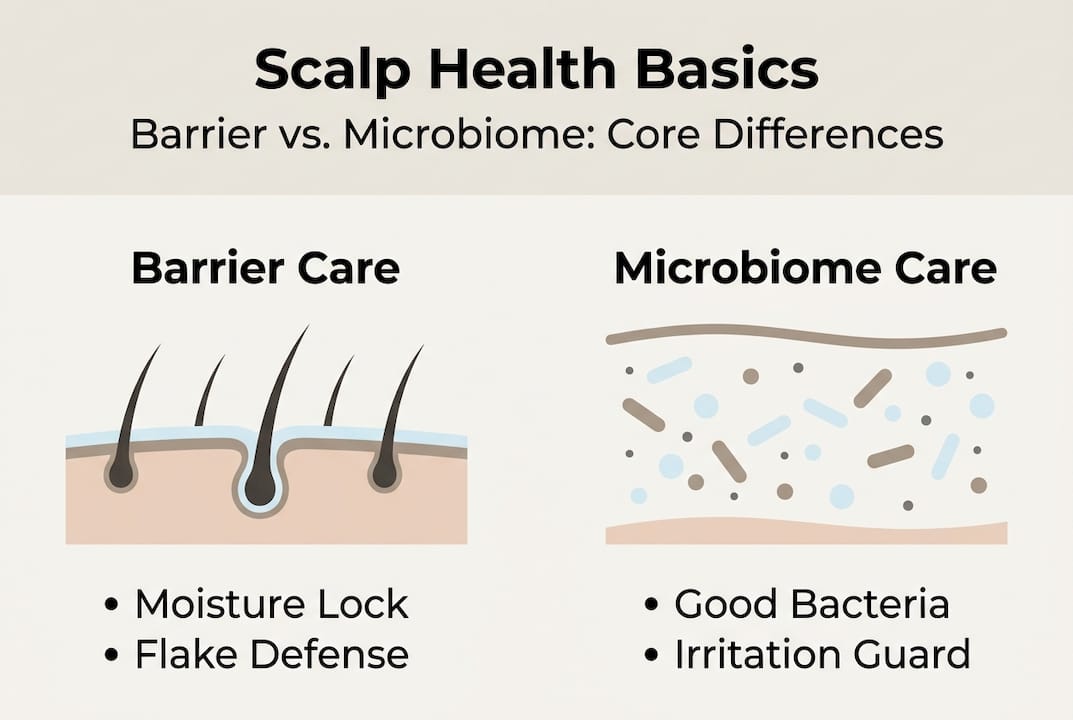
A compromised barrier allows Malassezia to proliferate more easily, making flare-ups more frequent and harder to resolve. This is why combining antifungals with moisturisers is recommended for irritation-prone adults. It addresses both the fungal driver and the structural weakness that allows it to take hold.
Key reasons scalp barrier and microbiome health matter:
- A healthy barrier reduces water loss and keeps the scalp resilient
- A balanced microbiome resists fungal relapses naturally
- Disrupted microbiomes are slower to recover from flare-ups
- Nourishing formulas reduce inflammation without stripping protective oils
- Maintaining scalp pH balance supports both barrier function and microbial diversity
Statistic to note: Research indicates that scalp conditions linked to Malassezia may affect up to 50% of the adult population, making scalp barrier support one of the most broadly relevant areas of personal care.
The scalp microbiome balance is not a fixed state. It shifts with product choices, diet, stress, and environment. Humid conditions in particular can accelerate fungal activity, which is why seasonal flare-ups are common in warmer climates.
Pro tip: Pairing an anti-fungal treatment with a low-pH, microbiome-compatible conditioner or serum can significantly reduce recovery time after a flare-up. Look for formulas that sit below pH 5 for daily maintenance. Explore dandruff prevention tips for a practical starting framework.
The best long-term outcomes come from treating the scalp as an ecosystem. Not just a surface to be cleaned.
Best practices for effective and sustainable scalp care
Building a scalp care routine that works long-term requires more than choosing the right product. It requires the right approach to frequency, adjustment, and supporting habits.
Step-by-step plan for sustainable anti-fungal scalp care:
- Start with a targeted treatment. Use an anti-fungal product 2-3 times per week during active flare-ups. Medicated shampoo at this frequency manages dandruff effectively without creating chemical dependency.
- Reduce frequency as symptoms improve. Once flaking settles, step down to once weekly or as needed. The goal is the minimum effective dose.
- Introduce a microbiome-friendly maintenance product. Switch to a low-pH shampoo or serum for ongoing care between treatment applications.
- Address diet and hydration. Certain foods can trigger inflammatory responses that worsen scalp conditions. Tracking food intake alongside scalp symptoms can reveal patterns.
- Monitor your environment. Heat, humidity, and sweat accelerate Malassezia activity. Adjust wash frequency during summer or after exercise.
Common pitfalls to avoid:
- Product hopping before giving a formula time to work (minimum three weeks)
- Neglecting moisturisation after anti-fungal treatment
- Using high-pH products that disrupt the scalp's natural acid mantle
- Assuming more product means faster results
- Ignoring gut health as a contributing factor to scalp inflammation
For oily scalp management, the approach may need slight adjustment since excess sebum can accelerate fungal activity. Frequency and product selection matter more in these cases.
Exploring natural remedies for dandruff alongside targeted treatments can support recovery and reduce the overall product load on the scalp over time.
Pro tip: Consistency matters more than intensity. A gentle, well-timed routine outperforms aggressive daily treatment in almost every case.
The truth about scalp care: why gentle, balanced routines beat aggressive treatments
After more than 45 years of living with severe dandruff, the founding insight behind Victory Serums is straightforward. Aggressive treatments offer short-term relief but rarely resolve the underlying issue. They can actually make the scalp more dependent on intervention by disrupting the very ecosystem that would otherwise provide natural resistance.
The research supports a more measured approach. Focusing on scalp barrier and microbiome health over symptom suppression, pairing antifungals with moisturisers, and monitoring for relapse in humid conditions are the markers of genuinely effective care.
One-size-fits-all protocols do not serve sensitive or irritation-prone adults well. The scalp responds to individual biology, lifestyle, and environment. What works for one person may worsen another's condition. This is why a structured, data-informed approach that tracks symptoms and adjusts over time consistently outperforms generic routines.
Patience is not passive. It is the active choice to let the scalp recover on its own terms. The scalp care balance perspective reinforces this. Less intervention, applied correctly, produces more durable results than maximum-strength daily use.
Discover Victory Serums
Knowing what works is the first step. Having access to the right products makes it practical. Victory Serums offers a pharmacist-developed range built specifically for scalp microbiome health, formulated to address fungal imbalance without disrupting the scalp's natural defences.

The Victory Serums scalp serum delivers fast-acting, microbiome-friendly relief with minimal chemical interference, designed for weekly use or as a targeted flare-up response. It is the practical next step for anyone ready to move from symptom management to genuine scalp balance.
Frequently asked questions
Can I use anti-fungal scalp products every day?
Using medicated shampoo 2-3 times per week is sufficient for long-term dandruff management without chemical dependency. Daily use is rarely necessary and may not suit sensitive scalps.
Are herbal anti-fungal solutions as effective as synthetic ones?
Herbal options act more gently and suit long-term or sensitive care, while synthetics like ketoconazole provide faster relief in severe cases. Synthetics are faster but may dry the scalp; herbals are more microbiome-supportive for ongoing use.
Does anti-fungal treatment damage the scalp's microbiome?
Carefully chosen formulas paired with regular moisturising can support the microbiome and prevent dryness. Combining antifungals with moisturisers is the recommended approach for irritation-prone adults.
How soon can I expect relief from dandruff using anti-fungal care?
Many people may notice improvement within one to two weeks with consistent use as directed. Results vary depending on severity and scalp type.
Recommended
- How to Treat Dandruff Naturally for a Healthy Scalp – Victory Serums
- Australian scalp care: microbiome balance for 2026 – Victory Serums
- Oily scalp management guide for microbiome balance in 2026 – Victory Serums
- What is scalp serum for healthy scalp care 2026 – Victory Serums
- Scalp Fungal Treatment - OTC - mybestpharmacy.net | Mybestpharmacy.net | Online Pharmacy

Get the free 1-Week Guide to Scalp Health and uncover the real cause of your flakes.
Download the free guide
Matt Heron is the founder of Victory Serums, an Australian microbiome focused scalp care brand specialising in severe dandruff, yeast imbalance and chronic scalp instability. With more than four decades of personal experience managing persistent dandruff and extensive study of scalp biology, skin pH and barrier function, he developed targeted scalp serums that work within minutes or as leave in treatments. His Reset, Rebalance and Restore approach challenges daily anti-dandruff shampoo dependence and is helping redefine the way chronic dandruff is treated.