

Updated July 2026
In Brief:
- Over 90% of chronic dandruff is driven by Malassezia overgrowth, not poor hygiene or dry skin.
- Conventional anti-dandruff agents suppress the yeast but reduce microbial diversity, which is how the dependency loop starts.
- A low-pH routine, used sparingly rather than daily, lets the scalp rebalance and hold its own between treatments.
Over 90% of chronic dandruff cases trace back to a Malassezia yeast imbalance, yet most treatments ignore that trigger entirely. Instead of restoring balance, they suppress the symptom and build a dependency that quietly makes the scalp worse over time. This guide sets out the microbiome-friendly approach: pH science and controlled frequency, rather than harsh daily suppression.
What causes chronic dandruff? The microbiome connection
Chronic dandruff is not about poor hygiene or dry skin. It is a biological imbalance.
Malassezia is present in over 90% of dandruff cases. This naturally occurring yeast overgrows when conditions favour it, feeding on scalp oils and producing oleic acid that irritates sensitive individuals. That irritation drives inflammation, which speeds up skin cell turnover, and the result is visible flakes, redness and a persistent itch.
Scalp pH regulates this ecosystem. A healthy acid mantle holds pH between 4.5 and 5.5, which favours microbial diversity. When pH rises toward neutral or alkaline, Malassezia thrives while the beneficial microbes decline, and the whole community destabilises. This is why so many treatments fail: they ignore the microbiome or disrupt the pH, suppressing symptoms while worsening the imbalance underneath. Addressing what actually causes scalp flakes means restoring ecosystem function, not just killing microbes.
The main drivers of microbiome disruption:
- Excess sebum, which creates a nutrient-rich environment for the yeast
- Raised pH from alkaline hair products and hard water
- A compromised barrier that lets moisture out and irritants in
- Systemic inflammation that amplifies the immune response
The goal is not sterility. It is balanced diversity, where no single organism dominates.
Pro Tip: Track when the itch intensifies. Patterns often line up with diet changes, stress or a new product, which reveals personal triggers worth addressing alongside topical care.
How scalp pH influences dandruff and treatment
Scalp pH is not a chemistry footnote. It is the master switch controlling how the microbes behave.
A healthy scalp holds a pH between 4.5 and 5.5, the acidity that supports diverse microbial communities while keeping opportunists in check. Push above that range and conditions favour Malassezia while the barrier weakens at the same time.
The knock-on effects compound. The acid mantle protects against irritants and regulates the enzymes involved in healthy skin turnover. A higher pH impairs lipid synthesis, weakens the barrier and lets more moisture escape, while shifting the advantage from beneficial bacteria to fungal species. Low-pH treatments work by restoring that acidic state. They do not just fight the yeast directly. They recreate the conditions where a balanced community naturally limits overgrowth.
Why pH matters for treatment:
- An acidic environment strengthens the skin's own antimicrobial defences
- Lower pH improves the stability and penetration of active ingredients
- A restored acid mantle reduces inflammation and speeds barrier repair
- The right pH lets beneficial microbes recover and hold pathogens in check
Most conventional shampoos sit between pH 6 and 8, disrupting the acid mantle with every wash. That is what prevents the scalp from ever fully rebalancing between applications.
Pro Tip: Do not trust the marketing. Trust the pH. Check it before you buy. A disclosed pH below 5.5 supports the microbiome; anything above 6, or an undisclosed pH, may worsen the imbalance despite short-term relief.
This is also why scalp care is not hair care. Hair tolerates a higher pH for cleaning. The skin underneath needs acidity for microbial balance, and a product built for one often compromises the other.
Common anti-dandruff agents: chemical vs microbiome-friendly
Traditional anti-dandruff agents take a scorched-earth approach. They work, but at a cost.
Zinc pyrithione, ketoconazole, selenium sulphide and coal tar derivatives dominate the mainstream. They suppress Malassezia through direct antimicrobial action and reduce flaking within days. But many regular users of zinc pyrithione develop scalp sensitivity and rebound flaking with long-term use, because the action is not selective. These chemicals do not just hit the problem organisms. They reduce overall diversity, leaving ecological gaps that opportunists quickly fill once treatment stops. The scalp then depends on constant suppression to stay in check.
| Treatment type | Mechanism | Benefits | Drawbacks |
|---|---|---|---|
| Zinc pyrithione | Broad antimicrobial suppression | Rapid symptom reduction | Reduces diversity, causes sensitivity, builds dependency |
| Ketoconazole | Antifungal enzyme disruption | Strong Malassezia control | Dryness, potential irritation, daily use expected |
| Microbiome-friendly | pH restoration, selective targeting | Preserves beneficial microbes | May take longer to show initial response |
| Low-pH formulations | Acid mantle support | Improves barrier and diversity | Requires a consistent approach |
Microbiome-compatible alternatives work differently. Rather than suppressing all microbial life, they restore the conditions that favour balanced diversity, letting beneficial organisms recover while limiting overgrowth through competition. It requires patience, but the scalp gradually regains its own regulatory capacity instead of depending on external chemical control.
Pro Tip: Moving from chemical suppression to microbiome support can cause a temporary return of symptoms as the scalp adjusts. Plan the switch for a low-stress period and use a targeted treatment to manage any flare while balance returns.
Breaking the daily dependency
Daily treatment is not healing. It is suppression dressed up as management.
The anti-dandruff industry built a profitable model on daily use. Apply every wash, forever. That ignores how ecosystems actually recover from disruption. Using a targeted product weekly, rather than every single wash, tends to reduce flaking over the following weeks, and easing off the frequency lowers recurrence compared with daily application. The scalp needs recovery windows where beneficial microbes recolonise and competition naturally limits the yeast.
Controlled frequency works through intentional cycling. An initial intensive phase manages the acute symptoms. As the flaking settles, intervals extend, then stretch out to as-needed maintenance:
- Start with weekly application until symptoms drop by 70% or more
- Extend to fortnightly once two consecutive weeks hold steady
- Watch for early warning signs, like a returning itch before visible flaking
- Use intensive treatment reactively for a flare, not preventively
- Track application dates and symptom scores to find your own maintenance interval
Low-pH formulations make this viable, because they support rather than suppress, so the scalp holds better balance between applications. The goal is not the perfect product to use forever. It is restoring scalp function so you eventually need very little. That is genuine healing rather than managed disease.
Beyond topicals: holistic approaches for lasting scalp health
Scalp health does not exist in isolation. It reflects whole-body function.
Your gut microbiome influences your skin through the gut-skin axis. Systemic inflammation shapes local immune responses, diet alters sebum, and stress hormones change how microbes behave. Diet and gut health both influence scalp condition alongside topical treatment. The Reset, Rebalance, Restore framework is built around this, addressing several layers at once over 12 weeks.
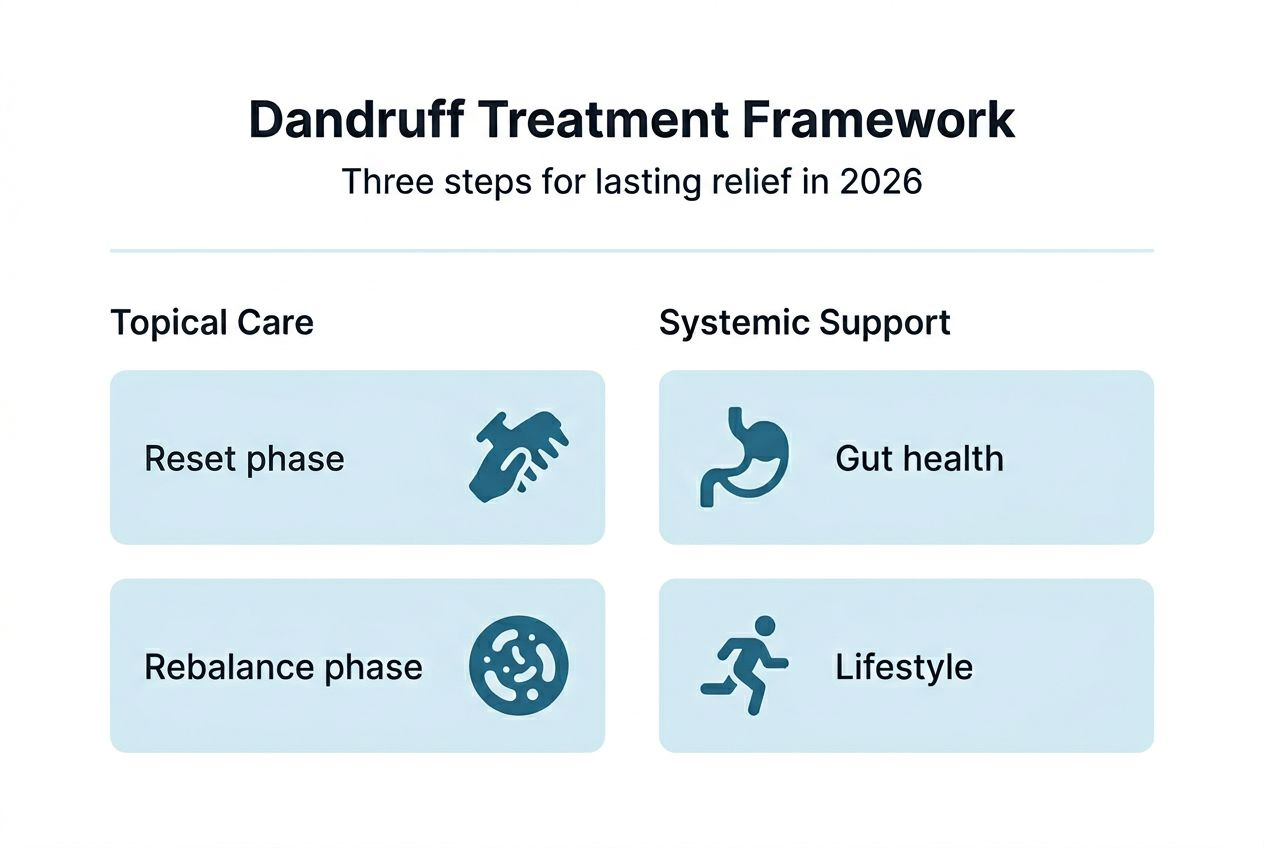
- Reset: control the acute symptoms with targeted treatment while identifying and removing dietary triggers, such as high-sugar foods, dairy or processed foods
- Rebalance: reduce treatment frequency while supporting the gut with fermented foods, prebiotic fibre and an anti-inflammatory pattern
- Restore: settle into sustainable maintenance with minimal product, as the scalp regains its own regulation
Understanding how dandruff connects to gut and diet reveals why topical treatment alone so often falls short. The scalp reflects the internal terrain, and improving that terrain improves everything you do on the surface.
Common misconceptions about anti-dandruff treatments
Daily shampooing controls dandruff better. It does the opposite. Frequent washing with harsh surfactants strips sebum and triggers compensatory overproduction, disrupts the acid mantle and blocks microbiome recovery between washes. That is the dependency cycle.
Anti-dandruff agents should kill all scalp microbes. Effective care preserves beneficial organisms while selectively limiting overgrowth. Non-selective antimicrobials leave ecological gaps that opportunists fill, often worse than the original problem.
High-pH products clean better and improve scalp health. The reverse is true. Alkaline formulas disrupt the acid mantle and shift the balance toward pathogens. That "clean" feeling is usually stripped protective lipids, not health.
Dry scalp and dandruff are the same thing. Dandruff involves inflammation and microbial imbalance in an oily environment. Simple dryness has different causes and needs a different approach, and confusing the two leads to the wrong treatment.
Applying microbiome-friendly treatment for chronic dandruff
Knowledge only helps through application. Here is the practical version:
- Switch to low-pH, microbiome-compatible products for anything that touches the scalp
- Reduce washing to two or three times a week at most
- Apply targeted treatment weekly during the initial phase, extending the interval as symptoms resolve
- Support the gut with fermented foods and diverse plant fibre
- Identify personal dietary triggers through careful reintroduction
- Track weekly progress with consistent symptom scores
- Reduce product dependency gradually over 12 weeks, watching for early warning signs
Success takes patience and consistency. Microbiome rebalancing takes weeks to months, not days. The reward is genuine restoration rather than perpetual management.
Discover microbiome-friendly dandruff solutions from Victory Serums
Victory Serums delivers pharmacist-developed, microbiome-compatible formulations for people who want a sustainable answer to chronic dandruff. The targeted scalp serum uses controlled-frequency, pH-aware formulation that supports rather than suppresses your scalp's own regulation.

The range integrates with the Reset, Rebalance, Restore framework, and the free 1-Week Scalp Health Guide walks you through it step by step, combining topical care with dietary support and progress tracking. Australian formulated, for lasting scalp health without perpetual product dependence.
Frequently asked questions
How often should I use anti-dandruff treatments to avoid dependency?
Limit intensive treatment to weekly application once the initial symptoms improve, then extend the interval to fortnightly and monthly as flaking settles. This controlled frequency allows microbiome recovery between applications and prevents rebound. Follow the specific product instructions and adjust based on how your scalp responds over 12 weeks.
Can diet really impact my dandruff and scalp health?
Yes. Diet influences scalp microbiome balance and inflammation, both of which drive dandruff severity. Gut health support combined with topical care tends to improve outcomes compared with topical treatment alone. Focus on reducing inflammatory triggers like processed foods and high-sugar carbohydrates, while supporting gut diversity with fermented foods and prebiotic fibre.
Are all anti-dandruff shampoos damaging to the scalp microbiome?
No. Formulation matters. Products with a pH below 5.5 and selective actives preserve beneficial microbes while limiting overgrowth. It is the harsh daily suppression shampoos, with non-selective antimicrobials at high concentration, that reduce diversity and build dependency.
What is the role of scalp pH in fighting dandruff?
Scalp pH controls the microbial balance. A healthy acidic range of 4.5 to 5.5 favours beneficial diversity while holding Malassezia in check. Maintaining that pH strengthens the skin's natural defences, improves barrier function and supports treatment. Low-pH products restore the acid mantle so a balanced community can limit overgrowth without harsh suppression.
Victory Serums products are designed to support scalp comfort and scalp health practices. They are not intended to diagnose, treat, cure or prevent medical conditions. If symptoms are severe, persistent, cracked, bleeding or worsening, seek guidance from a qualified healthcare professional.
Recommended
- Australian scalp care: microbiome balance for 2026 – Victory Serums
- Why Does My Scalp Itch? Microbiome Care Guide – Victory Serums
- What causes scalp flakes? Malassezia affects 80% of cases – Victory Serums
- Why Scalp Care Differs from Hair Care – Victory Serums

Get the free 1-Week Guide to Scalp Health and uncover the real cause of your flakes.
Download the free guide
Matt Heron is the founder of Victory Serums, an Australian microbiome focused scalp care brand specialising in severe dandruff, yeast imbalance and chronic scalp instability. With more than four decades of personal experience managing persistent dandruff and extensive study of scalp biology, skin pH and barrier function, he developed targeted scalp serums that work within minutes or as leave in treatments. His Reset, Rebalance and Restore approach challenges daily anti-dandruff shampoo dependence and is helping redefine the way chronic dandruff is treated.