

Updated July 2026
In Brief:
- Scalp build up is physical accumulation of dead skin, sebum and product residue. It is not the same as dandruff.
- Simple home checks tell the two apart, and the texture of the debris is the giveaway.
- Gentle clarifying, used fortnightly rather than daily, clears it without triggering rebound oil.
Many adults dealing with persistent flaking assume they have dandruff. But scalp build up is a separate issue, and treating it the same way often makes things worse. Scalp irritation is frequently misattributed to dandruff when physical accumulation is the real driver. This guide explains what scalp build up actually is, how it differs from dandruff, how to spot it at home, and what works for lasting relief. If you have been cycling through anti-dandruff shampoos without results, build up may be the missing piece.
What is scalp build up?
Scalp build up is exactly what it sounds like. Layers of material accumulate on the scalp over time, creating a physical barrier that irritates the skin and disrupts normal function. Unlike dandruff, which has a specific biological trigger, build up is largely a mechanical problem.
It consists of dead skin cells, excess sebum, sweat, styling products and environmental pollutants that collect faster than the scalp can shed them. The result is a waxy or greasy residue that sits on the skin, blocks follicles and creates the conditions for irritation.
Common symptoms:
- Persistent itching that does not resolve after washing
- Visible flakes that feel greasy or stick rather than falling freely
- An oily or waxy residue along the hairline or at the roots
- A scalp that feels heavy or congested shortly after washing
- Residue visible on brushes or combs
Understanding what causes scalp itching matters here, because itch from build up behaves differently to itch from a fungal source. Build-up itch tends to worsen with product use and improve briefly with thorough cleansing, then return quickly.
| Feature | Scalp build up | Dandruff |
|---|---|---|
| Primary cause | Physical accumulation | Malassezia yeast |
| Flake texture | Greasy, waxy, sticky | Dry, loose, powdery |
| Response to cleansing | Temporary improvement | Variable |
| Linked to product use | Often yes | Rarely |
| Microbiome involvement | Indirect | Direct |
Build up is not a hygiene failure. It is a mismatch between what the scalp produces, what products deposit, and how effectively the scalp is cleansed.
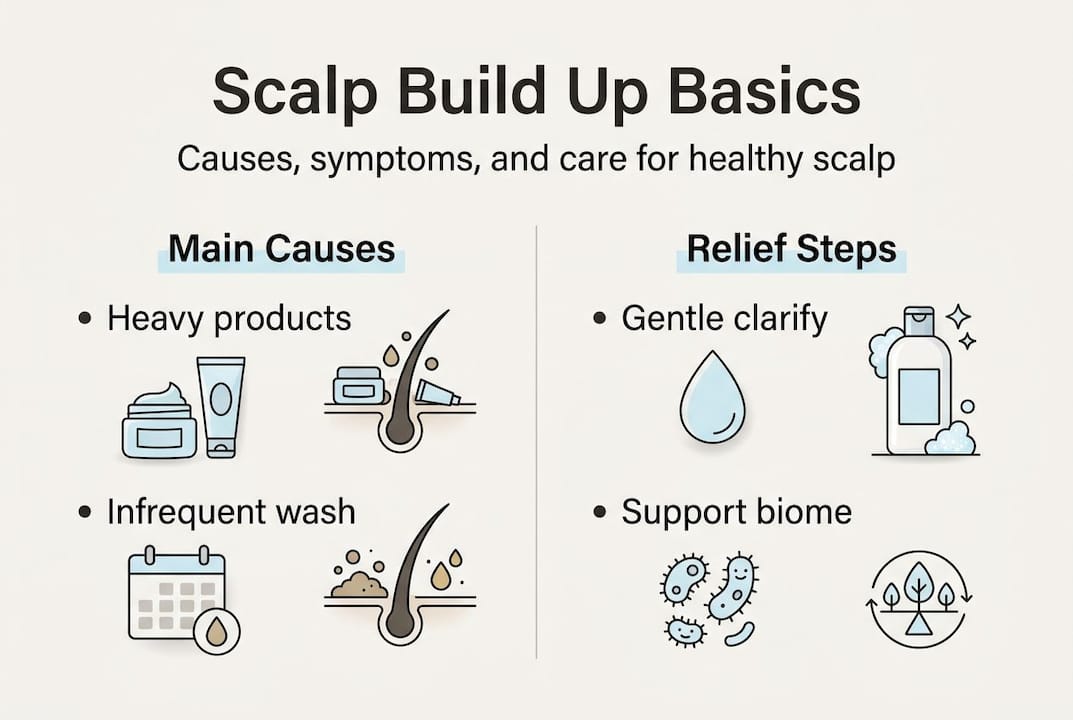
Common triggers include infrequent washing, heavy conditioners or styling waxes, hard water and environmental pollution.
The science behind build up and dandruff
Dandruff and build up share surface-level symptoms, but their drivers differ. Around 80% of scalp flake cases involve Malassezia, a naturally occurring yeast that becomes problematic when it overgrows. Dandruff is largely a fungal response. Build up, by contrast, can be entirely physical with no fungal involvement at all.
The scalp renews itself roughly every 28 days. When that cycle is disrupted, or when external material accumulates faster than the skin can shed, build up forms. Excess sebum, which can be triggered by over-cleansing or hormonal shifts, accelerates the process.
| Condition | Main driver | Best response |
|---|---|---|
| Dandruff | Malassezia overgrowth | Targeted antifungal treatment |
| Scalp build up | Physical accumulation | Gentle clarifying |
| Mixed presentation | Both factors | Targeted, layered care |
Scalp microbiome balance plays a role in both. A disrupted microbiome creates an environment where Malassezia thrives and where the barrier becomes less effective at regulating oil and shedding. Aggressive anti-dandruff shampoos used daily strip the acid mantle, disrupt pH and kill beneficial microbes alongside problematic ones.
Pro Tip: If your scalp feels tight or more irritated after washing, that is a signal your cleanser is too stripping. Gentle cleansing that respects the scalp's natural pH works better long term than aggressive daily treatment.
How to identify scalp build up at home
You do not need a dermatologist to spot the early signs. A few practical checks tell you a lot.
- Check your brush or comb. Waxy, greasy residue on the bristles is a reliable indicator of build up rather than dandruff.
- Examine your scalp under bright light. Part the hair in sections and look for a dull, yellowish or grey film along the roots.
- Scratch gently and check under your nails. Waxy or oily debris points to build up. Dry, powdery flakes suggest dandruff.
- Note how quickly the scalp feels oily after washing. Congested within 24 hours suggests build up is contributing.
- Track product use. Heavy conditioners, styling creams, dry shampoos and waxes all deposit residue. If symptoms worsen with heavier product use, build up is the driver.
The texture and feel of the debris is the key differentiator. Sticky, waxy or heavy residue signals build up, even when both conditions produce visible flaking.
Chronic build up is frequently self-misdiagnosed. Many people spend months treating what they assume is dandruff with antifungal shampoos, with limited results, because the root issue is physical rather than fungal. If managing an oily scalp is already part of your routine, build up is a likely companion issue, since excess sebum is one of the primary materials that accumulates.
Evidence-based solutions for scalp build up
Once build up is identified, the approach needs to be deliberate. Reaching for the harshest clarifying shampoo daily is counterproductive. Consistency and gentleness outperform aggression here.
Clarifying washes used once or twice a fortnight help prevent physical build up from returning. For purely physical build up without a fungal component, clarifying alone is often sufficient.
Practical steps that work:
- Use a clarifying wash once or twice a fortnight, not daily. Daily clarifying strips the scalp and triggers rebound oil production.
- Apply salicylic acid-based products to gently dissolve dead skin accumulation without scrubbing.
- Choose microbiome-friendly, low-pH cleansers for regular washing between clarifying sessions.
- Reduce or eliminate heavy silicone conditioners, styling waxes and dry shampoos that deposit residue.
- Rinse thoroughly. Incomplete rinsing leaves residue that compounds build up between washes.
Where both build up and Malassezia are involved, targeted antifungal treatment alongside microbiome support tends to give the best long-term result. For chronic or sensitive scalps, targeted serums used weekly or during flares offer relief without the daily chemical load of conventional shampoos. Understanding sustainable anti-dandruff agents helps clarify which actives are worth using, and how often.
Pro Tip: Consistency matters more than intensity. A gentle clarifying routine maintained fortnightly produces better long-term results than aggressive weekly treatments that disrupt the scalp's natural balance.
Prevention and long-term scalp health
Treating existing build up is one step. Stopping it from returning is the real goal, and that comes from routine choices rather than one-off treatments.
- Choose non-stripping, microbiome-friendly cleansers for your regular wash.
- Avoid heavy silicones, styling waxes and thick leave-in products that deposit residue with every use.
- Wash two to three times a week for most scalp types. Daily washing is rarely necessary.
- Rinse with cooler water where possible. Hot water increases sebum production and loosens the protective barrier.
- Monitor your scalp and adjust when symptoms shift, rather than waiting for a full flare.
The scalp's natural acid mantle, sitting between pH 4.5 and 5.5, is its primary defence against build up and microbial imbalance. Products that respect this range support long-term resilience.
Understanding the difference between scalp care and hair care matters too. Most hair products are formulated for the hair shaft, not the skin. Applying hair-focused products directly to the scalp is one of the most common and least recognised contributors to build up.
What most people get wrong about build up
The most common mistake is treating build up as a hygiene problem. It is not. Washing more frequently with a harsh shampoo often makes it worse by stripping the acid mantle and triggering excess oil as a compensatory response.
Every scalp is different. Someone with a naturally oilier scalp and a preference for heavy styling products will accumulate residue faster than someone with a drier scalp who uses minimal product. One-size-fits-all solutions ignore that reality.
Harsh daily cleansers remove the beneficial microbes that help regulate oil, protect against pathogens and maintain the barrier. The scalp compensates by producing more oil, which accelerates build up, which prompts more aggressive washing. It is a cycle conventional products rarely break. Long-term relief requires understanding your own scalp, reducing overall product volume, and choosing formulations that work with the scalp rather than against it.
Microbiome-friendly solutions for lasting relief
For those dealing with chronic build up and irritation, moving from information to action is the practical next step.

Victory Serums offers targeted options developed for chronic scalp concerns. The Moisturising Scalp Serum supports recovery between clarifying sessions, and the scalp serum provides relief during flares as a leave-in or rinse-off treatment. Explore the full dandruff control range. Each product is pharmacist-developed and designed to reduce dependency over time, not create a new one.
Frequently asked questions
How can I tell if I have scalp build up or dandruff?
Build up creates an oily, waxy residue, versus the dry, loose flakes typical of dandruff. If your flakes feel sticky or greasy and worsen with product use, build up is the more likely cause.
What ingredients help remove scalp build up?
Clarifying washes used once or twice a fortnight, combined with salicylic acid exfoliation, are the most effective options for dissolving accumulated residue without over-stripping.
Can scalp build up be prevented without harsh chemicals?
Yes. Microbiome support reduces flares, and gentle, pH-aware cleansers prevent build up from returning. Avoiding heavy styling products is equally important.
How often should I clarify my scalp?
Once or twice a fortnight is sufficient for most people. More frequent clarifying risks stripping natural oils and disrupting the balance that keeps build up in check.
Victory Serums products are designed to support scalp comfort and scalp health practices. They are not intended to diagnose, treat, cure or prevent medical conditions. If symptoms are severe, persistent, cracked, bleeding or worsening, seek guidance from a qualified healthcare professional.
Recommended
- Oily scalp management guide for microbiome balance in 2026 – Victory Serums
- What causes scalp flakes? Malassezia affects 80% of cases – Victory Serums
- Australian scalp care: microbiome balance for 2026 – Victory Serums
- Understanding anti-dandruff agents: sustainable relief – Victory Serums

Get the free 1-Week Guide to Scalp Health and uncover the real cause of your flakes.
Download the free guide
Matt Heron is the founder of Victory Serums, an Australian microbiome focused scalp care brand specialising in severe dandruff, yeast imbalance and chronic scalp instability. With more than four decades of personal experience managing persistent dandruff and extensive study of scalp biology, skin pH and barrier function, he developed targeted scalp serums that work within minutes or as leave in treatments. His Reset, Rebalance and Restore approach challenges daily anti-dandruff shampoo dependence and is helping redefine the way chronic dandruff is treated.