

Updated July 2026
In Brief:
- A dry scalp is rarely just "dry". It usually reflects a disrupted microbiome, a weakened barrier and the wrong products.
- The scalp's natural pH is 4.5 to 5.5. Harsh, high-pH products and overwashing tip that balance and drive the dryness.
- Support the scalp rather than strip it: low-pH cleansing, longer gaps between washes, and fewer harsh chemicals.
You have tried every moisturising shampoo on the shelf, switched conditioners three times, and still wake up with that tight, itchy feeling across your scalp. What most people do not realise is that the causes of a dry scalp reach well beyond simple dryness. They involve a mix of microbiome disruption, environment and product choices that ordinary remedies miss. This guide unpacks that complexity and sets out a microbiome-friendly way to restore lasting balance without chemical dependency.
Understanding the scalp's microbiome and its role in dryness
Your scalp hosts a living community of bacteria, fungi and other microorganisms that work together to keep skin healthy. When that balance tips, dryness, irritation and flaking follow. Microbiome imbalance is a leading factor in a dry scalp, yet most conventional treatments ignore it.
The scalp's natural pH sits between 4.5 and 5.5, an acidic environment that favours beneficial microbes while keeping opportunistic fungi in check. Harsh shampoos, environmental stress and overwashing strip protective oils and disrupt that balance. The beneficial bacteria struggle while problem organisms like Malassezia multiply.
Think of your scalp like a garden. You would not spray harsh chemicals on the soil and expect healthy plants. Aggressive anti-dandruff treatments work the same way: they may suppress symptoms for a while but damage the ecosystem underneath, creating a cycle where you need more frequent applications to hold the line.
The main microbiome disruptors:
- Daily washing with sulphate-based formulas that strip natural oils
- Hot water that damages the skin barrier
- Chemical treatments including dyes, relaxers and keratin smoothing
- Overwashing that removes protective sebum faster than the scalp can replace it
- Environmental pollution that adds irritants and oxidative stress
Pro Tip: Your scalp replaces its natural oils within 24 to 48 hours of washing. Extending the gap between washes lets the microbiome stabilise and the barrier strengthen, which reduces dryness over time.
Maintaining a healthy microbiome means gentle, targeted care that works with the scalp's biology: products at the right pH, less chemical exposure, and enough recovery time between treatments. That is the heart of microbiome-friendly prevention, moving away from daily suppression toward sustainable balance.
Common causes of dry scalp and how they affect the microbiome
A dry scalp rarely comes from a single cause. Several factors usually converge. Understanding the triggers helps you address the root problem rather than chase symptoms.
Fungal overgrowth and yeast imbalance. Malassezia lives on everyone's scalp, feeding on sebum and usually causing no trouble. Problems begin when it multiplies, triggering inflammation and faster skin cell turnover. Malassezia is involved in around 80% of scalp flake cases, driving both dryness and oiliness depending on how your scalp responds.
Skin conditions. Several conditions affect scalp hydration directly. Eczema causes inflammation and moisture loss. Psoriasis triggers rapid skin cell production and thick, silvery scale. Contact dermatitis from products, metals or fragrance creates localised irritation and flaking.
| Cause | Microbiome impact | Typical symptoms |
|---|---|---|
| Malassezia overgrowth | Disrupts pH, triggers inflammation | Flaking, itching, redness |
| Harsh shampoos | Strips oils, kills beneficial bacteria | Tightness, dryness, sensitivity |
| Weather extremes | Damages the barrier, alters moisture | Seasonal flaking, tightness |
| Medication side effects | Impairs sebum or skin renewal | Persistent dryness |
| Poor diet | Reduces nutrients for skin repair | Slow healing, weaker barrier |
Environment and lifestyle. Cold, dry winter air pulls moisture from the scalp, and indoor heating compounds it. Sun exposure without protection damages scalp skin just as it does the face. Products with sulphates, silicones and synthetic fragrance disrupt the microbiome and strip oils, while frequent heat styling damages both hair and scalp.
Medications. Certain medications worsen a dry scalp by affecting barrier function or sebum. Retinoids often cause dryness and peeling. Diuretics reduce overall hydration. Antihistamines can be drying throughout the body.
Pro Tip: Track your symptoms alongside product changes, weather and stress. Patterns emerge quickly and help you identify your specific triggers.
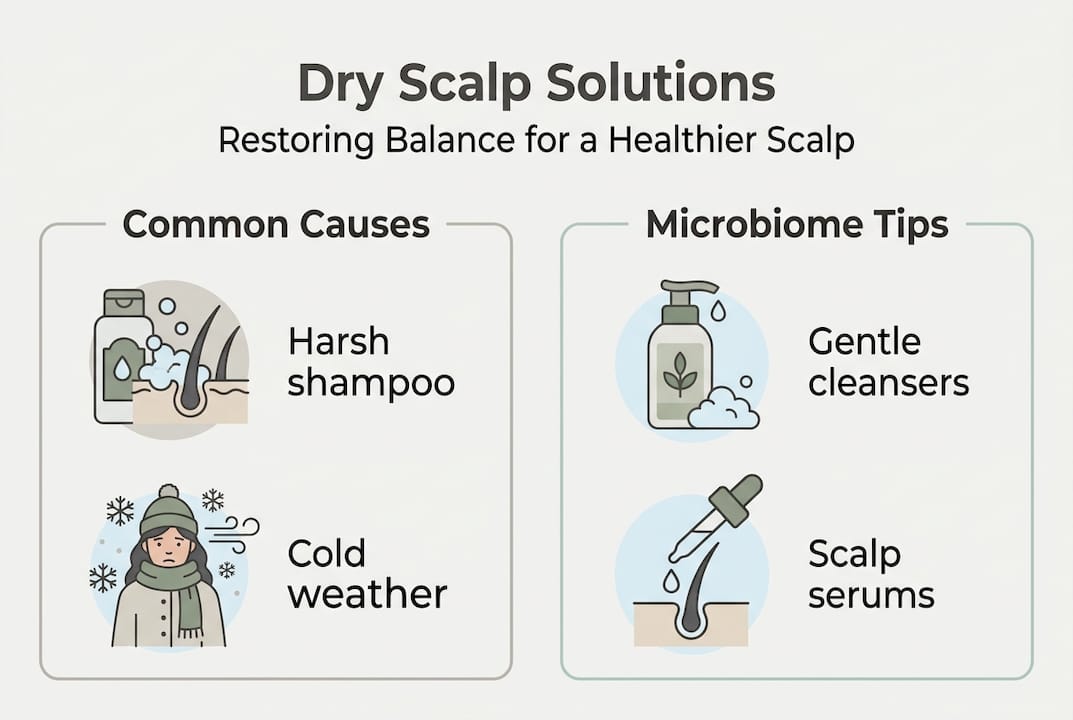
Dry scalp, dandruff and other conditions
Many people use "dry scalp" and "dandruff" interchangeably, but they have distinct causes and need different approaches. Getting it wrong leads to ineffective treatment and sometimes worse symptoms.
Dry scalp is about insufficient moisture in the skin itself. The flakes are small, dry and white, and fall easily. The scalp feels tight, especially after washing, and the itch is usually mild.
Dandruff flakes are larger, yellowish and slightly greasy, and they cling to the hair rather than falling freely. The scalp can feel oily yet irritated, with redness and stronger itching. This one stems mainly from Malassezia overgrowth and the inflammation it triggers.
| Condition | Flake appearance | Scalp feel | Primary cause |
|---|---|---|---|
| Dry scalp | Small, dry, white | Tight, rough | Insufficient moisture, damaged barrier |
| Dandruff | Larger, oily, yellowish | Oily yet irritated | Malassezia overgrowth, inflammation |
| Seborrhoeic dermatitis | Greasy, yellow scales | Red, inflamed patches | More severe yeast overgrowth, immune response |
| Psoriasis | Thick, silvery scales | Raised, red plaques | Autoimmune-driven rapid cell turnover |
Getting the diagnosis right matters. Using anti-dandruff treatments on a genuinely dry scalp often makes it worse, because the actives can be drying. Conversely, heavy moisturisers on a dandruff-prone scalp can feed Malassezia and increase flaking.
Pro Tip: If home care and over-the-counter products do not improve your symptoms within four weeks, see a dermatologist. Persistent scalp issues sometimes signal an underlying condition that needs medical attention.
Microbiome-friendly strategies to restore moisture balance
Once you understand what is driving your dry scalp, you can use targeted strategies that support the scalp's natural functions rather than suppress them.
1. Choose gentle, pH-appropriate cleansing. Use cleansers formulated between pH 4.5 and 5.5, sulphate-free, that clean without stripping protective oils. Avoid synthetic fragrance, parabens and harsh preservatives.
2. Reduce washing frequency, gradually. Add a day between washes and increase the gap as your scalp adjusts. Use dry shampoo sparingly, since many contain drying alcohols.
3. Use targeted scalp treatments. Apply serums with prebiotic, postbiotic or barrier-supporting ingredients. Apply directly to a dry scalp, not the lengths, using a small amount. A dry scalp matters here: water dilutes the active and lifts its pH.
4. Optimise your technique. Use lukewarm rather than hot water. Focus cleansing on the scalp, let the runoff clean the lengths, and rinse thoroughly. Pat, do not rub, with the towel.
5. Support the scalp from within. Stay hydrated, include omega-3s, eat probiotic-rich foods, and get enough biotin, zinc and vitamins A, C and E.
6. Manage stress and sleep. Chronic stress disrupts hormones and immune function, both of which affect the scalp. Prioritise seven to nine hours of sleep.
7. Protect against the environment. Wear a hat or scalp sunscreen outdoors, use a humidifier in winter, and rinse after chlorinated or salt water.
Pro Tip: Introduce changes gradually rather than overhauling everything at once. That way you can see which specific changes deliver the most benefit for you.
Explore microbiome-friendly scalp care products
Understanding the causes is the first step. The next is choosing products designed to support the microbiome while addressing moisture. Victory Serums offers pH-aware, pharmacist-developed formulations that work with your scalp's biology, not against it.

The scalp serum delivers targeted support for a dry, irritated scalp using a small amount of product and controlled application, so the scalp has space to rebalance between uses. The full dandruff control range covers multiple concerns while staying microbiome-compatible, and the free 1-Week Scalp Health Guide integrates topical care with dietary awareness and symptom tracking.
Frequently asked questions about dry scalp causes
Can autoimmune diseases cause dry scalp?
Yes. Several autoimmune conditions, including lupus, psoriasis and lichen planopilaris, affect scalp skin through inflammation that disrupts moisture balance and barrier function. If you have persistent scalp issues alongside other unexplained symptoms like fatigue or joint pain, see a healthcare provider.
How long does it take to restore scalp moisture balance?
Most people notice improvement within two to four weeks of microbiome-friendly care. Fuller rebalancing usually takes 8 to 12 weeks as natural oil production normalises and beneficial microbes re-establish. Consistency matters more than intensity.
Does drinking more water help dry scalp?
Adequate hydration supports overall skin health, but drinking excessive water will not directly cure dryness. Focus on consistent hydration while addressing external factors like harsh products and environmental stress. Topical barrier support and microbiome care usually deliver more direct benefit.
Can stress cause dry scalp?
Chronic stress disrupts hormone balance and immune function, both of which affect scalp health and microbiome stability. Stress can trigger or worsen dryness, dandruff and seborrhoeic dermatitis. Managing it through exercise, sleep and relaxation often improves scalp symptoms.
Should I avoid washing my hair if I have dry scalp?
No, but optimise the frequency and technique. Overwashing strips protective oils, while underwashing allows buildup that feeds problem microbes. Most people with a dry scalp do well washing every two to three days with gentle, pH-appropriate products, focusing on the scalp and rinsing thoroughly.
Victory Serums products are designed to support scalp comfort and scalp health practices. They are not intended to diagnose, treat, cure or prevent medical conditions. If symptoms are severe, persistent, cracked, bleeding or worsening, seek guidance from a qualified healthcare professional.
Recommended
- Oily scalp management guide for microbiome balance in 2026 – Victory Serums
- Dandruff prevention tips for microbiome-friendly care 2026 – Victory Serums
- What causes scalp flakes? Malassezia affects 80% of cases – Victory Serums
- Understanding anti-dandruff agents: sustainable relief – Victory Serums

Get the free 1-Week Guide to Scalp Health and uncover the real cause of your flakes.
Download the free guide
Matt Heron is the founder of Victory Serums, an Australian microbiome focused scalp care brand specialising in severe dandruff, yeast imbalance and chronic scalp instability. With more than four decades of personal experience managing persistent dandruff and extensive study of scalp biology, skin pH and barrier function, he developed targeted scalp serums that work within minutes or as leave in treatments. His Reset, Rebalance and Restore approach challenges daily anti-dandruff shampoo dependence and is helping redefine the way chronic dandruff is treated.