
Updated July 2026
In Brief:
- Harsh shampoos promise relief but often make chronic scalp issues worse over time.
- Non-irritating, microbiome-friendly treatments keep the scalp near its natural pH so beneficial microbes hold the yeast in check.
- In clinical testing, gentle formulas measurably reduced flaking, redness and water loss while improving the microbial balance.
Harsh shampoos promise relief but often make chronic scalp issues worse over time. Many Australians cycle through medicated products, get short-term results, then watch the flakes and itch return within days. Daily chemical shampoos tend to build scalp dependency rather than solve the underlying problem. The good news is that non-irritating, microbiome-friendly treatments are now backed by solid science, and they consistently outperform conventional options for lasting scalp health.
Why scalp irritation is so common in Australia
Australia's climate is tough on scalps. High UV, hard water in many cities and humidity swings all stress the skin barrier. Add a daily harsh shampoo, and the scalp rarely gets a chance to settle. Scalp care in Australia is complicated by these factors, which is why so many people find standard solutions fall short.
The scalp hosts a complex community of bacteria, fungi and other microorganisms. When that balance is disrupted, Malassezia can overgrow, triggering the inflammation and flaking most people recognise as dandruff. What causes scalp flakes is often less about hygiene and more about microbial imbalance.
Common triggers for scalp irritation in Australia:
- Hard water stripping the scalp's natural acid mantle
- Frequent washing with detergent-heavy shampoos
- Heat styling and UV weakening the barrier
- Stress and diet altering sebum production
- Overuse of medicated shampoos creating dependency
How non-irritating scalp treatments work
Non-irritating treatments work by keeping the scalp's pH in its optimal range of 4.5 to 5.5. At that acidity, beneficial bacteria thrive while yeast overgrowth is kept in check. Scalp pH balance is one of the most overlooked factors in chronic scalp management.
Research confirms that a gentle, plant-based formulation can rebalance pH, preserve beneficial microbes and limit pathogen overgrowth, with the Cutibacterium to Staphylococcus ratio improving in clinical testing. That shift in microbial balance translates into less inflammation, less flaking and a stronger barrier.
Understanding why scalp care differs from hair care matters here. The scalp is skin, not just a surface to clean, and it needs the same barrier support as facial skin.
Pro Tip: If your scalp feels tight or itchy after washing, that is a sign the shampoo is stripping the acid mantle. Switch to a pH-balanced, SLS-free formula and give your scalp two to three weeks to recalibrate.
| Measure | Baseline | After gentle treatment |
|---|---|---|
| Dandruff scaling score | High | Reduced by about 29% |
| Redness score | Elevated | Reduced by about 23% |
| Transepidermal water loss | High | Reduced by about 19% |
| Beneficial bacteria ratio | Low | Improved by about 20% |
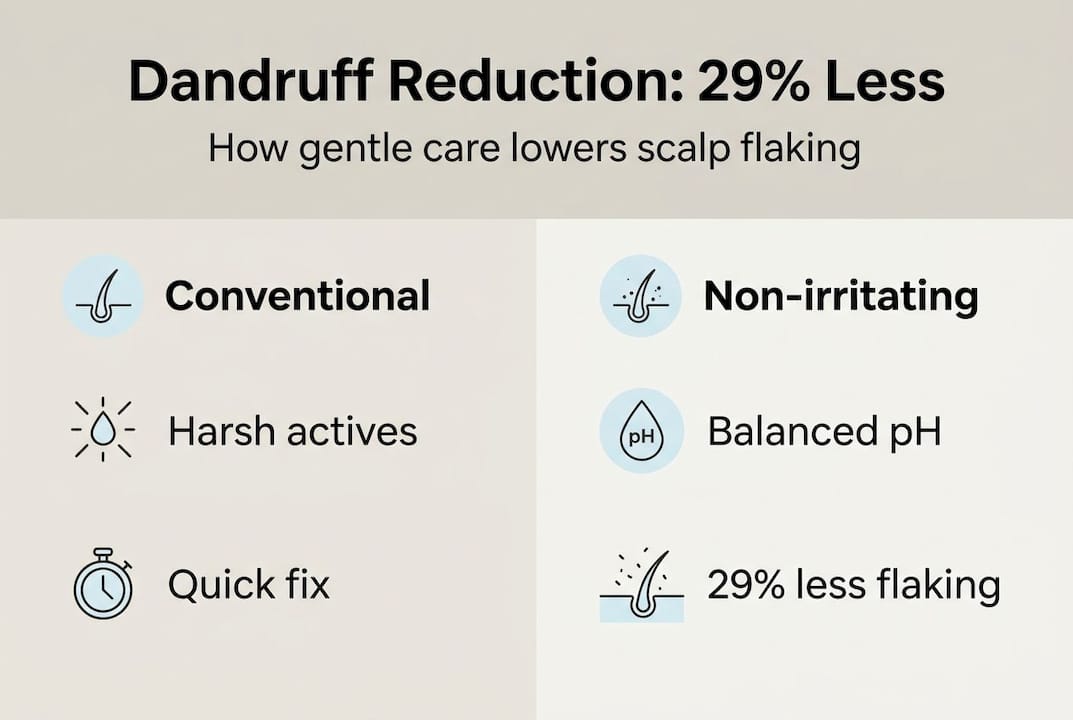
These figures come from clinical data on a microbiome-friendly formulation and represent real, measurable improvements in scalp condition.
Key benefits of non-irritating scalp treatments
- Lasting itch relief. Reduced inflammation means less persistent itching, not just temporary numbing.
- Visible reduction in flaking. Clinical data showed a clear drop in dandruff scaling and redness over four weeks.
- No rebound flare-ups. Without the dependency cycle of harsh shampoos, the scalp stabilises over time.
- Suits sensitive and oily scalps. Gentle formulas do not strip sebum or trigger compensatory oil.
- Stronger barrier. Lower water loss means the scalp retains moisture and resists irritants better.
For Australians who have spent years managing symptoms rather than addressing root causes, these outcomes represent a genuine shift.
How gentle treatments compare to conventional options
| Feature | Conventional medicated shampoos | Non-irritating microbiome-friendly treatments |
|---|---|---|
| Speed of relief | Fast (days) | Moderate (2 to 4 weeks) |
| Long-term outcome | Dependency and rebound | Sustained balance |
| Microbiome impact | Disruptive | Supportive |
| Skin barrier effect | Stripping | Protective |
| Steroid or SLS content | Often present | Absent |
| Suitable for daily use | Marketed as such | Designed for minimal use |
Conventional shampoos containing zinc pyrithione, selenium sulphide or SLS deliver quick results by suppressing symptoms chemically. Steroid-free, plant-based products aim for long-term balance instead, relieving symptoms without the harsh chemicals that create dependency.
Pro Tip: If you are switching from a medicated shampoo, do not stop abruptly. Taper over two to three weeks while introducing a gentle, pH-balanced alternative. That reduces the risk of a rebound flare.
Choosing the right non-irritating products in Australia
Once you know what to look for, the choices get simpler. Label reading is essential. Look for:
- SLS-free and SLES-free on the label
- Steroid-free formulation
- Microbiome-friendly or pH-balanced claims
- Plant-based or probiotic-infused actives for sensitive or persistent issues
- Targeted actives like urea or piroctone olamine for symptom relief
For oily scalps, the oily scalp guide outlines how to balance sebum without stripping the scalp. For prevention, dandruff prevention tips cover microbiome-friendly maintenance.
Pro Tip: Avoid products that list fragrance or alcohol high on the ingredient list. Both are common irritants that undermine the barrier, even in products marketed as gentle.
Best practices and application tips
- Replace your baseline shampoo with a gentle, pH-balanced, SLS-free alternative. This is the single most impactful change.
- Reduce washing frequency to two or three times a week. Daily washing, even with gentle products, disrupts the scalp's rhythm.
- Introduce a serum, applied to the scalp rather than the hair shaft, and to a dry scalp so the low-pH active is not diluted.
- Start with targeted treatment if needed for severe dandruff, then transition to gentle maintenance once symptoms settle.
- Support the barrier. A healthy barrier is the foundation of a stable scalp.
Common mistakes to avoid: washing daily out of habit, using too much product and rinsing too quickly, switching products before giving them time to work, and ignoring gut health and dietary triggers. Consistency matters more than intensity.
Ready to stop managing symptoms and start restoring balance?
Victory Serums is built for Australians who are done with the cycle of harsh shampoos and recurring flare-ups. The range is pharmacist-developed, pH-aware and designed around the Reset, Rebalance, Restore framework, formulated for minimal use rather than daily dependency.

The Intensive Scalp Serum targets oily dandruff, applied weekly or during flares rather than every day. The free free 1-Week Scalp Health Guide integrates topical care with gut health and food-trigger tracking. Explore the full range at victoryserums.com and take the first step toward a scalp that regulates itself.
Frequently asked questions
Are non-irritating scalp treatments safe for sensitive and oily scalps?
Yes. Plant-based and microbiome-friendly treatments are generally well tolerated by both sensitive and oily scalps, without triggering compensatory oil or irritation.
How quickly will I see results from gentle scalp care?
Most people notice less itching and flaking within two to four weeks, with greater improvement by around week eight.
Should I stop using my medicated shampoo right away?
Not immediately. For severe dandruff or dermatitis, taper off with medical guidance before switching fully to gentle options, to avoid a rebound flare.
What ingredients should I avoid to prevent scalp irritation?
Avoid SLS, SLES and steroid-heavy formulas for routine scalp care, and keep strong actives like zinc pyrithione and selenium sulphide for short flares rather than daily use.
Victory Serums products are designed to support scalp comfort and scalp health practices. They are not intended to diagnose, treat, cure or prevent medical conditions. If symptoms are severe, persistent, cracked, bleeding or worsening, seek guidance from a qualified healthcare professional.
Recommended
- Understanding anti-dandruff agents: sustainable relief – Victory Serums
- Oily scalp management guide for microbiome balance – Victory Serums
- Dandruff prevention tips for microbiome-friendly care 2026 – Victory Serums
- What causes scalp flakes? Malassezia affects 80% of cases – Victory Serums

Get the free 1-Week Guide to Scalp Health and uncover the real cause of your flakes.
Download the free guide
Matt Heron is the founder of Victory Serums, an Australian microbiome focused scalp care brand specialising in severe dandruff, yeast imbalance and chronic scalp instability. With more than four decades of personal experience managing persistent dandruff and extensive study of scalp biology, skin pH and barrier function, he developed targeted scalp serums that work within minutes or as leave in treatments. His Reset, Rebalance and Restore approach challenges daily anti-dandruff shampoo dependence and is helping redefine the way chronic dandruff is treated.