

Updated July 2026
In Brief:
- Chronic dandruff comes from Malassezia overgrowth and microbiome imbalance, not simple dryness.
- Gentle, pH-balanced products used two to three times a week beat daily washing with harsher formulas.
- In Australia, UV protection is part of the moisture strategy, not an optional extra.
The flakes on your shoulders, the persistent itch, the tight feeling after washing. These are not simply signs of a dry scalp. They often point to a disrupted skin barrier and an imbalanced microbiome. Standard anti-dandruff shampoos can suppress symptoms temporarily but rarely address the cause, and many make things worse over time by stripping the oils and beneficial microbes the scalp needs. This guide covers the real reasons scalp moisture is lost, the right tools to restore it, and a routine that supports lasting comfort without harsh chemicals.
Understand your scalp: dandruff, dryness and the microbiome
Chronic dandruff is not the same as a dry scalp. It is driven largely by overgrowth of Malassezia, a yeast that lives on everyone's scalp. When its populations get out of control, it breaks sebum down into irritating fatty acids, producing inflammation, flaking and persistent itch. Malassezia overgrowth disrupts the microbiome and leads to both irritation and reduced moisture.
A healthy microbiome helps regulate moisture, prevent pathogen overgrowth and maintain the protective barrier. When that balance shifts, the barrier weakens. Dandruff-affected scalps show higher water loss and lower hydration than healthy ones.
| Feature | Dry scalp | Dandruff |
|---|---|---|
| Flake type | Small, fine, white | Oily, yellowish clumps |
| Scalp feel | Tight, itchy | Greasy or inflamed |
| Redness | Minimal | Common |
| Root cause | Low sebum and moisture | Malassezia overgrowth |
| Best response | Hydration focus | Microbiome rebalancing |
What typically goes wrong with common treatments:
- Medicated shampoos target the yeast but do not repair the barrier
- Daily washing strips protective oils and disrupts the microbiome
- Moisturising products with heavy alcohols or sulphates add to the irritation
- Treating dandruff as dry skin delays real improvement
A healthy scalp pH sits between 4.5 and 5.5. Products that push pH higher weaken the barrier and allow Malassezia to thrive.
What you need: moisture-boosting essentials
The most effective routines keep it simple. Fewer products, chosen carefully, outperform a shelf full of medicated options. Gentle, sulphate-free, pH-balanced cleansers used two to three times a week meaningfully reduce dryness compared with daily washing using harsher formulas.
Serums are where the real moisture work happens. A well-formulated moisturising scalp serum delivers actives directly to the scalp without needing to rinse them away. Look for ceramides (the lipids that form your barrier), humectants that draw water into the skin, and panthenol.
| Product type | Key ingredients | Frequency |
|---|---|---|
| pH-balanced cleanser | No sulphates, low pH | 2 to 3 times per week |
| Leave-in scalp serum | Ceramides, humectants | 2 to 3 times per week |
| Light scalp oil | Jojoba, argan | Once weekly |
| UV protection | Broad-brimmed hat | Every outdoor session |
Pro Tip: Australia's UV index regularly exceeds 10, which accelerates scalp barrier breakdown. Protecting the scalp outdoors is not optional. It is part of the moisture strategy.
Step-by-step: cleanse, hydrate and support the barrier
- Wet thoroughly. Saturate the scalp with lukewarm water before applying anything. Hot water increases inflammation and strips oils.
- Apply cleanser to the scalp only. Focus on the scalp, not the hair length. Work in sections if needed.
- Massage with fingertips. Use gentle circular motions. Never use nails, as microtears disrupt the barrier and invite irritation.
- Rinse thoroughly. Residue left on the scalp feeds Malassezia and blocks follicles. Spend at least 60 seconds.
- Apply serum to a dry scalp. Wait until the hair has dried, then apply directly to the scalp rather than the hair. A dry scalp matters here: water dilutes the formulation and lifts its low pH, which works against a low-pH active.
- Allow it to absorb. Do not rinse the serum. Let it work as a leave-in treatment.
- Protect when outdoors. Cover the scalp with a broad-brimmed hat when heading outside.
Wash every two to three days with a gentle cleanser to maintain the barrier and microbiome. Daily washing is one of the most common and damaging mistakes.
Common pitfalls: using excessive product volume, skipping UV protection, and applying heavy oil to a scalp that is already oily.
Pro Tip: Keep a simple log for the first four weeks. Tracking wash days, product amounts and symptom changes gives you real data to adjust from.
Troubleshooting and common mistakes
Not every case responds to a gentle home routine. Some conditions, such as seborrhoeic dermatitis, need medical input.
| Symptom | Likely cause | Action |
|---|---|---|
| Small, dry flakes with tight scalp | Dry scalp or low sebum | Increase hydration, reduce wash frequency |
| Oily, yellowish flakes with redness | Dandruff or seborrhoeic dermatitis | Microbiome rebalancing routine |
| Worsening redness after two weeks | Product reaction or infection | Stop current products and seek advice |
| Pain, crusting or hair loss | Medical condition | Dermatologist consultation required |
Mistakes that stall progress:
- Switching products every week or two before they have had time to work
- Using medicated shampoos daily for months without professional guidance
- Ignoring persistent inflammation and hoping it resolves
- Overloading the scalp with multiple new products at once
- Continuing sulphate-based shampoos alongside a microbiome routine
For most people with chronic but non-severe dandruff, a meaningful reduction in flaking is realistic within four weeks of consistent, gentle care. If that is not happening, the routine needs adjustment or professional input.
Why most scalp moisture advice fails Australians
Most generic advice treats scalp problems like facial dry skin: add more moisture, use richer products, wash less. That works for some people. For Australians dealing with chronic dandruff, it frequently makes things worse.
Here is why. Australia's UV environment is aggressive, and prolonged sun exposure degrades the scalp's long-chain ceramides, the exact lipids that hold the barrier together. A moisturising shampoo with harsh surfactants can strip those ceramides while adding superficial hydration. The barrier gets weaker despite the product feeling good.
The real answer sits at the microbiome level. Repairing ceramides, nurturing beneficial bacteria and keeping Malassezia in check produces durable improvement. Product type matters less than pH, ingredient compatibility and how often you apply it.
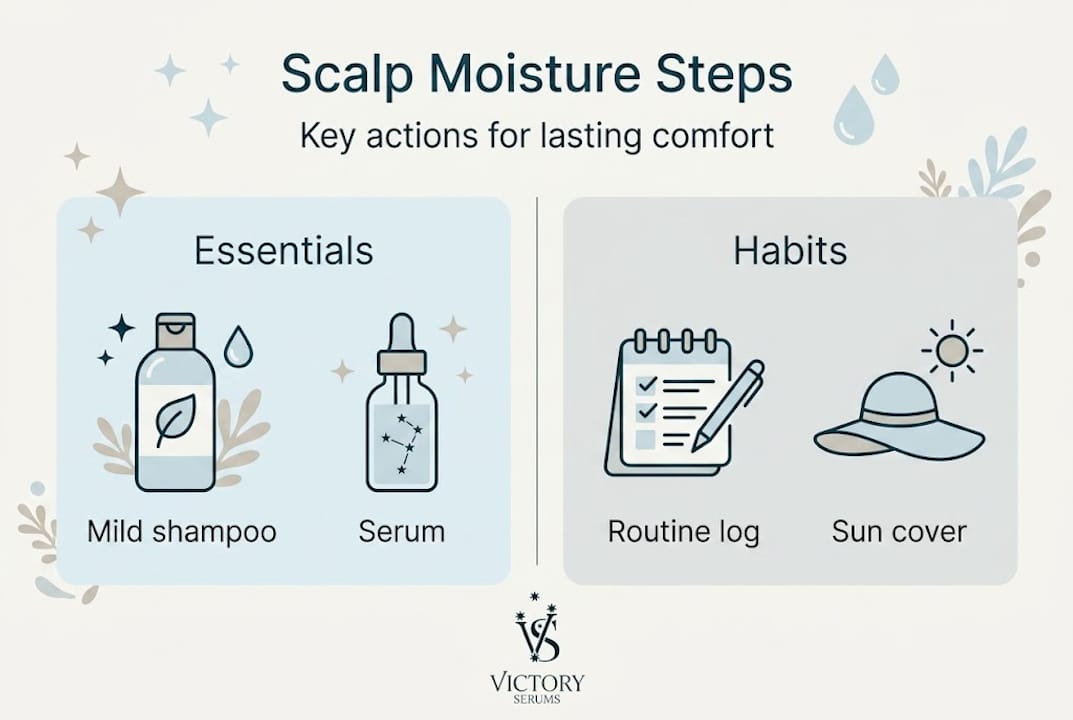
Consistency beats constant product changes. Most people expect results in days and abandon routines after two weeks, just before meaningful change begins.
Personalise your scalp care for lasting results
Victory Serums is built on pharmacist-developed formulations designed to address the functional drivers of chronic dandruff, not just the surface symptoms.

The dandruff control range covers every stage of the routine. For acute flares, the Intensive Scalp Serum works directly on the scalp to calm irritation, with a structured frequency that prevents dependency. For ongoing hydration, the Moisturising Scalp Serum supports the barrier between washes.
Frequently asked questions
What ingredients should I avoid with chronic dandruff?
Avoid sulphates, and use strong medicated shampoos only as directed rather than indefinitely, since they can worsen dryness and irritation over time.
How soon should I see improvement after changing my routine?
Consistent use of gentle, microbiome-friendly products usually produces meaningful reduction in flaking within two to four weeks.
Can I use oils on my scalp if I have dandruff?
Light oils like jojoba or argan can help if used sparingly, but avoid heavy oils that may feed yeast growth, particularly on an already oily scalp.
When should I see a dermatologist?
Seek advice if dandruff does not improve after a month, or if you notice worsening redness or pain. Persistent cases may need prescription treatment.
Victory Serums products are designed to support scalp comfort and scalp health practices. They are not intended to diagnose, treat, cure or prevent medical conditions. If symptoms are severe, persistent, cracked, bleeding or worsening, seek guidance from a qualified healthcare professional.
Recommended
- Dry scalp remedies list for effective relief in 2026 – Victory Serums
- Oily scalp management guide for microbiome balance in 2026 – Victory Serums
- Dry vs oily scalp: 50% of people face dandruff care issues – Victory Serums
- Australian scalp care: microbiome balance for 2026 – Victory Serums

Get the free 1-Week Guide to Scalp Health and uncover the real cause of your flakes.
Download the free guide
Matt Heron is the founder of Victory Serums, an Australian microbiome focused scalp care brand specialising in severe dandruff, yeast imbalance and chronic scalp instability. With more than four decades of personal experience managing persistent dandruff and extensive study of scalp biology, skin pH and barrier function, he developed targeted scalp serums that work within minutes or as leave in treatments. His Reset, Rebalance and Restore approach challenges daily anti-dandruff shampoo dependence and is helping redefine the way chronic dandruff is treated.